Robots will outsmart humans in 15 years, says Google's AI chief
24 Feb 2014
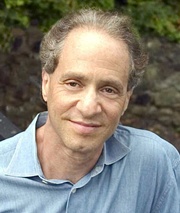 Robots would be smarter than humans within 15 years, according to Google's new chief of artificial intelligence, Ray Kurzweil.
According to Kurzweil, considered by many to be the world's leading expert on AI, by 2029, computers would be more intelligent than mankind and would be able to learn from experience, crack jokes, tell stories and even flirt.
Kurzweil has been hired by the internet giant, with the task of creating a search engine that would respond to natural language and in the end, knew people better than they knew themselves.
According to the 66-year-old Kurzweil the Turing test - the moment at which a computer would exhibit intelligent behaviour equal to or indistinguishable from that of a human – would be passed in 2029.
He added, in 1999, at a conference of AI experts, a poll about when computer scientists thought the Turing test would be passed was taken. The consensus was hundreds of years and a pretty good contingent thought that it would never happen.
Kurzweil added, however, today he was pretty much at the median of what AI experts thought and the public was kind of with them.
He said it was because the public had seen things like Siri [the iPhone's voice-recognition technology] where one talked to a computer, they had seen the Google self-driving cars.
He added, his views were not radical any more and he had actually stayed consistent. He said it was the rest of the world that was changing its view.
Among Kurzweil's previous predictions are giving a computer eight years to beat a world chess champion (it took seven), driverless cars that had almost been perfected by Google and 'Iron Man' style body armour for injured soldiers, as currently being trialled by the US military.
Kurzweil had projected that the internet, when it was still a tiny network used by a small collection of academics, would make it possible to link up the whole world.
Though he is known for building the world's first flat-bed scanners and text-to-speech synthesisers, Kurzweil is, perhaps better known for his theory of "the singularity" - a point in the future where humans and machines will apparently "converge."
His decision to work for Google came following the company's acquisition of a host of other AI developers, from the BigDog creators Boston Dynamics to the British startup DeepMind.
Also the search engine giant's co-founder Larry Page was able to convince Kurzweil to take on "his first actual job" with his promise of "Google-scale resources".

























