EU warns U.S. against tariff hikes after court ruling, says trade pact must be honored
By Axel Miller | 23 Feb 2026
Summary
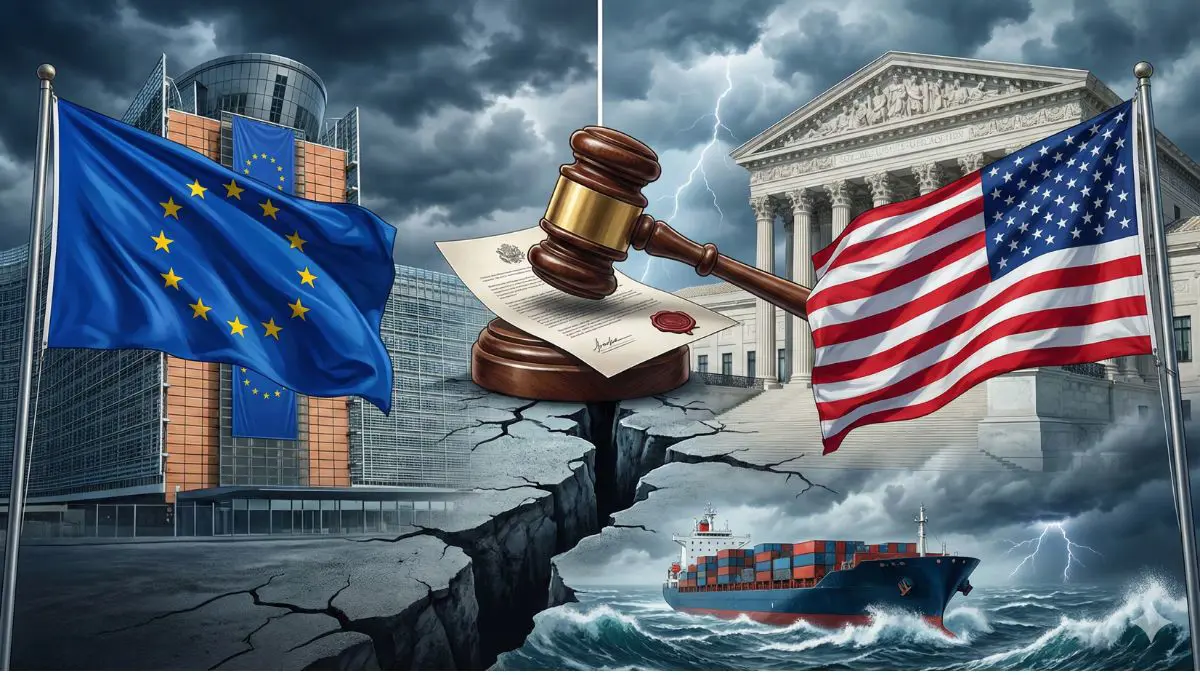
The European Union said it will not accept any increase in U.S. tariffs and urged Washington to respect the terms of the transatlantic trade agreement following a U.S. court ruling that created fresh uncertainty around trade policy.
The European Commission has warned that the United States must honor existing trade commitments after a legal ruling in the U.S. raised questions about the future of certain tariff measures.
Brussels said it expects “full clarity” from Washington on how it intends to proceed, stressing that the current trade framework should remain in place.
EU stresses agreement must be respected
EU officials said the transatlantic arrangement reached last year provides a clear structure for tariffs and market access, and warned that any unilateral increase would undermine confidence in the agreement.
The Commission reiterated that stability and predictability are essential for businesses operating across the Atlantic and for maintaining balanced trade relations.
Diplomatic engagement continues
EU Trade Commissioner Maros Sefcovic has been in contact with U.S. counterparts, including senior trade and commerce officials, as both sides assess the implications of the court ruling.
Officials indicated that discussions remain ongoing, with the focus on preserving the existing framework and avoiding disruptions to trade flows.
Trade uncertainty weighs on business sentiment
The situation underscores how legal and policy shifts can quickly ripple through global markets. Companies with cross-border supply chains are particularly sensitive to tariff changes, which can affect pricing, investment decisions, and logistics planning.
Why this matters
Transatlantic trade is one of the world’s largest economic relationships, and even modest tariff changes can have broad effects across industries and financial markets.
Maintaining clarity around tariff policy is critical for exporters, manufacturers, and investors, as uncertainty can delay investment and complicate long-term planning.
FAQs
Q1. Why is the EU objecting to U.S. tariff changes?
Because it wants the U.S. to respect the terms of the existing trade agreement and avoid unilateral increases.
Q2. What triggered the dispute?
A U.S. court ruling that created uncertainty about tariff policy and prompted calls for clarification.
Q3. What is the EU asking for now?
Clear guidance from Washington on its next steps and confirmation that the agreement will be upheld.
Q4. Could this escalate into a trade conflict?
Both sides are continuing talks, but tensions could rise if tariffs are increased beyond agreed levels.
Q5. Who is leading negotiations?
EU Trade Commissioner Maroš Šefčovič is in contact with U.S. officials.
Q6. Why is this important for markets?
Tariff uncertainty can affect trade flows, corporate earnings, and investor sentiment.

























