Dubai Airport reopens gradually after drone attack ignites fuel blaze
By Cygnus | 16 Mar 2026
Summary
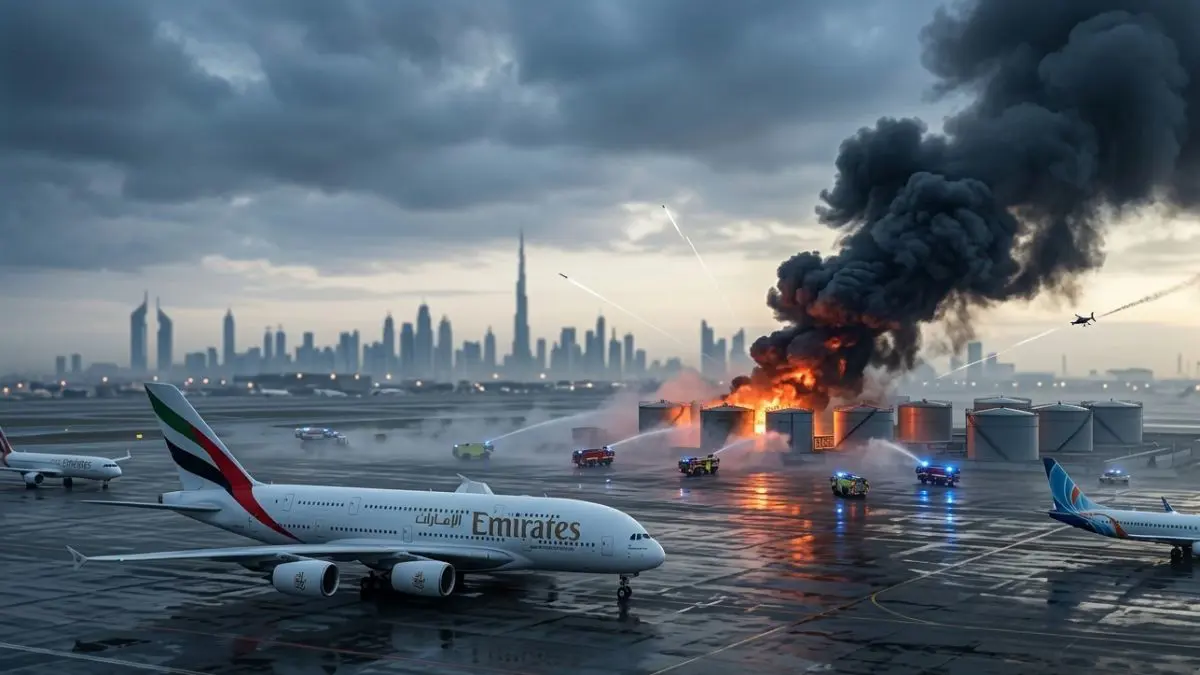
Dubai International Airport (DXB) is beginning to resume operations after a drone attack sparked a fire at a fuel storage facility, forcing a temporary ground stop. This marks the third strike on the global transit hub since the regional conflict began, further crippling Middle East aviation and sending air freight rates soaring.
DUBAI, March 18, 2026 — Duba’s international airport began a cautious resumption of flights on Monday following a fuel tank fire triggered by a drone attack. The incident, which caused significant disruptions but no reported injuries, highlights the persistent threat to civilian infrastructure as the U.S.-Israel war with Iran enters its third week.
The temporary suspension of one of the world’s busiest aviation hubs sent ripples through global travel networks, forcing major carriers like Emirates and flydubai to cancel or divert dozens of flights. While the fire was contained by emergency services, the psychological and economic toll on the region’s $367 billion tourism sector continues to mount.
A crossroads under fire
The attack is the third to strike Dubai International since February 28, when Iran launched a series of assaults across the Gulf. Although the UAE hosts U.S. military facilities, Tehran’s choice to target civilian hubs like airports and ports has drawn sharp international condemnation.
“The Gulf is a global crossroads for commercial aviation,” noted a regional analyst. “When you strike Dubai, you aren’t just hitting the UAE; you are disrupting the flow of critical medicines, global trade, and thousands of travelers from every corner of the planet.”
Operational fallout and diversions
As the fuel blaze was being extinguished, authorities diverted several incoming flights to the smaller Al Maktoum International Airport (DWC) and Al Ain.
- Emirates Airline: Partially resumed operations around 06:00 GMT, though many Monday flights remained canceled.
- Air India & Air India Express: Suspended all Dubai services for the day following the security breach.
- Economic Impact: Air freight rates have surged by as much as 70% on key routes as carriers factor in higher insurance premiums and the necessity of carrying extra fuel for long-range rerouting.
The broader air-space crisis
With most Middle East airspace effectively shut down or restricted, flights in the region are operating at approximately half their usual capacity. Travelers are facing surging ticket prices and fuel surcharges as airlines navigate the “no-fly” zones created by the threat of missile and drone fire.
The UAE, which normalized relations with Israel in 2020, has faced more than 2,000 missile and drone attacks since the end of February. While air defenses have intercepted the majority of these threats, the sheer volume of attacks has turned the Gulf’s once-secure corridors into a high-risk theater.
Why this matters
- Global Supply Chains: The surge in air freight rates directly impacts the cost of high-value goods, including electronics and medical supplies.
- Tourism Crisis: The $367 billion Middle East tourism industry is facing an existential threat as traveler confidence wanes amid repeated attacks on transit hubs.
- Aviation Safety: The necessity of constant diversions and ground stops is straining pilot rosters and air traffic control systems across the remaining open corridors.
Frequently asked questions (FAQs)
Q1. Is Dubai International Airport safe for travel?
Operations are resuming gradually, but the airport remains under high alert. Passengers are advised to check directly with their airlines for real-time status updates and potential cancellations.
Q2. What happened to the passengers on diverted flights?
Most diverted flights landed at Al Maktoum or Al Ain. Airlines have been arranging bus transport for the 130-km trip back to central Dubai once ground security is cleared.
Q3. Why is Iran targeting civilian airports?
Tehran claims its strikes are aimed at the U.S. presence in the region. However, by targeting civilian facilities, they exert maximum economic pressure on Gulf nations that host U.S. military bases.

























