Asia’s Russian fuel imports poised to hit record high after U.S. sanctions waiver
By Axel Miller | 19 Mar 2026
Summary
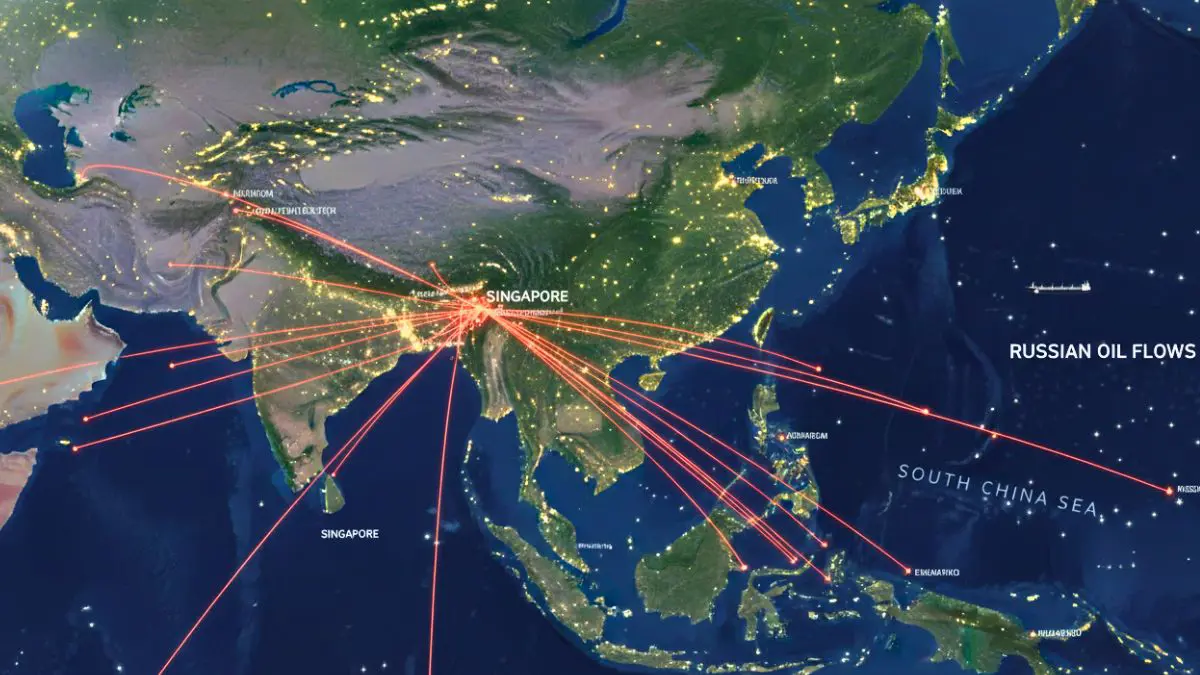
Asia is set to receive over 3 million tonnes (614,500 barrels per day) of Russian fuel oil in March 2026, a record volume, as U.S. authorities issue a 30-day waiver allowing “stranded” Russian cargoes at sea to be sold. The surge comes amid disruptions in Middle Eastern supplies caused by the U.S.-Israeli conflict in Iran, which has halted shipping through the Strait of Hormuz. Southeast Asia and China are the primary recipients, easing some high-sulphur fuel oil (HSFO) price pressures, though analysts warn the relief is temporary.
SINGAPORE/BEIJING, March 19, 2026 — Asia is expected to import more than 3 million tonnes of Russian fuel oil this month, as U.S. sanctions were temporarily eased and Middle Eastern supply chains remain disrupted. According to ship-tracking data from Kpler and LSEG, the volumes are equivalent to roughly 614,500 barrels per day.
Southeast Asia is set to receive about 1.7–1.9 million tonnes, primarily in Singapore and Malaysia, largely for marine bunkering. China is expected to take around 1.2–1.5 million tonnes, mainly to refiners in Shandong province using fuel oil as an alternative feedstock amid reduced Middle Eastern crude flows.
The increase follows a U.S. Treasury waiver issued March 12, allowing purchases of Russian crude and petroleum products stranded at sea before that date. The 30-day license runs through April 11, enabling buyers to alleviate immediate supply shortages without lifting broader sanctions.
The higher volumes have helped cool Asia’s HSFO market, where spot premiums for 380-centistoke fuel oil had spiked above $76 per metric ton, easing to about $70 after the waiver. Analysts caution, however, that prompt prices remain higher than future contracts, reflecting ongoing tightness.
“While the Russian inflows provide short-term relief, they cannot fully replace lost Middle Eastern supply if disruptions continue,” said Royston Huan, senior oil products analyst at Energy Aspects. “The Strait of Hormuz remains blocked, keeping the market fundamentally tight.”
Why this matters
- Buffering tight markets: Record Russian fuel flows ease high-sulphur fuel oil prices in Asia.
- Temporary relief: The U.S. waiver allows immediate access to stranded Russian cargoes without altering broader sanctions.
- Persistent risk: Prolonged disruption of Middle Eastern exports could keep energy prices elevated.
FAQs
Q1. What is the U.S. waiver?
It temporarily allows the purchase of Russian oil and petroleum products already loaded at sea before March 12, 2026.
Q2. Why are Asian refiners buying Russian fuel oil?
Middle Eastern supply disruptions have forced refiners to seek alternative feedstocks, including high-sulphur fuel oil.
Q3. Will this stabilize fuel prices long term?
The waiver eases short-term pressures, but markets remain tight if disruptions in the Middle East continue.