Enehos expands Asia footprint with Chevron Singapore downstream assets deal
By Cygnus | 14 May 2026

Summary
- Strategic acquisition: Japan’s ENEOS Holdings has agreed to acquire Chevron Corporation’s 50% stake in the Singapore Refining Company (SRC) along with selected downstream fuels and lubricants assets in a deal valued at approximately $2.17 billion.
- Regional network expansion: The transaction includes downstream marketing and distribution operations across parts of Southeast Asia and Oceania, strengthening ENEOS’s access to established fuel retail and supply networks in the region.
- Industry consolidation trend: The deal reflects a broader structural shift in which Western oil majors are selectively reducing exposure to downstream refining and marketing assets in Asia, while regional players expand control over trading and distribution infrastructure.
TOKYO/SINGAPORE, May 14, 2026 — ENEOS Holdings has agreed to acquire Chevron Corporation’s 50% stake in the Singapore Refining Company (SRC), alongside a portfolio of downstream fuels and lubricants operations across Asia-Pacific, in a transaction valued at approximately $2.17 billion.
The deal includes Chevron’s downstream marketing businesses in multiple regional markets, including Singapore, Malaysia, the Philippines, Australia, Vietnam, and Indonesia, subject to regulatory approvals and standard closing conditions. It also covers associated branding and distribution arrangements tied to Chevron’s retail fuel presence in those regions.
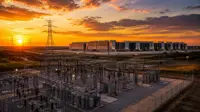
At the core of the transaction is SRC, a refining joint venture located on Singapore’s Jurong Island with a crude processing capacity of around 290,000 barrels per day. The remaining 50% stake is held by Singapore Petroleum Company, a subsidiary of China’s PetroChina.
The acquisition also includes storage and terminal infrastructure in Singapore, a key global hub for oil trading, blending, and bunkering. Control of these assets is expected to enhance ENEOS’s flexibility in regional product flows and trading operations.
For ENEOS Holdings, the transaction aligns with its strategy to expand beyond Japan as domestic fuel demand continues to decline due to demographic shifts, improved efficiency, and long-term electrification trends. The company has been increasing its focus on overseas downstream growth and trading capabilities.
For Chevron Corporation, the sale is consistent with a broader portfolio strategy aimed at concentrating capital on upstream oil and gas production and higher-return global assets.
The transaction follows a wider pattern of restructuring in Asia-Pacific downstream markets, where international oil majors have gradually rebalanced portfolios, while regional refiners and national-linked firms expand their presence in refining and distribution.
Why this matters
- Shift in downstream ownership: Global oil majors are gradually reducing direct exposure to Asian refining and retail fuels markets, creating opportunities for regional operators to consolidate assets.
- Strategic value of Singapore hubs: Singapore’s refining and storage infrastructure remains central to global fuel trading, blending, and regional supply optimization.
- Regional expansion strategy: ENEOS Holdings is increasingly positioning itself as a cross-border energy trader rather than a domestically focused refiner.
- Supply chain control matters more: Ownership of terminals, storage, and blending capacity is becoming as strategically important as refining capacity itself.
FAQs
Q1. What does ENEOS acquire in this deal?
ENEOS Holdings is acquiring Chevron’s 50% stake in the Singapore Refining Company, downstream fuels and lubricants businesses across several Asia-Pacific markets, and related storage and terminal assets.
Q2. Why is Chevron selling these assets?
Chevron Corporation is streamlining its portfolio to focus more on upstream oil and gas production and higher-return projects.
Q3. What is the Singapore Refining Company?
SRC is a refining joint venture on Jurong Island with capacity of about 290,000 barrels per day, jointly owned by Chevron and Singapore Petroleum Company.
Q4. Why is Singapore strategically important?
Singapore is one of the world’s largest oil trading and refining hubs, playing a key role in global fuel storage, blending, and maritime distribution.