US Formally Exits World Health Organization as Unpaid Dues Dispute Triggers Geneva Budget Shock
By Axel Miller | 22 Jan 2026
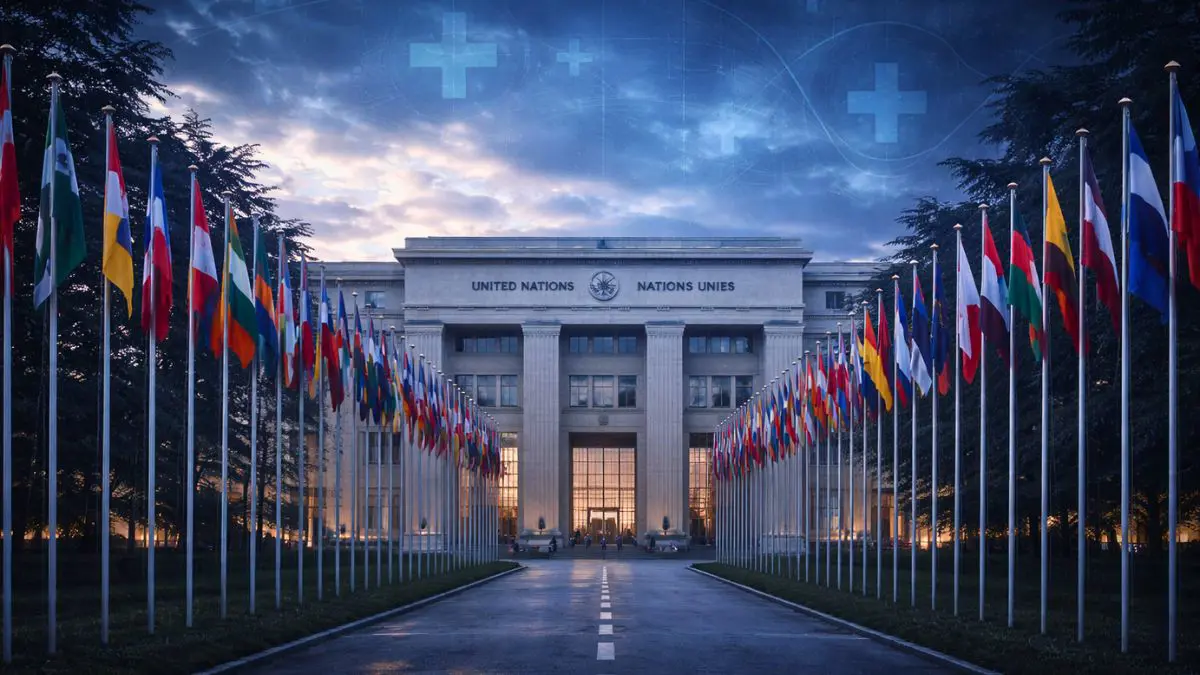
The United States formally exited the World Health Organization (WHO) on Thursday, following a withdrawal order issued by U.S. President Donald Trump on his first day back in office in 2025.
The move comes despite warnings from global health experts that the decision could weaken U.S. and global preparedness for future outbreaks. It also comes amid a legal dispute over outstanding U.S. financial obligations, as American law requires Washington to settle all dues before leaving the U.N. health agency.
According to WHO officials, the United States has not yet paid around $260 million in assessed contributions for 2024 and 2025. A U.S. State Department spokesperson said the administration’s position is that the WHO’s failures during recent health emergencies had imposed severe economic costs on the United States, and that the president had exercised authority to pause further transfers of U.S. funds and support to the agency.
Exit clouds global disease coordination
WHO Director-General Tedros Adhanom Ghebreyesus has repeatedly urged the U.S. to reconsider, warning that the withdrawal would be a loss not only for global health cooperation but also for the United States itself, given the WHO’s central role in outbreak surveillance, disease response coordination, and information-sharing.
Speaking at the World Economic Forum in Davos this week, Bill Gates said he did not expect the U.S. to reverse course in the near term, though he noted that global health systems still require a functioning WHO.
Geneva budget crisis: WHO begins structural cuts
The U.S. exit has triggered an immediate financial shock in Geneva.
Washington has traditionally been the WHO’s largest national backer, contributing about 18% of total funding. WHO officials say the loss of U.S. support has already forced the agency to scale back operations, including:
- cutting its management team by half
- reducing budgets across departments
- planning to cut about a quarter of staff by mid-2026
Public health experts warned that these reductions could weaken early warning networks and slow coordinated responses during cross-border health emergencies.
Legal uncertainty: can the U.S. leave without paying?
The withdrawal has opened a legal and diplomatic question: whether the U.S. can fully exit without settling obligations under the 1948 U.S. joint resolution, which requires one-year notice and payment of dues.
“This is a clear violation of U.S. law,” said Lawrence Gostin, founding director of Georgetown University’s O’Neill Institute for Global Health Law, though he added that enforcement against a superpower would be difficult.
A WHO spokesperson said member states are expected to discuss the U.S. departure — and how it will be handled — at the WHO Executive Board meeting in February.
China signals funding expansion amid vacuum
The U.S. departure also raises the prospect of a geopolitical vacuum in global health funding.
China pledged at the World Health Assembly in May 2025 to increase voluntary contributions, including $500 million over five years, positioning itself to expand influence in an organization that has long relied on U.S. funding and leadership.
Why This Matters
- Global health surveillance becomes weaker
Cutbacks at WHO risk slowing detection and response systems the world relies on for outbreaks. - U.S. influence shifts to rivals
The exit creates space for other powers—particularly China—to gain agenda-setting influence in global health policy. - Funding shock spreads beyond WHO
Many health programs tied to WHO coordination—including disease surveillance networks—depend on stable international funding. - Legal and diplomatic uncertainty rises
If dues remain unpaid, the dispute becomes a precedent-setting case about international obligations vs domestic politics.
Summary
The United States formally exited the WHO on Jan 22, 2026, after a one-year notice period triggered by President Trump’s 2025 executive order. The withdrawal is overshadowed by a dispute over roughly $260 million in unpaid dues, which U.S. law requires to be settled before leaving. WHO has begun deep structural cuts, including a planned 25% workforce reduction, while experts warn the move weakens global disease coordination and shifts influence toward rival funders such as China.
FAQs
Q1: When did the U.S. officially leave the WHO?
The withdrawal became procedurally effective on January 22, 2026, one year after the Trump administration issued the exit order and notification.
Q2: How much does the U.S. still owe the WHO?
WHO officials say Washington has not yet paid around $260 million in assessed contributions for 2024 and 2025.
Q3: Does the U.S. have to pay before exiting?
Under the 1948 U.S. joint resolution, the U.S. must give one-year notice and pay outstanding obligations, making the exit legally contested if dues remain unpaid.
Q4: What changes has WHO announced?
The WHO has cut management leadership by half and plans to cut about 25% of staff by mid-2026.
Q5: Will the U.S. return later?
A future administration could seek to rejoin, but membership would likely require settling outstanding dues and rebuilding cooperation frameworks.

























