Trump to meet tech giants on energy pledge ahead of midterms
By Cygnus | 04 Mar 2026
Summary
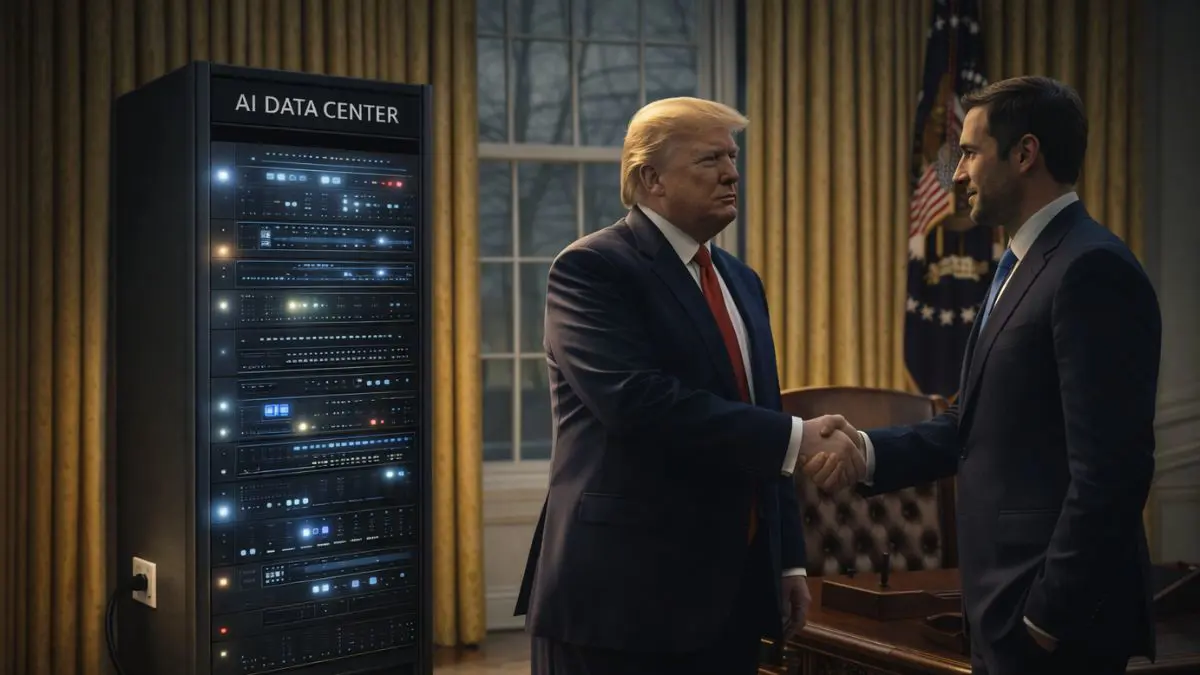
President Donald Trump will host leaders from major technology firms—including Google, Meta, and OpenAI—on Wednesday to sign the “Ratepayer Protection Pledge.” The initiative aims to ensure that the massive energy demands of AI data centers do not lead to higher electricity bills for American households, addressing a key voter concern ahead of the 2026 midterm elections.
WASHINGTON, March 4, 2026 — In a high-stakes meeting at the White House, President Donald Trump is set to formalize a new energy pact with the titans of the technology industry. The “Ratepayer Protection Pledge” is designed to decouple the rapid growth of artificial intelligence from the rising cost of residential electricity, a move that comes as the administration seeks to shore up support before the November midterms.
The pledge involves a “who’s who” of the tech world: Google, Microsoft, Meta, Oracle, xAI, OpenAI, and Amazon have all committed to signing.
“President Trump’s ratepayer protection pledge will deliver more affordable, reliable, and secure energy for the American people,” Energy Secretary Chris Wright said in a statement. He emphasized that the goal is to reverse the trend of rising electricity prices that the administration attributes to previous policies.
Shifting the burden of power
The rapid expansion of AI requires an immense amount of computing power, which in turn places a significant strain on the aging U.S. electrical grid. Under the terms of the pledge, tech companies are expected to commit to:
- Dedicated Power Generation: Bringing or buying their own electricity supplies—either from new power plants or expanded output from existing ones—to avoid siphoning energy from the public grid.
- Infrastructure Investment: Paying for upgrades to regional power delivery systems.
- Special Rate Agreements: Entering into specific contracts with utilities to ensure their energy usage doesn’t trigger price hikes for standard consumers.
Trump has consistently urged “hyperscalers” to secure dedicated power capacity, framing it as a necessity for both national technological competitiveness and economic stability for the average voter.
Political and logistical hurdles
The timing of the announcement is explicitly political. With the 2026 midterm elections approaching, energy affordability has emerged as a top-tier issue for voters. By pressuring Big Tech to pay its “fair share” of the energy bill, the administration hopes to neutralize criticism over grid instability.
However, some experts question if the pledge will result in meaningful change. Jon Gordon, a director at the trade group Advanced Energy United, noted that the real bottleneck is how quickly new generation can be built. He argued that the administration’s focus on fossil fuels rather than quicker-to-build solar and wind might delay the actual relief consumers see on their bills.
“Hyperscalers paying for the generation doesn’t get it online any faster,” Gordon warned, suggesting that while the pledge is a significant step, the logistics of the U.S. power grid remain a formidable challenge.
Why this matters
- Consumer protection: If successful, the pledge prevents a “hidden tax” on consumers where residential bills rise to subsidize the infrastructure of multi-billion-dollar tech firms.
- AI vs. the Grid: The massive power consumption of AI is currently outstripping the capacity of several regional grids; this pact forces tech companies to become “prosumers” who contribute to the energy supply.
- Midterm Strategy: This move aligns with the administration’s “energy dominance” platform, using corporate pressure to address inflation and utility costs before voters head to the polls.
FAQs
Q1. Which companies are signing the energy pledge?
The list includes Google, Microsoft, Meta, Oracle, xAI (Elon Musk’s AI firm), OpenAI, and Amazon.
Q2. What exactly is a “Ratepayer Protection Pledge”?
It is a commitment by tech companies to ensure that their energy-intensive data centers do not cause electricity price increases for everyday households and small businesses.
Q3. How will these companies get their energy?
They are expected to buy or build their own power sources (like dedicated natural gas plants) rather than relying exclusively on the general public utility grid.
Q4. Is this related to the 2026 elections?
Yes. High energy bills are a major concern for voters, and the administration is positioning this as a proactive solution ahead of the November midterms.