Raghuram Rajan blames stimulus for current economic woes
09 Dec 2013
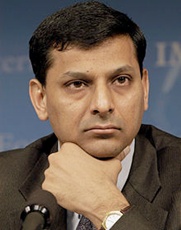 The current woes of the Indian economy has its origins in the stimulus provided by the government in the wake of the global crisis of 2008, Reserve Bank of India (RBI) governor Raghuram Rajan has said.
The stimulus provided by the government to ring fence the country's economy from the ill effects of the global financial crisis of 2008 has eventually led to an overheated economy, high inflation and uncomfortable fiscal and current account deficits, he pointed out.
Addressing investors at an event in New York, Rajan said the economy has slowed to below 5 per cent from an average of 8 per cent between 2002 and 2012, mainly on account of domestic factors.
The slowdown is "largely a result of domestic factors (institutional weakness, withdrawal of stimulus) and one-third due to global factors," Citi said in a release quoting Rajan.
"While the stimulus did help growth initially, it eventually led to an over-heated economy, high inflation/wage growth and consequently deficits widening to uncomfortable highs".
The then finance minister Pranab Mukherjee had provided industry with three stimulus packages to counter the impact of the 2008 global financial meltdown.
The current account deficit (CAD), which is the difference between inflow and outflow of foreign exchange, was up at a record high of 4.8 per cent of GDP in 2012-13, from 2.8 per cent in 2010-11.
After the measures introduced by the government and the RBI to increase inflow and restrict gold imports, the CAD was down to 3.1 per cent of the GDP in the first half of current fiscal, as against 4.5 per cent in H1 of 2012-13.
"Efforts to rein in the CAD have worked with the deficit likely to come in at sub 3 per cent of GDP from 5 per cent last year," he said.
Meanwhile, India's benchmark 10-year bond gave up early gains and was trading flat at 8.85 per cent after RBI Rajan said inflation would remain the key focus of monetary policy.
During his interaction with institutional investors, Rajan "re-iterated that inflation is and will remain the key focus of monetary policy", Citi Research said in a note to clients issued today.
Rajan, according to Citi, also said the divergence between wholesale price inflation and consumer price inflation made it a balancing act for the RBI, and quoted the governor as saying, "it needs to manage the process of dis-inflation with an eye on the economy, so that you don't kill growth."

























