India operationalises safeguards agreement with the IAEA

16 Oct 2009

1

New Delhi: India's safeguards agreement with the International Atomic Energy Agency (IAEA) has become operational with this country notifying its 'separation plan' to the IAEA. The 'separation plan' formally separates India's civil and military nuclear establishments.
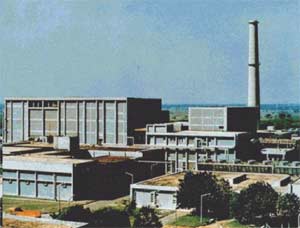
Tarapur Plant
The safeguards agreement was approved by the IAEA Board of Governors in August 2008. The agreement will enter into force on the date the IAEA receives from India written notification that its statutory and/or constitutional requirements for entry into force have been met.

The IAEA currently applies safeguards to six nuclear reactors in India under safeguards agreements concluded between 1971 and 1994. According to the international watchdog body additional reactors are expected to come under safeguards in the future under the aegis of the newly-signed agreement.

The safeguards agreement has been operationalised even as India and the United States prepare up for the state visit of Indian prime minister Dr Manmohan Singh who will arrive in Washington on 24 November.

Dr Singh's visit will also be the first state visit for the Obama administration.

The operationalising of the safeguards agreement is likely to speed up negotiations for the reprocessing agreement currently under way between India and US. Analysts feel that the move by India to implement the 'separation plan' is likely to flummox carping critics of the Indo-US civil nuclear treaty, the non-proliferation ayatollahs in the new US administration.


Latest articles

Carmakers explore energy storage, but claims of major pivot and write-downs are overstated

Carmakers explore energy storage, but claims of major pivot and write-downs are overstated

Government advances Dholera semiconductor hub, but timelines and scale claims need caution

Government advances Dholera semiconductor hub, but timelines and scale claims need caution

South Korea’s AI chip push grows, but 2nm robotics claims remain premature

South Korea’s AI chip push grows, but 2nm robotics claims remain premature

India–Japan chip collaboration grows, but details around Axiro–EdgeCortix deal remain limited

India–Japan chip collaboration grows, but details around Axiro–EdgeCortix deal remain limited

Post-splashdown: What Artemis II taught us about the ‘deep space wall’

Post-splashdown: What Artemis II taught us about the ‘deep space wall’

Carmakers explore energy storage, but claims around Ford and GM pivot remain overstated

Carmakers explore energy storage, but claims around Ford and GM pivot remain overstated

Tesla’s robotics push continues, but Shanghai “Optimus mass production” claims remain unconfirmed

Tesla’s robotics push continues, but Shanghai “Optimus mass production” claims remain unconfirmed

VinFast eyes India growth, but details around VF MPV 7 launch remain unverified

VinFast eyes India growth, but details around VF MPV 7 launch remain unverified

Breaking the engine barrier: HAL and GE move forward on F414 co-production deal

Breaking the engine barrier: HAL and GE move forward on F414 co-production deal