Honda Siel Cars India Ltd
05 Jul 2007
| Models: | |
| Honda City |  |
| Honda Accord |  |
Company profile: The history of Honda Motor Company began with the vision of one man — Soichiro Honda. His dream was personal mobility for everyone.
Soichiro Honda founded Honda Motor Company in 1948. In the same year, he designed and engineered the first product of this company — a 50cc motorised bike on a bicycle frame — in his small shed at Hamamatsu.
Today, as the company celebrates its 50th anniversary, Honda is a global firm with a global viewpoint and a four-region global strategy that is reflected in a solid commitment to local markets and economies.
The essential spirit of Honda: “In our eyes, however, our most enduring challenge has been to satisfy the ever-changing needs of our customers.”
Honda’s vision and role — fulfilling the global needs of personal mobility in the new automotive society — go hand in hand with its corporate philosophy: maintaining a global viewpoint, the company is dedicated to supplying products of the highest efficiency at a reasonable price for worldwide customer satisfaction.
In India, it is through Honda Siel Cars India (HSCI) that customers can enjoy the benefits of Honda’s expertise. Incorporated in December 1995, HSCI is a joint venture between Honda Motor Co Ltd, Japan, and Siel Ltd, India.
The automobile production facility of HSCI has been set up on a 150-acre site in Greater Noida, in the state of Uttar Pradesh. The initial installed capacity of this facility is 30,000 cars per annum (on a two-shift basis). Commercial production of Honda automobiles from this facility commenced in December 1997.
Registered office and plant:
Plot No A1, Sector 40/41
Surajpur, Kasna Road
Greater Gautam Buddha Nagar
Uttar Pradesh - 203 207
Tel: 011-561321-327
President and CEO: Teruo Fujisaki
Latest articles







Featured articles

The decoupling paradox: Why Wall Street keeps funding AI despite $100 oil
By Axel Miller | 11 May 2026
AI infrastructure stocks continue rallying despite $100 oil as investors bet on productivity gains and semiconductor demand in 2026.

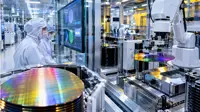
Hybrid bonding gains attention as AI chip packaging demand grows
By Cygnus | 23 Apr 2026
Hybrid bonding is driving AI chip packaging demand as backend technologies gain importance in the semiconductor supply chain.

The agentic transition: how enterprises are scaling AI from pilot to profit
By Cygnus | 22 Apr 2026
AI has entered its execution era. Discover how companies like Valeo and Microsoft are scaling agentic AI systems—from copilots to autonomous workflows driving real business impact.

Post-splashdown: What Artemis II taught us about the ‘deep space wall’
By Axel Miller | 15 Apr 2026
Artemis II splashdown marks a breakthrough in deep space exploration. Discover AVATAR radiation data, Orion’s distance record, and insights shaping NASA’s 2028 Moon mission.

Can aviation go green? The multi-billion dollar race for sustainable fuel
By Cygnus | 10 Apr 2026
Airlines are racing to adopt sustainable aviation fuel, but limited supply and high costs challenge the future of green aviation.

The battery race: who will control the future of electric vehicles?
By Axel Miller | 08 Apr 2026
The global battery race is reshaping the electric vehicle industry, with China, the US, and Europe competing for control over supply chains and technology.

AI vs governments: Who controls the future of intelligence?
By Cygnus | 07 Apr 2026
Governments and AI companies like OpenAI and Anthropic are shaping the future of intelligence amid rising policy conflicts and global competition.

Strait of Hormuz: how one chokepoint controls the global economy
By Axel Miller | 06 Apr 2026
The Strait of Hormuz is a critical global chokepoint. Learn how disruptions impact oil prices, shipping, and the global economy.

The $2 trillion AI infrastructure race: Who will control global compute?
By Cygnus | 06 Apr 2026
AI spending is set to exceed $2 trillion in 2026, driving a global race in data centers, chips, and energy infrastructure.


Latest articles





