Unclassified version of new report predicts small drone threats to infantry units
08 Mar 2018
The emergence of inexpensive small unmanned aircraft systems (sUASs) that operate without a human pilot, commonly known as drones, has led to adversarial groups threatening deployed U.S. forces, especially infantry units.
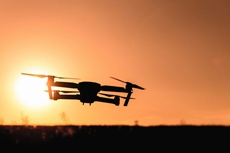 Although the US Army and the US Department of Defence (DOD) are developing tactics and systems to counter single sUASs, a new report by the National Academies of Sciences, Engineering, and Medicine emphasises the need for developing countermeasures against multiple sUASs - organised in coordinated groups, swarms, and collaborative groups - which could be used much sooner than the Army anticipates.
The committee that conducted the study developed a classified report that details its findings and recommendations, along with an unclassified public version that discusses key background issues presented in this news release.
"Hobby drones are easy to buy, their performance is improving dramatically, and their cost has dropped significantly; now with millions of them around the world, they pose a growing threat to the U.S. warfighting forces if used for nefarious intents," said Albert Sciarretta, president of CNS Technologies and chair of the committee. "The threats could be consumer items like hobby drones, modified consumer items such as could be assembled with online components, and customized ones, like built-from-scratch aircraft."
The committee that authored the report was asked by the US Army to assess the threat from sUASs, especially when massed and operating collaboratively, examine the current capabilities of military units to counter them, assess related human performance issues, and identify technologies appropriate for short- and long-term science and technology investments by the Army.
Readily available, high-performance, sUASs can be easily modified to carry lethal weapons, identify targets at long ranges, and conduct electronic warfare attacks. As the capabilities of hobby drones improve at a rapid pace, the added threat from coordinated groups, swarms, and collaborative groups of sUASs will pose a substantial challenge to US armed forces, the report says.
"Modified hobby drones can be used to support conventional and unconventional attacks. For example, they can be fitted with external or embedded explosives designed to explode on contact," adds Sciarretta. "In addition, they can be used by adversaries to jam our radio frequency signals and to support their information operations. When these sUASs are combined in groups or swarms, their threat is significantly enhanced."
Countering sUASs first requires detection and identification, which is very difficult because they are small, fly at low altitudes, can have highly irregular flight paths, and travel at a range of speeds, the report says. Moreover, a sUAS can also take advantage of the surrounding environment, for example, by concealing itself among trees or blending in with a flock of birds.
Even after threats are identified, countering sUASs can be challenging, the report says. The Army and DOD have invested significantly in technologies in response to these threats, often focusing on detecting radio frequency transmissions of the sUASs or their operators. However, the report highlights that today's consumer and customized sUASs increasingly can operate without radio frequency command-and-control links by using automated target recognition and tracking, obstacle avoidance, and other capabilities enabled by software.