UN agency begins dismantling Syria’s chemical arms
07 Oct 2013
Experts from the United Nation's Organisation for the Prohibition of Chemical Weapons (OPCW) on Sunday began dismantling Syria's chemical weapons, international monitors have said.
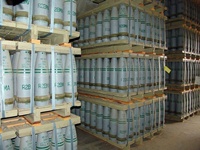 The operation, which is being overseen by an OPCW team, began after Syria accepted a UN resolution calling for destruction of all chemical weapons held by the country under a US-Russian proposal.
The resolution followed international outrage over the killing of hundreds of people in a chemical weapons attack near Damascus in August.
"The first day of destruction and disabling is over and missile warheads, aerial bombs, along with mobile and static mixing and filling units, were dealt with. Work continues tomorrow and in the next few days," reports quoting an official on the joint OPCW-UN delegation said.
The weapons inspectors, however, did not reveal the location of the chemical weapons sites where Sunday's operations took place. The United States and other western powers blame the regime of Bashar al-Assad for the attack while Assad accuses Syrian rebels of being behind it.
UN chemical weapons inspectors, in an interim report, have confirmed the use of nerve agent sarin in the attack in Ghouta on the outskirts of the city on 21 August, which killed hundreds of people.
The mission to dismantle Syrian chemical weapons was established under a UN resolution, which was passed after agreement between Russia and the US.
As per details given by the Syrian government to the OPCW last month, the country is estimated to be holding 1,000 tonnes of the deadly nerve agent sarin, VX nerve gas, mustard gas and other chemical weapons at some 20 sites and it is a huge task for the experts to locate and destroy these.
Syria, which has acceded to the UN Chemical Weapons Convention, and signed the Biological and Toxin Weapons Convention in 1972, however, has never ratified them.
The mission to dismantle Syrian chemical weapons is expected to continue until at least mid-2014.
Assad's detractors say Sunday's operations were symbolic images and the start of a serious process or a public relations exercise, while some diplomats say the Syrian leader has no other option than accede to the UN resolution in order to avert a US military strike.
The rebel Free Syrian Army, on the other hand, say the Assad regime has already moved chemical stocks to its ally Hezbollah in Lebanon, a claim not supported by proof.
This is the first time the OPCW, based in The Hague, has been asked to oversee the destruction of a chemical weapons armoury amidst an ongoing conflict.
Assad has ruled out any talks with the rebel fighters but has suggested that Germany could mediate to try to end the 30-month-long civil war.