Isro launches Nasa-Isro high-precision earth monitoring satellite NISAR
By Unnikrishnan | 31 Jul 2025
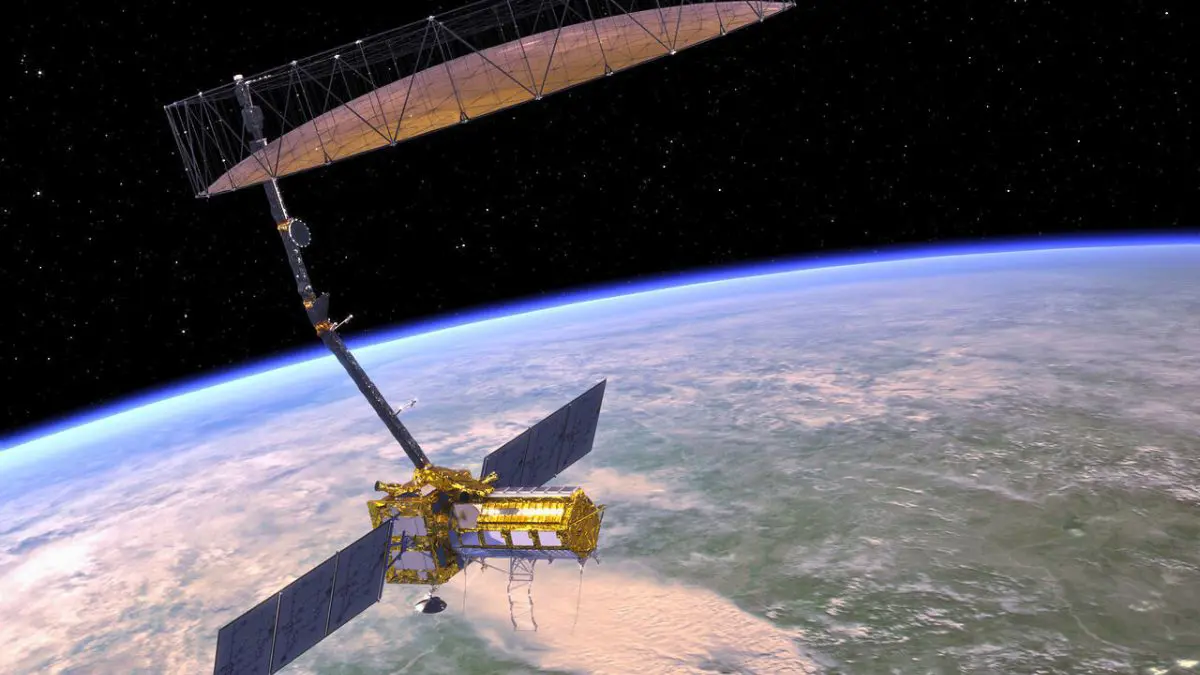
Indian Space Research Organisation (Isro) on Wednesday launched the Nasa-Isro Synthetic Aperture Radar (NISAR), an earth observation satellite jointly developed by Isro and the National Aeronautics and Space Administration (Nasa) of the United States.
A GSLV rocket carrying the 2,393-kg satellite lifted off at 5:40 pm IST from the second launchpad of the Satish Dhawan Space Centre (SDSC), at Sriharikota in Hyderabad and successfully launched the satellite into a Sun synchronous polar orbit, some 747 km above the Earth.
NISAR, a $1.5 billion satellite, with a rare combination of Isro's S-band radar and Nasa's L-band radar, is set to revolutionise earth monitoring worldwide, capturing even the smallest changes on the Earth’s surface with accuracy as small as a few millimetres.
NISAR is also perhaps the first Earth-mapping satellite equipped with dual-frequency synthetic aperture radar, with capability to acquire fully polarimetric and interferometric data.
The dual frequency radar helps the satellite to capture and combine multiple measurements, to give sharper, high resolution images of the planet. NISAR will be orbiting the planet every 97 minutes, mapping nearly the entire surface, and sending images every 12 days.
It was a decade-long effort by the two agencies that resulted in the development of the satellite and the launch and its operationalisation. The two SAR radars - S-Band SAR and L-Band – were developed independently developed and later integrated at Nasa’s Jet Propulsion Laboratory (JPL). It has also undergone extensive testing at Isro and JPL. It was then integrated with the mainframe satellite and further tested at Isro’s UR Rao Satellite Centre (URSC).
NISAR will now undergo a 90-day operationalisation phase, involving system checks and calibration of equipment and validation of operations before planning co-ordinated observation and joint management of the mission by Isro and JPL.
The operationalisation of NISAR will start with the deployment of its 12-metre reflector that will be extended 9 meters from the satellite. The satellite has Solid-State Recorder and GPS receiver, besides the 9m Boom hoisting the 12m reflector, all delivered by NASA.
Isro will take care of satellite command and operations with Nasa providing the orbit maneuvre and Radar operation plans. Ground stations of Iso and Nasa will download the acquired images and process them before disseminated to users.
NISAR will help to:
Measure changes in the woody biomass;
Track changes in crop activities;
Observe changes in the extend of wetlands;
Map ice sheets of Greenland and Antarctica, sea and mountains; and
Measure land deformation related to seismicity, volcanic activity, landslides, subsidence, subsurface aquifers, hydrocarbon reservoirs, etc.
The satellite will have an active life of 5 years.

























