US to permit Nvidia H200 chip sales to China with 25% export fee
By Cygnus | 09 Dec 2025
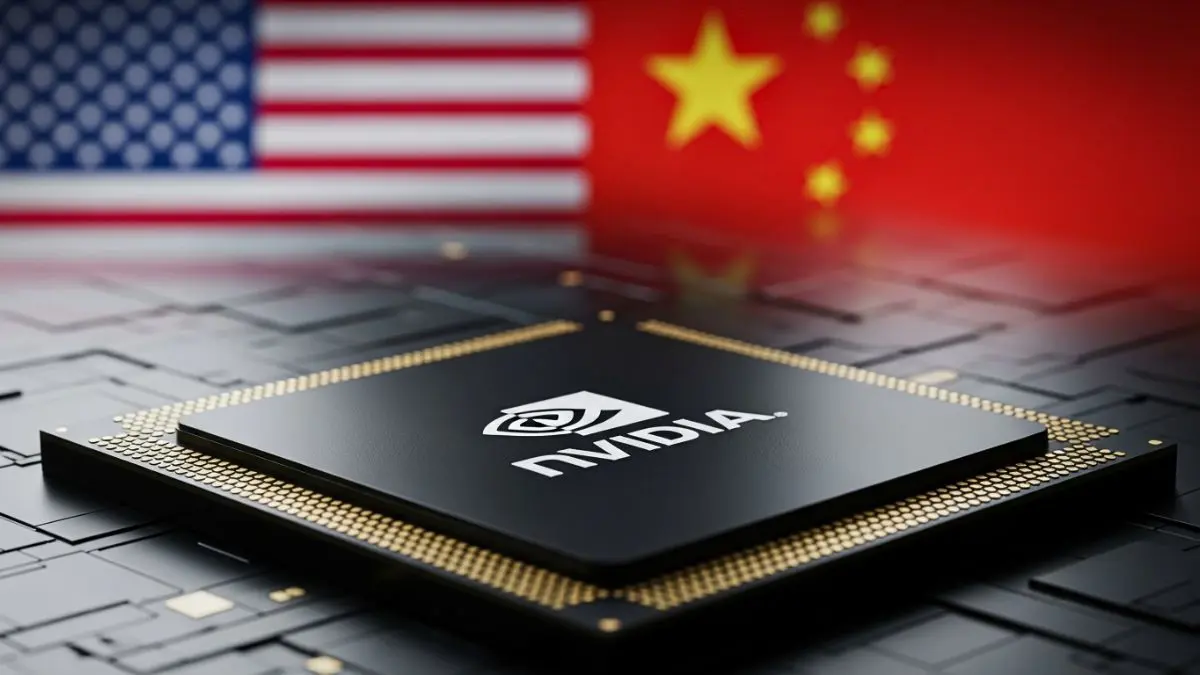
The United States will allow Nvidia to ship its H200 artificial intelligence processors to China, while charging a 25% government fee on each sale, according to an announcement by President Donald Trump. The move marks a notable shift in Washington’s approach to high-end semiconductor exports at a time when AI chips sit at the center of global economic and geopolitical competition.
Following the announcement, Nvidia shares climbed about 2% in after-hours trading, extending gains made earlier in the day. Investors appear to be betting that reopened access to China—still one of the world’s largest semiconductor markets—could support revenue growth without fully undermining U.S. security priorities.
Trump said the Commerce Department is finalizing the framework and that similar terms would apply to other major U.S. chipmakers, including AMD and Intel. He also stated that Chinese President Xi Jinping had been informed of the decision and responded favorably, though official details remain limited.
The policy appears designed to strike a middle ground. The H200 is Nvidia’s second-most advanced AI chip, positioned below its cutting-edge Blackwell processors, which remain restricted for export to China. According to Trump, the newest Blackwell and future Rubin chips are excluded from the arrangement, preserving what the administration sees as America’s technological lead.
From a business standpoint, the decision gives Nvidia and its peers a way to retain a foothold in China without opening access to their most powerful products. Administration officials have privately argued that a total ban would simply accelerate the rise of domestic Chinese competitors, particularly Huawei, while cutting U.S. firms off from a major source of demand.
Nvidia stated that offering the H200 to vetted commercial buyers “strikes a thoughtful balance” between national security and economic competitiveness. Chips approved for sale would be reviewed by U.S. authorities before export, and the 25% fee would be collected as an import tax when the chips arrive in the U.S. from manufacturing facilities in Taiwan.
Still, the move has drawn sharp political criticism. Lawmakers concerned about China’s military modernization, including the House China Select Committee, argue that even slightly older AI chips could enhance Beijing’s defense, surveillance, and data-analysis capabilities. Some critics also warn that Chinese firms could reverse-engineer the technology, weakening U.S. companies over time.
Independent analysts highlight that the H200 is significantly more powerful than the chips currently allowed for China—estimated to be nearly six times faster than the compliant H20 chip—though it remains well behind Nvidia’s latest offerings now used by U.S. AI leaders. For Chinese companies, that gap still matters: the H200 outperforms domestically produced alternatives, making it commercially attractive despite Beijing’s long-term push for semiconductor self-reliance.
At the same time, China has shown growing skepticism toward U.S.-designed chips. Regulators have previously raised security concerns about Nvidia products, and Chinese authorities have encouraged local firms to reduce dependence on downgraded foreign processors. That tension adds uncertainty over how much demand will actually materialize.
The timing is notable. The policy was announced on the same day the U.S. Justice Department disclosed the dismantling of a China-linked network accused of smuggling restricted Nvidia chips worth more than $160 million. The case underscores how valuable high-end AI hardware has become—and how difficult it is to fully enforce export controls.
For global markets, the decision highlights a broader reality: AI chips are now both strategic assets and core commercial products. How Washington navigates this balance will shape not only U.S.–China relations but also the competitive landscape for the entire semiconductor industry.
Brief summary:
The US will allow Nvidia to export its H200 AI chips to China under a 25% fee structure, while keeping its most advanced processors restricted. The move aims to balance national security concerns with economic competitiveness, offering U.S. chipmakers limited access to China while attempting to slow the rise of domestic Chinese rivals. Political and security debates, however, are far from settled.
FAQs
Q 1: What is the Nvidia H200 chip, and where does it sit in Nvidia’s product lineup?
The H200 is Nvidia’s second-most advanced AI processor, positioned below its latest Blackwell architecture. It is designed for high-performance AI training and inference but does not match the speed and efficiency of Nvidia’s newest chips used by leading U.S. AI developers.
Q 2: Why is the US allowing H200 chip exports but not newer AI chips?
US policymakers are attempting to balance economic interests with national security. Allowing exports of slightly older AI chips preserves U.S. firms’ access to China’s market while keeping the most advanced semiconductor technology out of Chinese hands.
Q 3: How does the 25% fee on chip exports work?
The fee is collected by the US government. The chips, manufactured in Taiwan, are taxed upon import to the United States for security review before being approved for re-export to China.
Q 4: What impact could this decision have on Nvidia and other US chipmakers?
The decision could help Nvidia, AMD, and Intel maintain revenue streams from China, which remains a major global customer for AI hardware. It may also reduce the risk of losing market share entirely to domestic Chinese competitors.
Q 5: Are there national security risks associated with the policy?
Critics argue that even non-cutting-edge AI chips can enhance China’s military, surveillance, and data-processing capabilities. Supporters counter that restricting all exports would speed up China’s efforts to build a fully independent semiconductor ecosystem.
Q 6: Will Chinese companies definitely buy these chips?
Not necessarily. While the H200 outperforms Chinese-made alternatives, Beijing has been encouraging firms to reduce reliance on US technology, citing security and strategic concerns. Final approval from Chinese regulators will influence actual demand.
Q 7: How does this affect China’s domestic AI chip industry?
Access to H200 chips could slow adoption of domestic alternatives in the short term, but China continues to invest heavily in companies like Huawei and other local chipmakers to reduce long-term dependence on US suppliers.
Q 8: What does this move signal for future US–China tech policy?
The decision suggests that future policy may emphasize controlled access rather than blanket bans, using fees, reviews, and tiered restrictions to manage strategic risks while preserving commercial advantages.
Q 9: How does the H200 compare to the chips China can currently buy?
The H200 is significantly more powerful than the H20 (the current export-compliant model). Analysts estimate the H200 is roughly six times faster than the H20, offering a major boost for training AI models.
Q 10: Could this policy change again?
Yes. Export controls on advanced technology remain fluid and highly political. Future decisions could shift based on security assessments, trade dynamics, or changes in leadership priorities on both sides.

























