SBU says Ukrainian drones hit oil depot in Russia’s Pskov region
By Axel Miller | 19 Feb 2026
Summary
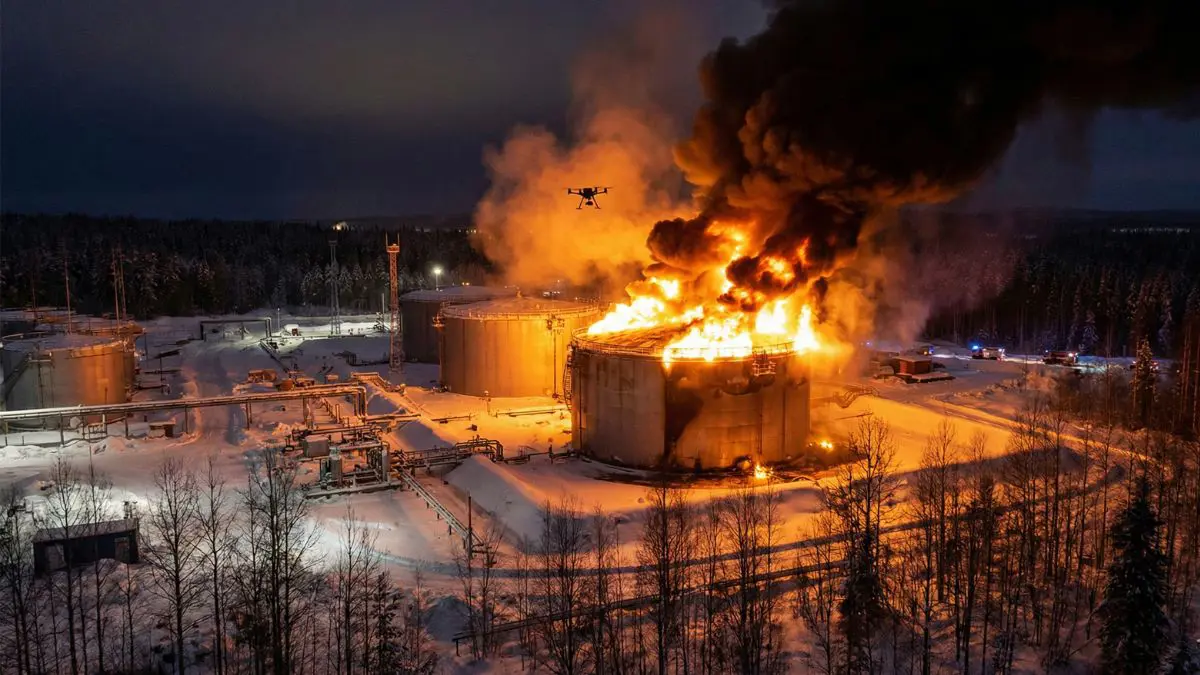
Ukrainian long-range drones struck an oil depot in Russia’s Pskov region overnight, triggering explosions and a fire, according to Ukrainian security officials, in what Kyiv described as part of its campaign to disrupt Russian military logistics.
KYIV, Feb 19, 2026 — Ukrainian drones struck an oil depot in Russia’s northwestern Pskov region overnight, causing explosions and a fire, an official from Ukraine’s Security Service (SBU) told Reuters, as Kyiv intensifies efforts to target fuel and logistics infrastructure deep inside Russian territory.
The SBU official said the strike formed part of a broader strategy aimed at weakening Russia’s ability to sustain military operations by disrupting fuel supplies and transport networks. Russian regional authorities confirmed that a fire broke out at a petroleum storage facility, while emergency crews were dispatched to contain the blaze.
There were no immediate reports of casualties.
Part of wider infrastructure campaign
The incident underscores Ukraine’s growing capability to conduct long-range drone operations far from the front lines. Kyiv has increasingly targeted energy and transport assets in recent months, arguing that such strikes reduce Moscow’s operational capacity and force it to divert air-defense resources.
Russian officials said air-defense systems were active overnight in several regions as they attempted to intercept incoming drones, reflecting the continuing escalation of cross-border aerial attacks.
Strategic implications
Analysts say repeated strikes on fuel depots and refineries could place additional strain on regional supply chains, even when physical damage is limited, by disrupting storage, transport, and insurance logistics. The attacks also highlight the expanding role of domestically produced long-range drones in Ukraine’s military strategy.
Why this matters
Targeting fuel infrastructure deep inside Russian territory signals a shift toward sustained pressure on logistics rather than purely battlefield gains. Such strikes can raise operational costs, disrupt regional supply chains, and compel Moscow to redeploy air-defense assets away from front-line areas.
For global markets, continued attacks on energy infrastructure also reinforce geopolitical risk premiums, particularly in oil and shipping, even when supply disruptions remain localized.
FAQs
Q1: Where did the strike occur?
At an oil depot in Russia’s Pskov region in the country’s northwest.
Q2: Who claimed responsibility?
An official from Ukraine’s Security Service (SBU) said Ukrainian drones carried out the strike.
Q3: Were there casualties?
No immediate casualties were reported by authorities.
Q4: Why are such targets significant?
Fuel infrastructure is critical for military mobility and logistics, making it a strategic focus in long-range drone operations.