The 2026 Power Paradox: Can India’s Grid Sustain the Physical AI Revolution?
By Axel Miller | 07 Jan 2026
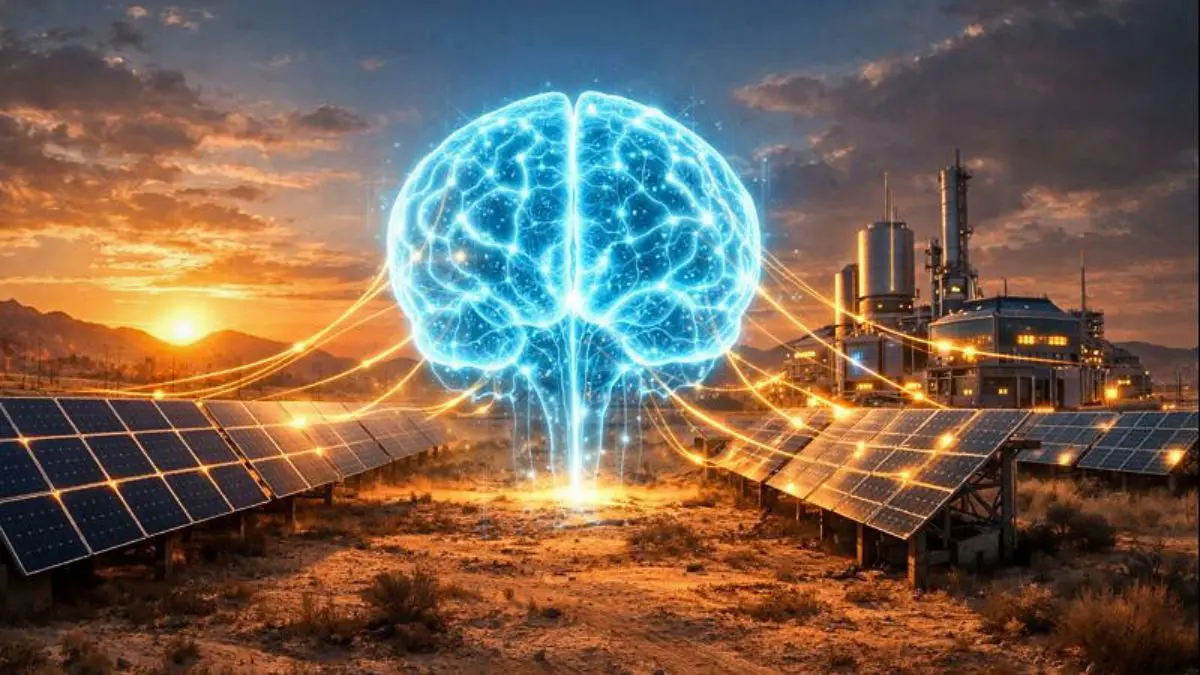
As India pivots from “AI Hype” to the heavy-lifting of “Physical AI,” the industry is hitting a brutal reality: intelligence requires immense amounts of power. While the digital economy thrived on bits, the physical economy—now populated by autonomous robots, massive EV fleets, and high-precision smart factories—demands gigawatts.
The epicenter of this energy-industrial complex shifted to Nellore, Andhra Pradesh, this week. Tata Power Renewable Energy’s (TPREL) ₹6,675 crore investment in a 10 GW solar ingot and wafer manufacturing facility is no longer just a “green energy” story. It is the architectural foundation of India’s semiconductor and AI ambitions. For the first time, we are seeing the vertical integration of the “AI Stomach”—the hardware that harvests the sun to feed the chips that drive the robots.
Beyond the Data Center
The 2026 landscape has fundamentally changed. Previous outlooks focused almost exclusively on “Hyperscale” data centers—centralized brains in the cloud. Today, the demand is decentralized. Every “Physical AI” node—from the 2.26 million BYD EVs now dominating global roads to the smart grids managing urban clusters—acts as a localized, persistent drain on the system. India’s electricity demand is projected to hit 817 TWh by 2030, with a staggering one-fifth of that incremental growth driven purely by AI workloads.
“We are moving from a world of ‘Plug-and-Play’ to ‘Build-to-Power’,” notes an industry analyst tracking the Nellore development. “You cannot deploy a fleet of autonomous delivery bots or a 2035-spec space station roadmap without a sovereign supply chain for the energy hardware itself.”
The Storage Inflection Point
But solar panels alone are insufficient for the “always-on” requirements of industrial automation. 2026 marks the “Year of the Battery.” India’s energy storage installations are set for a transformative breakout, with capacity additions expected to surge nearly ten-fold this year to 5 GWh. This shift from mere tendering to ground-level execution is what allows the industry to finally solve the intermittency of renewables.
Tata’s Nellore site will include its own 200 MW captive green power plant, effectively creating a self-sustaining industrial island—a template for the “Micro-Grid” future. The paradox remains: to make the world “smarter” and more efficient through AI, we must first build the most power-hungry infrastructure in human history. The Tata Power project in Nellore suggests that India isn’t just participating in this race—it’s building the gas station for the entire revolution.
Summary
The transition to “Physical AI” in 2026 has triggered a massive infrastructure surge, exemplified by Tata Power’s ₹6,675 crore solar manufacturing plant in Nellore. As AI moves from the cloud to hardware, India faces a “Power Paradox”—the need for massive energy generation to support a more efficient, automated economy. With storage capacity expected to hit 5 GWh this year, the focus has shifted from mere generation to “energy sovereignty” and grid stability.
Frequently Asked Questions (FAQs)
Q1: What is the Tata Power Nellore project?
It is a ₹6,675 crore facility in Andhra Pradesh designed to manufacture 10 GW of solar ingots and wafers, critical for solar cells and semiconductor applications.
Q2: How much power will AI consume in India by 2030?
Estimates suggest AI-related workloads could account for 50 TWh per year, representing about 20% of India’s incremental power demand growth.
Q3: Why is ‘Physical AI’ driving energy demand?
Unlike software-only AI, Physical AI involves robotics, autonomous vehicles, and smart manufacturing, all of which require constant, decentralized energy sources.
Q4: Is India ready for the energy demands of 2026?
The industry is hitting an “inflection point” in 2026, with a 10x surge in battery storage (5 GWh) and massive solar capacity additions (40 GW) planned for the year.

























