Tencent, Tesla Team Up on WeChat-Linked In-Car Features in China
By Cygnus | 11 Feb 2026
Summary
Chinese tech giant Tencent and electric-vehicle maker Tesla announced a partnership to integrate WeChat-linked features into Tesla vehicles in China. The collaboration aims to enhance navigation and digital services by linking location data between WeChat and Tesla’s in-car interface via over-the-air updates.
BEIJING, Feb 11 — Tesla is deepening its localization efforts in China with a software partnership that connects the country’s most ubiquitous social app, WeChat, to its vehicle navigation and services.
The announcement, made by Tencent Cloud on Wednesday, comes as automakers worldwide seek to embed popular mobile ecosystems more deeply into vehicles — especially in China, where WeChat plays an outsized role in daily life.
Linking WeChat to Navigation and Services
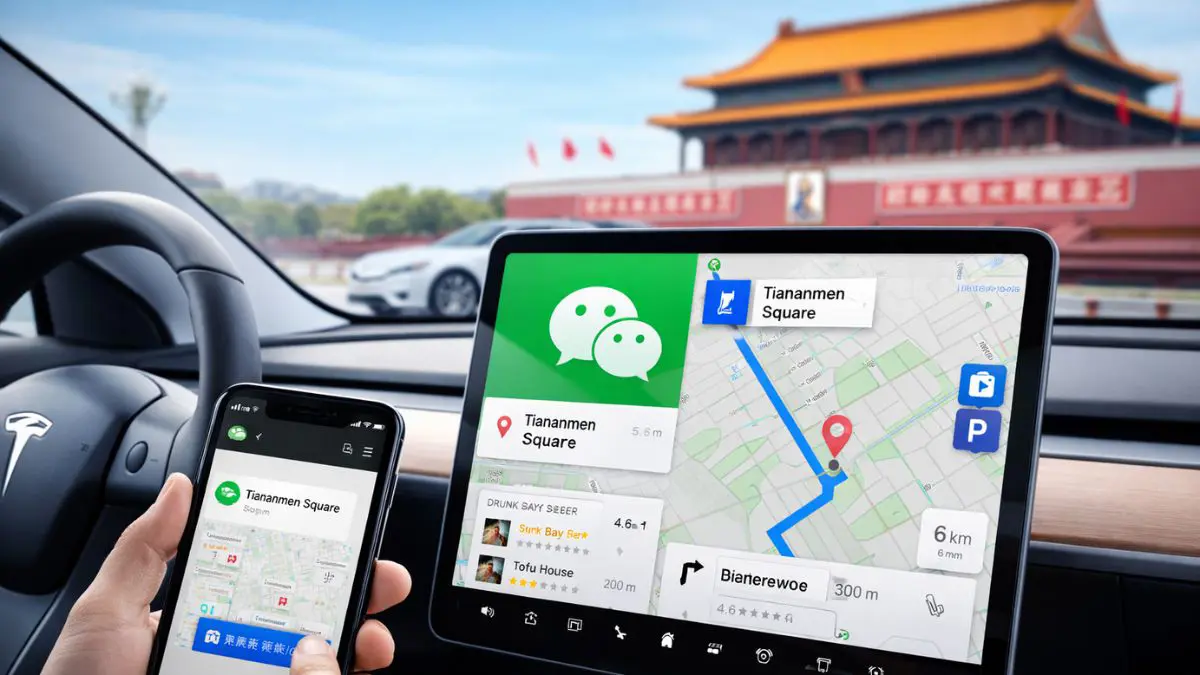
Under the new feature set, Tesla drivers in China can send a location directly from WeChat to their vehicle’s navigation system via a single tap on the phone. The destination then appears immediately on Tesla’s central display without manual re-entry.
The integration also leverages Tencent’s AI capabilities to offer context-aware service suggestions — such as nearby restaurants or parking — based on the driver’s destination.
These features are being deployed through an over-the-air (OTA) software update, and apply to all Teslas produced in China.
Local Software Is Critical in China
The partnership reflects Tesla’s recognition of China’s unique digital ecosystem. In contrast to Western markets where services like Apple Maps or Google Maps dominate, Chinese drivers often rely on WeChat for navigation, payments, and local discovery.
“Consumers in China expect digital experiences in their vehicles that mirror their mobile lives,” a Tencent Cloud spokesperson said.
The move also signals Tesla’s effort to remain competitive with domestic EV brands — such as Huawei and others — which have long emphasized integration between cars and Chinese internet ecosystems.
Rollout Details
- Deployment: Free over-the-air update beginning this week
- Applicable Models: Made-in-China Model 3 and Model Y vehicles
- Functionality: One-tap location transfer from WeChat to navigation, plus Tencent-powered smart service suggestions
- Future Plans: Tencent Cloud said it is exploring additional features, including streamlined voice-to-text routing from WeChat chats
Tesla did not immediately respond to a request for comment on the broader partnership or its global implications.
Why This Matters
- Local digital ecosystems matter: Cars in China are increasingly extensions of consumers’ mobile ecosystems. Integrating WeChat allows Tesla to stay relevant in a market where app interoperability is a competitive advantage.
- Software differentiates EVs: As hardware becomes more standardized, software — particularly localized features — is a key battleground for market share in China’s crowded EV sector.
- Beyond navigation: The partnership hints at deeper potential integration between third-party platforms and vehicle systems, which could reshape how drivers interact with services while on the move.
- Strategic move for Tesla: Leveraging Tencent’s massive user base and AI could help Tesla retain Chinese customers and fend off aggressive ecosystem-based competitors.
FAQs
Q1. What exactly is being integrated between WeChat and Tesla?
Drivers can now send locations directly from WeChat to a Tesla’s navigation system with a single tap, and receive smart recommendations based on destination context.
Q2. Is this update available worldwide?
No — the rollout is currently limited to Made-in-China Tesla Model 3 and Model Y vehicles.
Q3. How is the feature delivered?
The new capabilities are being sent as a free over-the-air (OTA) software update.
Q4. Will this allow reading WeChat messages in the car?
Not yet. The initial focus is on navigation and smart service suggestions. Tencent Cloud said voice-to-text options are under consideration for future updates.
Q5. Why does China need separate integration compared with the U.S. or Europe?
China’s digital ecosystem is dominated by apps like WeChat and Baidu, which are central to daily life in ways that differ from Western markets. Local integration better meets user expectations.

























