PM Modi Launches Maruti Suzuki’s First Electric Vehicle, e-Vitara, in Gujarat
By Axel Miller | 26 Aug 2025
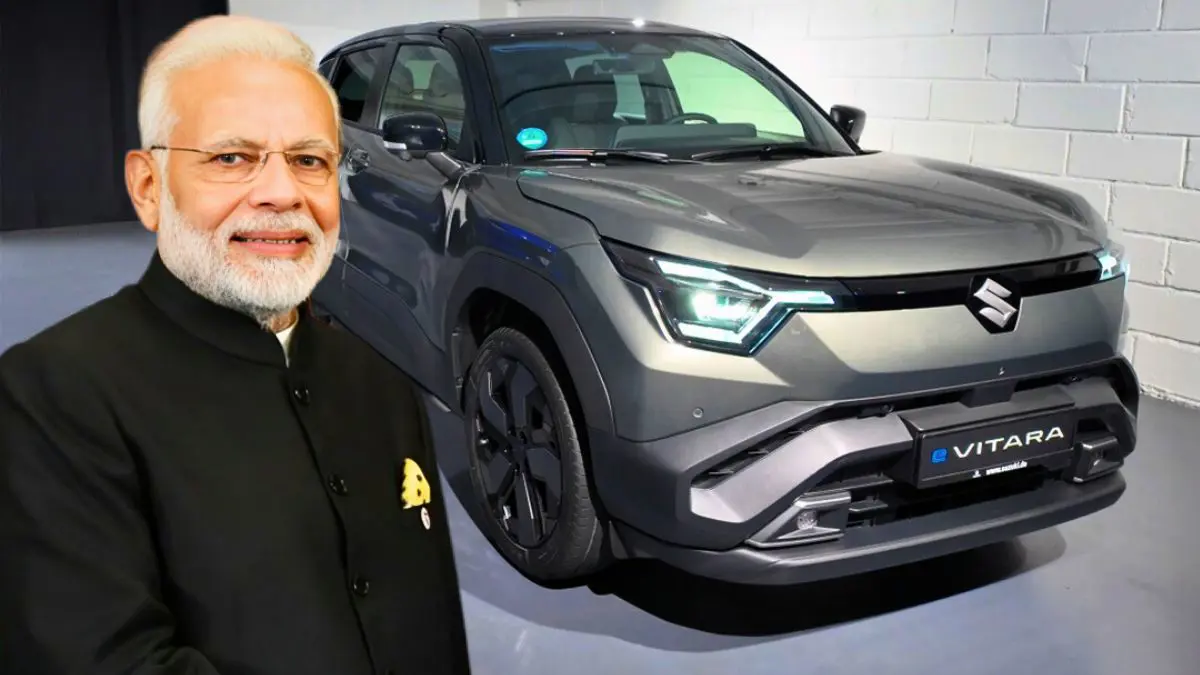
Gandhinagar, Gujarat – Prime Minister Narendra Modi on Tuesday flagged off Maruti Suzuki’s e-Vitara, the company’s first global strategic electric vehicle, from its Hansalpur plant in Gujarat. During his visit, he also inaugurated the next phase of a facility to produce hybrid battery electrodes, marking a significant step in India’s green mobility push. Gujarat Chief Minister Bhupendra Patel also attended the event.
Describing Maruti Suzuki as the face of the Make in India initiative, PM Modi highlighted the company’s new project as a major leap forward. “On the occasion of Ganesh Utsav, a new chapter is being added to the Make in India journey. ‘Make in India, Make for the World’ is a big leap. From today, electric vehicles made in Bharat will be exported to over 100 countries,” he said.
He further emphasized the global confidence in Indian manufacturing, noting that exporting India-made cars to Japan reflects the trust international companies place in the country. In a post on X (formerly Twitter), PM Modi described the day as “special in India’s journey toward self-reliance and becoming a hub for green mobility.”
The e-Vitara is set to be a global product, with plans to export it to over 100 countries, including key markets in Europe and Japan. This step establishes India as Suzuki’s global manufacturing hub for electric vehicles and enhances the country’s presence in the EV sector.
Alongside the e-Vitara launch, the Prime Minister inaugurated the local production of hybrid battery electrodes at the TDSG (Toshiba Denso Suzuki Gujarat) Lithium-Ion Battery plant. “We all know that the most critical part of the EV ecosystem is the battery," he stated. "Until a few years ago, batteries were entirely imported. Strengthening EV manufacturing required India to start producing batteries locally. “With this vision, we established the foundation of the TDSG battery plant here in 2017.”
According to a government release, more than 80% of the battery value will now be produced within India, underlining the country’s growing self-sufficiency in the EV supply chain. These developments reinforce India’s emergence as a green mobility hub while advancing the goals of Make in India and Aatmanirbhar Bharat.
Summary:
Maruti Suzuki’s e-Vitara launch and the expansion of local battery production mark a significant milestone for India’s EV ambitions. With exports aimed at over 100 countries and a robust domestic battery supply chain, India is set to emerge as a global hub for electric vehicle manufacturing.
FAQs: PM Modi Launches Maruti Suzuki’s e-Vitara in Gujarat
1. What is the e-Vitara?
The e-Vitara is Maruti Suzuki’s first global strategic Battery Electric Vehicle (BEV). It is designed for both domestic and international markets, including Europe and Japan.
2. Where was the e-Vitara launched?
The e-Vitara was flagged off by Prime Minister Narendra Modi at Maruti Suzuki’s Hansalpur plant in Gujarat.
3. Who attended the launch event?
The event was attended by Prime Minister Narendra Modi and Gujarat Chief Minister Bhupendra Patel.
4. What is the significance of the e-Vitara for India?
The e-Vitara marks India’s entry into global EV manufacturing. With exports planned to over 100 countries, it positions India as a key hub for electric vehicle production and strengthens the Make in India initiative.
5. What role does the TDSG battery plant play?
The TDSG (Toshiba Denso Suzuki Gujarat) Lithium-Ion Battery plant produces hybrid battery electrodes locally, reducing India’s dependency on imports and supporting the domestic EV supply chain.
6. How much of the battery value is produced in India?
Over 80% of the battery value is now manufactured within India, highlighting progress toward self-reliance in EV technology.
7. Why is local battery production important for EVs?
Batteries are the most critical component of electric vehicles. Local production strengthens India’s EV manufacturing ecosystem, reduces costs, and ensures supply chain security.
8. How does this launch support Make in India and Aatmanirbhar Bharat?
By producing EVs and critical battery components domestically, India is boosting local manufacturing, promoting self-reliance, and enhancing its position in the global green mobility market.
9. Which countries will receive India-made e-Vitaras?
The e-Vitara will be exported to more than 100 countries, including advanced markets such as Europe and Japan.
10. What does this development mean for India’s EV industry?
The e-Vitara launch and local battery production signal a major step in establishing India as a global hub for electric vehicles, advancing technological capability, and attracting international confidence in Indian manufacturing.

























