Makino India Pivots to Aerospace and Chips as It Marks 30 Years of Precision Manufacturing
By Axel Miller | 11 Dec 2025
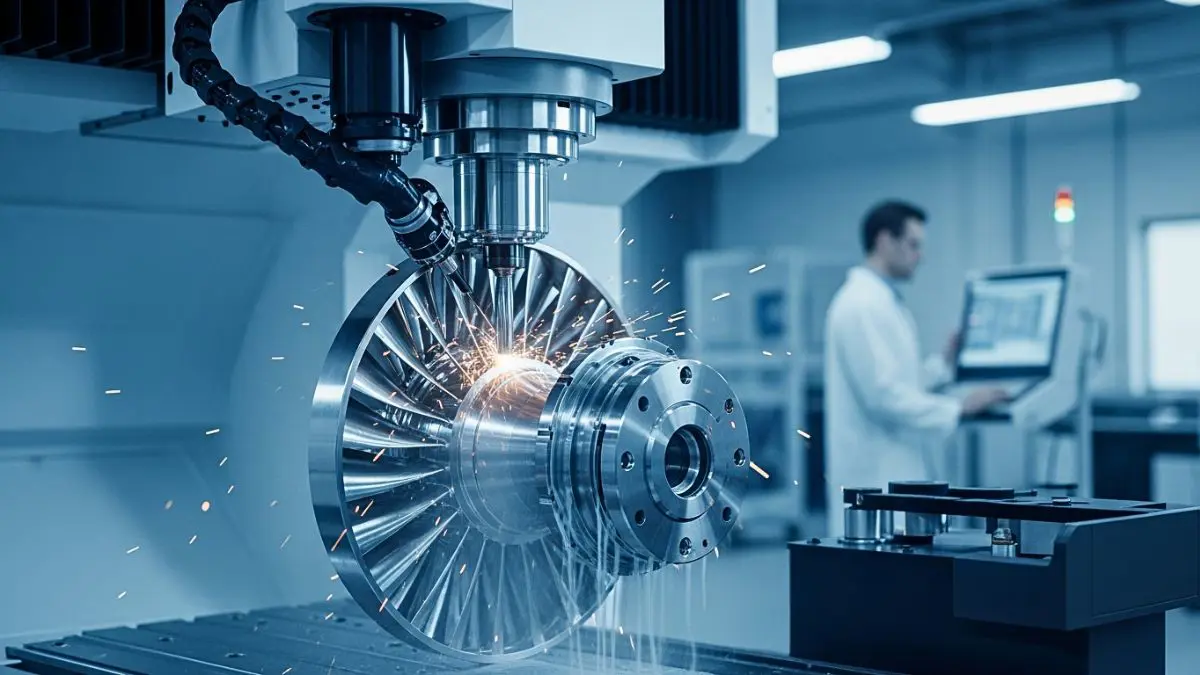
As India’s industrial landscape shifts from mass production to high-value engineering, Makino India is positioning itself as a critical enabler for the country’s next-generation sectors. Entering its 30th year of operations, the Japanese machine-tool major is pivoting its strategy to capture surging demand from the electric vehicle (EV), aerospace, and semiconductor industries.
The company, which now generates approximately $110 million in annual revenue with a robust 15% growth rate, has installed over 8,000 machines nationwide. However, its leadership signals a distinct evolution: moving beyond being a hardware supplier to becoming a turnkey partner for “Industry 4.0” automation and digital machining.
Beyond automotive
Currently, the automotive and EV sectors account for roughly 60% of Makino India’s order book. Yet, the momentum is clearly shifting toward higher-precision verticals.
Aerospace demand is accelerating as global OEMs expand their supply chains into India. Similarly, the government’s push for a domestic semiconductor ecosystem has created a niche but critical market for ultra-high-precision tooling—a domain where Makino’s five-axis and wire EDM (Electrical Discharge Machining) systems are industry standards.
“The baseline requirements have changed,” said an industry analyst covering the capital goods sector. “Five-axis capability, micron-level surface accuracy, and full traceability are no longer premium features—they are prerequisites for suppliers entering the global aerospace and chip supply chains.”
Automation and localization
To support this transition, Makino India is deepening its investments in its Whitefield campus in Bengaluru and its facility in Coimbatore. Both sites now feature advanced engineering labs dedicated to designing factory automation layouts and software-driven workflows.
Strategic localization has also been a key focus. Domestic value addition has risen from 15% in the company’s early years to nearly 50% today, insulating Indian clients from global supply chain volatility while integrating the local subsidiary more deeply into Makino’s global network.
Talent as a strategic asset
Recognizing that advanced hardware requires advanced skills, Makino has doubled down on workforce development. Its Technical Training Centre (MTTC) has already trained over 1,000 youth from rural backgrounds in high-end machining, creating a pipeline of “industry-ready” talent.
With a current headcount of 270 and plans to expand over the next three years, the company aims to bridge the skills gap that often bottlenecks high-tech manufacturing in India.
Brief Summary
Celebrating 30 years in the market, Makino India is transitioning from a traditional machine-tool supplier to a high-tech engineering partner for the EV, aerospace, and semiconductor sectors. With revenue growing at 15% annually and localization levels hitting 50%, the company is focusing on automation and talent development to support India’s shift toward precision manufacturing.
Frequently Asked Questions (FAQs)
Q1: What is Makino India’s new strategic focus?
While automotive remains its largest segment (60%), Makino is aggressively expanding into high-precision sectors like aerospace, semiconductors, medical devices, and electronics, where micron-level accuracy is essential.
Q2: Why is this shift important for India?
As India positions itself as a global manufacturing hub (“China+1”), its factories must meet stricter quality standards. Makino’s shift reflects the broader industrial move from low-cost assembly to high-value, precision-led engineering.
Q3: What technologies is Makino deploying?
The company is pushing “Industry 4.0” solutions, including 5-axis machining centers, high-speed Wire EDM systems, and fully automated, software-integrated production lines that reduce human error and increase throughput.
Q4: How high is the localization level?
Makino India has increased its localization (domestic value addition) to nearly 50%, up from 15% initially. This helps reduce lead times for Indian customers and lowers costs compared to fully imported machinery.
Q5: What is the MTTC?
The Makino Technical Training Centre (MTTC) is a CSR initiative that trains rural youth in advanced CNC machining and engineering skills, addressing the critical shortage of skilled labor in India’s high-tech manufacturing sector.

























