Hyundai Union Flags ‘Employment Shock’ Over Atlas Humanoid Robot Rollout
By Cygnus | 22 Jan 2026
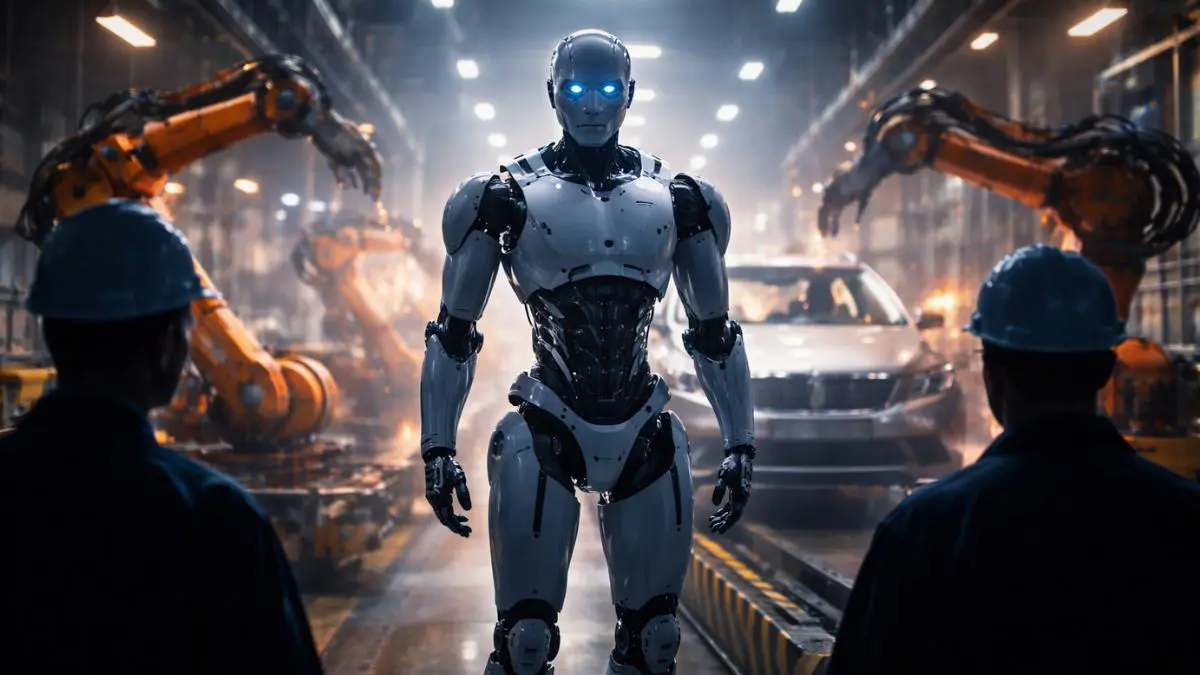
Hyundai Motor’s labour union in South Korea has warned the automaker against deploying humanoid robots on production lines without union consent, escalating tensions over job security as Hyundai accelerates its push into “physical AI” and factory automation.
In an internal bulletin issued Thursday, the union said “not a single robot using new technology will be allowed to enter the workplace” without a formal labour–management agreement, describing the rollout of humanoid robots as an “employment shock.”
The warning follows Hyundai Motor Group’s high-profile unveiling of the production version of Boston Dynamics’ fully electric Atlas humanoid robot at CES 2026 in Las Vegas earlier this month — a move that has boosted investor optimism about Hyundai’s longer-term transformation beyond traditional auto manufacturing.
Union: economics favour robots, workers face displacement risk
The union framed its opposition around cost structure, arguing that round-the-clock factory staffing requires multiple workers across shifts, while humanoid robots would entail significantly lower ongoing expenses after initial deployment.
Union leaders cited internal estimates suggesting annual staffing costs for 24-hour operations can far exceed expected robot maintenance costs, warning that the economic incentive could push the company toward labour substitution rather than augmentation.
Hyundai has not issued a formal response to the union’s latest bulletin.
Hyundai roadmap: U.S. robot factory, Georgia pilot deployment
Hyundai Motor Group has outlined a roadmap for scaling humanoid robotics through Boston Dynamics, including:
- Robot manufacturing facility: A dedicated production hub in the United States targeted for 2028, designed to support output of around 30,000 humanoid robots per year.
- Initial deployment: A pilot rollout expected to begin at Hyundai’s Georgia manufacturing site in 2028, before broader expansion across group facilities.
- Industrial use cases: Material handling, part sequencing, logistics workflows, and inspection-related tasks inside manufacturing environments.
Hyundai has said Atlas is being designed for industrial settings, focusing on safe integration into existing facilities and predictable performance in repetitive or physically demanding tasks.
Georgia expansion adds to domestic labour anxiety
The robot dispute is unfolding alongside union concerns over production shifting overseas.
Hyundai’s labour groups argue that domestic output constraints at key South Korean plants reflect volume being redirected to Hyundai Motor Group Metaplant America (HMGMA) in Georgia — a major facility that began operations in 2025.
Hyundai has confirmed plans to expand HMGMA’s annual production capacity from 300,000 vehicles to 500,000 units by 2028, intensifying fears that automation and overseas capacity growth could erode long-term job security at home.
Why This Matters
- Humanoid robots are moving from demos to real production plans — and labour resistance is rising
- The biggest battle isn’t technology — it’s who captures productivity gains
- Hyundai’s U.S. expansion adds a second layer of domestic tension: jobs + capacity transfer
Summary
Hyundai Motor’s union has warned that humanoid robots will not be allowed on production floors without labour-management approval, calling the shift an “employment shock.” The dispute follows Hyundai’s CES 2026 unveiling of Boston Dynamics’ production Atlas robot and its roadmap to deploy humanoid robots starting in 2028, initially at its Georgia factory. The standoff highlights growing job-security conflict as Hyundai expands U.S. capacity and accelerates automation plans.
FAQs
Q1: What did Hyundai’s union say today?
The union warned that no new-technology robot would be allowed into workplaces without labour–management agreement, citing job risk.
Q2: What is Atlas?
Atlas is Boston Dynamics’ fully electric humanoid robot designed for industrial applications, unveiled in production form at CES 2026.
Q3: When does Hyundai plan to deploy Atlas in factories?
Hyundai’s roadmap indicates initial deployment is targeted from 2028, starting at its Georgia operations.
Q4: Is Hyundai building a robot manufacturing plant?
Yes. Hyundai has outlined plans for a U.S.-based robotics production facility by 2028, aiming for output around 30,000 units per year.
Q5: Why is the Georgia plant linked to union concerns?
Because Hyundai plans to expand its U.S. production capacity significantly by 2028, raising fears of capacity shift away from South Korea.

























