Europe’s aviation faces dual pressure as fuel constraints and airspace risks mount
By Axel Miller | 14 Apr 2026
Summary
- Airlines for Europe (A4E) has warned of severe operational strain, though claims of a “systemic collapse” in fuel availability remain unverified and overstated.
- Airspace restrictions and conflict-zone rerouting are increasing flight times and costs, but figures like $80,000 per flight vary widely depending on route and aircraft type.
- The industry is pushing for policy relief, including flexibility under the EU Emissions Trading System (EU ETS) and coordinated fuel strategies.
BRUSSELS, April 14, 2026 — Europe’s aviation sector is grappling with a combination of fuel supply tightness and airspace disruptions, prompting airlines to seek coordinated action from policymakers as geopolitical tensions ripple through global energy and transport networks.
Fuel supply concerns, not collapse
Europe relies significantly on imported refined fuels, including jet fuel, but there is no confirmed data that 40% of kerosene imports have been cut off due to any single chokepoint.
That said, supply chains remain vulnerable to disruptions in the Middle East, and industry groups including Airlines for Europe and Airports Council International Europe have called for closer monitoring of fuel inventories across major hubs.
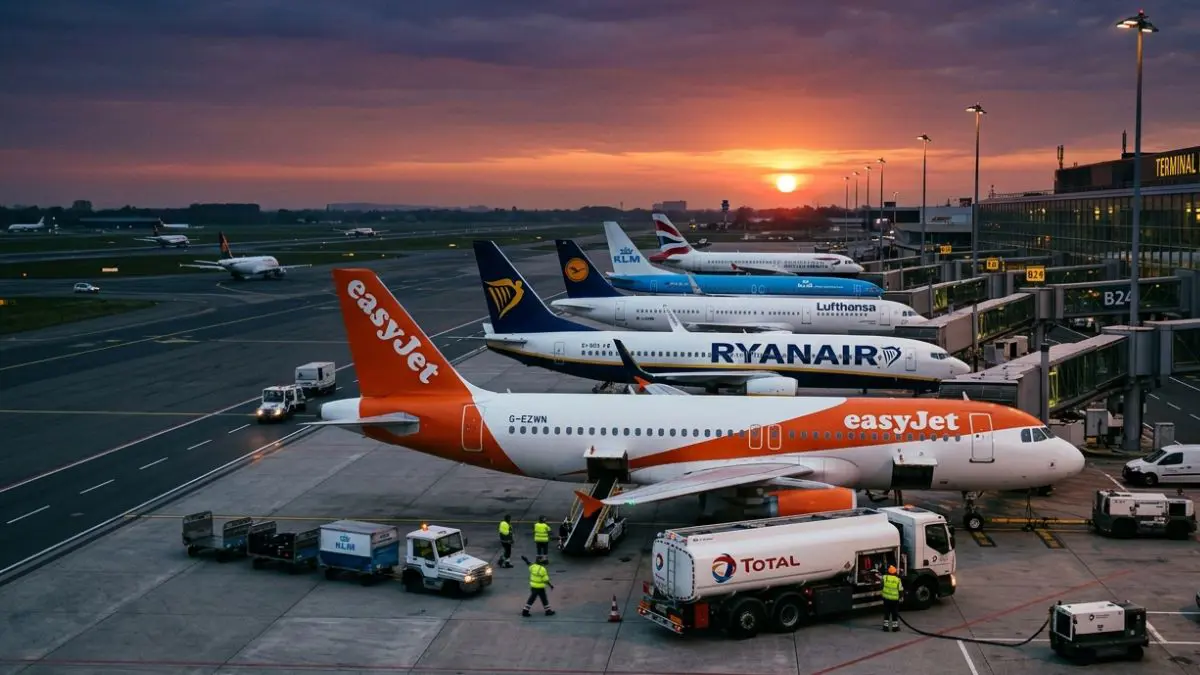
Airports such as Frankfurt Airport, Amsterdam Airport Schiphol, and Heathrow Airport continue to operate normally, though logistics costs and procurement complexity have increased.
Rerouting adds cost and complexity
Airspace advisories from European Union Aviation Safety Agency and other regulators have led airlines to avoid certain high-risk zones, particularly in parts of the Middle East.
As a result:
- Some long-haul routes are taking longer alternative paths
- Fuel burn and crew costs have increased
- Scheduling complexity has risen across networks
While additional costs per flight can be significant, they vary widely and are not uniform across the industry.
Carbon costs under scrutiny
The rerouting effect has also increased emissions, raising concerns about higher compliance costs under the EU Emissions Trading System (EU ETS).
Airlines are lobbying for temporary flexibility in carbon accounting, arguing that:
- Emissions increases are operationally unavoidable
- Penalizing airlines during geopolitical crises may distort competitiveness
However, no official EU decision has been announced regarding suspension or modification of ETS rules.
Calls for coordinated fuel strategy
Industry stakeholders have suggested exploring joint procurement mechanisms or coordinated fuel purchasing frameworks, similar in concept to EU energy cooperation models.
While still at a discussion stage, such proposals aim to:
- Reduce price volatility
- Strengthen bargaining power with global suppliers
- Improve supply visibility across member states
Why this matters
- Operational pressure: Airlines are facing higher costs from both fuel and rerouting, impacting profitability.
- Passenger impact: Ticket prices may rise as airlines pass on increased operating expenses.
- Policy tension: Balancing climate commitments with crisis response is becoming more complex for regulators.
FAQs
Q1. Is Europe running out of jet fuel?
No. There is no confirmed shortage, but supply chains are under pressure, leading to higher costs and tighter logistics.
Q2. Are flights being cancelled due to fuel issues?
At present, widespread cancellations have not been reported, though airlines are adjusting schedules and routes.
Q3. Why are flights taking longer?
Airlines are avoiding certain airspaces for safety reasons, resulting in longer flight paths and higher fuel consumption.