Amazon–Globalstar deal claims remain unverified amid satellite connectivity race
By Cygnus | 14 Apr 2026
Summary
Reports claiming that Amazon is acquiring Globalstar for $11.57 billion and forming a satellite partnership with Apple are not supported by any confirmed announcements as of April 2026. While Amazon continues to develop its Project Kuiper constellation and Globalstar powers Apple’s existing Emergency SOS feature, there is no verified evidence of an “Amazon Leo” network, acquisition deal, or Apple–Amazon satellite collaboration. However, the broader industry shift toward direct-to-device satellite connectivity remains real and highly competitive.
NEW YORK, April 14, 2026 — Claims of a multibillion-dollar acquisition of Globalstar by Amazon, along with a strategic satellite partnership involving Apple, appear to be speculative and unverified based on currently available public information.
No confirmed acquisition or “Amazon Leo” network
There has been no official confirmation from Amazon or Globalstar regarding a $11.57 billion acquisition, any rebranding of Project Kuiper into “Amazon Leo,” or the integration of Globalstar’s satellite assets into Amazon’s network. Amazon’s Kuiper initiative remains in its early deployment phase, with a limited number of satellites launched and commercial services expected to scale gradually over the coming years.
Apple–Globalstar relationship remains unchanged
Apple continues to rely on Globalstar’s satellite infrastructure for its Emergency SOS via satellite feature on iPhones. There is no confirmed partnership between Apple and Amazon for satellite-based services, nor any verified roadmap linking future iPhone models to Amazon’s satellite network. Apple is expected to expand its satellite capabilities over time, but its current ecosystem remains anchored to Globalstar and telecom partnerships.
Direct-to-device satellite connectivity gains momentum
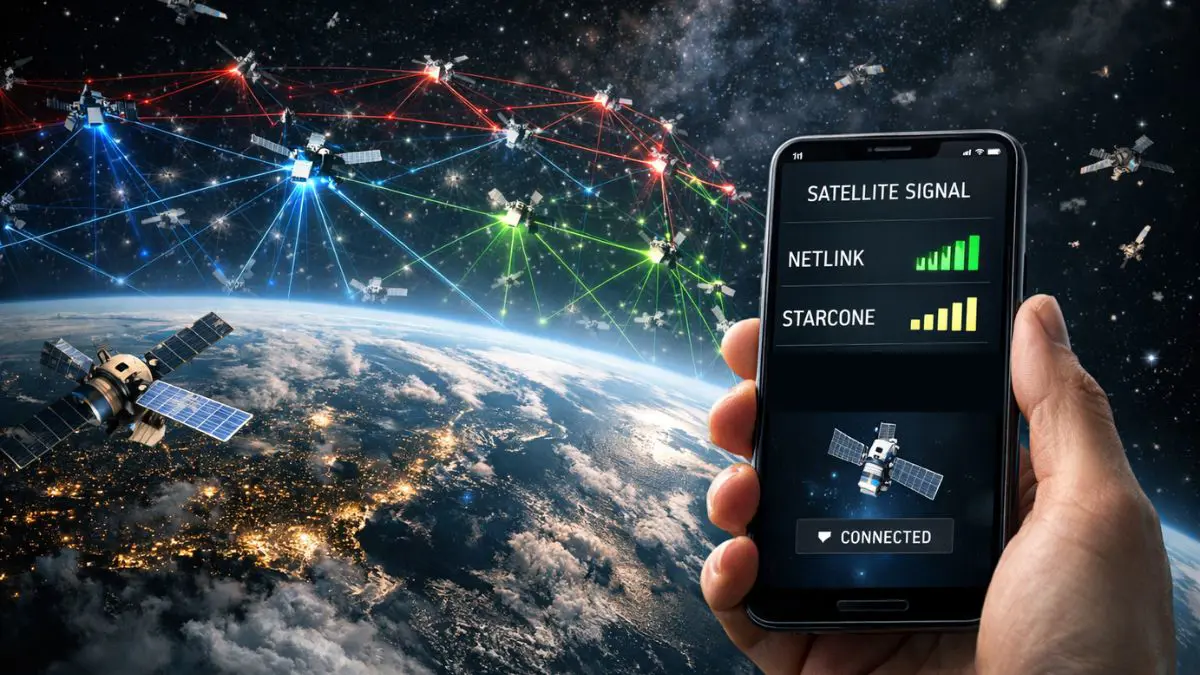
Although the specific deal is unverified, the broader industry trend toward direct-to-device (D2D) satellite connectivity is accelerating. SpaceX continues to expand Starlink’s direct-to-cell services through telecom partnerships, while Amazon is scaling Project Kuiper for broadband and potential mobility applications. Meanwhile, companies like Globalstar are enabling emergency messaging and low-bandwidth satellite communication. The long-term goal across the industry is to eliminate “no signal” zones by enabling seamless satellite-to-smartphone connectivity for emergency services, remote access, and maritime and aviation use cases.
Why this matters
- Reality check: The reported deal highlights growing interest in satellite connectivity but lacks factual backing.
- Competitive race: Tech giants and space firms are intensifying efforts to challenge Starlink’s early lead.
- Future connectivity: Direct satellite links to smartphones are becoming a key battleground for global telecom infrastructure.
FAQs
Q1. Is Amazon acquiring Globalstar?
No confirmed announcement supports this claim as of now.
Q2. Will iPhones use Amazon’s satellite network?
There is no verified partnership between Amazon and Apple for satellite services.
Q3. Who leads the satellite internet market currently?
SpaceX (Starlink) remains the dominant player with the largest operational constellation.

























