Stealth and speed: Indian Navy’s NGMV fleet to adopt waterjet propulsion technology
By Axel Miller | 14 Apr 2026
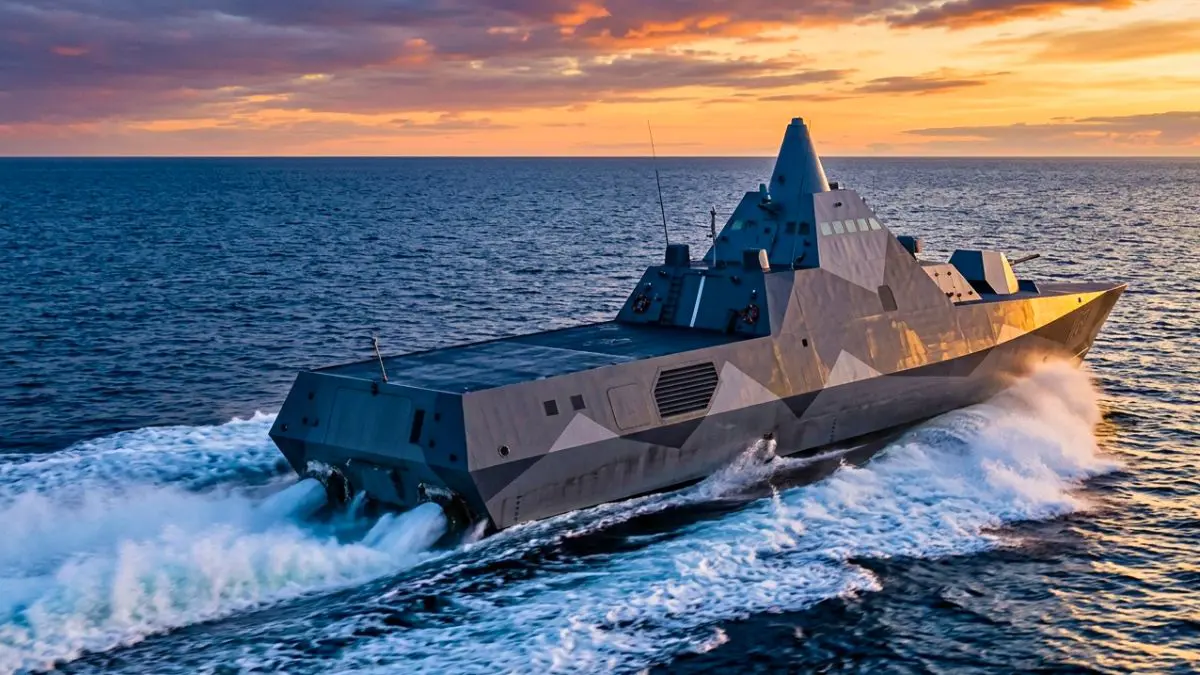
Summary
- Cochin Shipyard Limited has partnered with Kongsberg Maritime to supply waterjet propulsion systems for the Indian Navy’s Next-Generation Missile Vessel (NGMV) program.
- Advanced waterjets are expected to enhance speed, maneuverability, and shallow-water operations, compared to conventional propeller systems.
- The NGMV program is part of India’s broader push to strengthen coastal and littoral combat capabilities with fast, missile-equipped vessels.
NEW DELHI, April 14, 2026 — The Indian Navy is advancing its next-generation coastal combat strategy with the adoption of waterjet propulsion systems for its upcoming Next-Generation Missile Vessels (NGMVs), marking a shift toward higher speed and improved operational flexibility.
Shift toward high-speed propulsion
Under the NGMV program, vessels are being constructed by Cochin Shipyard Limited, with propulsion technology supplied by Kongsberg Maritime.
Waterjet propulsion differs from traditional propellers by:
- Drawing water into an internal intake system
- Expelling it at high velocity through steerable nozzles
- Eliminating exposed rotating blades
This configuration is widely used in fast patrol craft and is known for enabling high-speed performance and superior maneuverability, particularly in constrained maritime environments.
Operational advantages in littoral zones
The adoption of waterjets is expected to enhance the NGMVs’ ability to operate in:
- Shallow coastal waters and estuaries
- Congested maritime zones
- High-speed interception scenarios
Compared to propeller-driven systems, waterjets typically offer:
- Reduced risk of damage from underwater obstacles
- Improved handling at high speeds
- Lower draft requirements
These features align with the Navy’s focus on littoral warfare, where agility and rapid response are critical.
Stealth and survivability considerations
Waterjet systems can also contribute to reduced acoustic signatures, particularly by minimizing cavitation noise commonly associated with propellers.
While not rendering vessels “invisible,” this reduction can:
- Lower detectability by sonar systems
- Enhance survivability in contested environments
- Support tactical approaches in anti-ship operations
The NGMVs are expected to be equipped with modern weapon systems, including anti-ship missiles and air defence capabilities, though exact configurations may evolve as the program progresses.
Why this matters
- Coastal security: Faster, more agile vessels strengthen India’s ability to secure its Exclusive Economic Zone (EEZ).
- Technology upgrade: Adoption of advanced propulsion reflects a broader modernization trend in naval platforms.
- Strategic mobility: Improved speed and maneuverability enhance rapid deployment across key maritime regions.
FAQs
Q1. What is waterjet propulsion in ships?
It is a system that propels a vessel by expelling high-speed water jets instead of using external propellers, improving speed and maneuverability.
Q2. Are waterjets better than propellers?
They are advantageous for high-speed and shallow-water operations, though propellers remain more efficient for large, long-range vessels.
Q3. Who is building the NGMV ships?
The vessels are being built in India by Cochin Shipyard Limited, with international technology collaboration.

























