Egypt Boosts Gulf of Suez Output With New Well as Energy Investments Accelerate
By Cygnus | 21 Jan 2026
Egypt Boosts Gulf of Suez Output With New Well as Energy Investments Accelerate
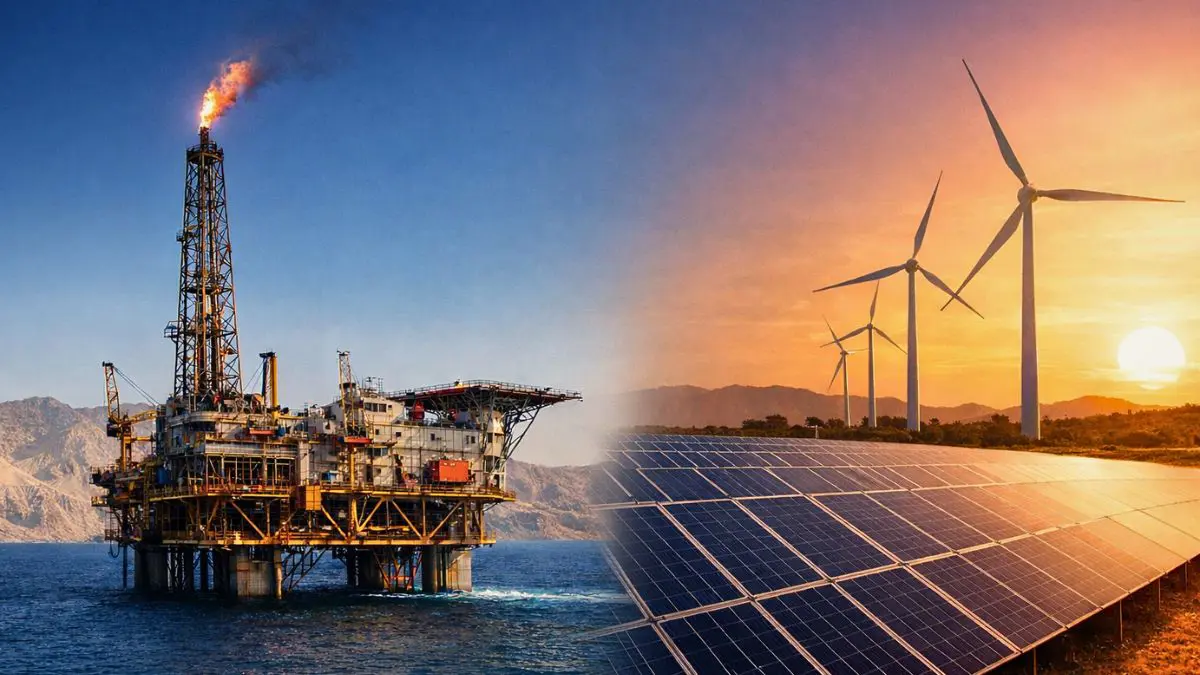
Egypt has advanced its upstream recovery efforts with production starting at the Al-Wasl-4 development well in the North Safa field, lifting crude output in the Gulf of Suez basin as investment momentum builds across the energy sector.
The well is operated by the Gulf of Suez Petroleum Company (GUPCO), a joint venture between Egypt’s state petroleum sector and Dragon Oil, which is owned by Dubai’s ENOC.
As of Wednesday, Al-Wasl-4 is producing around 2,250 barrels per day (bbl/d) of crude and 1.3 million cubic feet per day (mmcf/d) of natural gas, according to the Ministry of Petroleum and Mineral Resources. The start-up has raised GUPCO’s total crude output to approximately 65,000 bbl/d.
The ministry described the well as a key element of GUPCO’s 2026 drilling programme, aimed at stabilising domestic supply amid global energy price volatility.
North Safa expansion gathers pace
The North Safa field, which achieved first production in 2024, is now entering an integrated development phase. Current infrastructure work includes a new offshore production platform and a water-injection programme across three wells designed to maintain reservoir pressure and sustain output from the mature offshore basin.
Officials say these measures are central to Egypt’s strategy of maximising recovery from established fields in the Gulf of Suez.
Regional investment wave continues
The production boost follows a series of upstream agreements signed in late 2025.
In December, PICO Cheiron Group committed to an investment plan exceeding $30 million for the East Gemsa offshore area, including a $1 million signature bonus, as part of a wider drilling campaign.
Meanwhile, Egypt’s Western Desert remains a major growth driver. Through its joint venture Khalda Petroleum, Apache Corporation recently confirmed a gas discovery at the Gomana-1 well, with an estimated potential of 36 mmcf/d.
Separately, the petroleum ministry said on January 16 that a broader drilling campaign involving Khalda and state-owned GPC added a combined 4,300 bbl/d of crude and 47 mmcf/d of gas to national production.
A hybrid energy future
While hydrocarbons continue to underpin near-term supply security, Egypt is also expanding its renewable energy footprint.
On January 14, 2026, Norway-based Scatec signed a long-term power purchase agreement (PPA) for a 1.95 GW solar-plus-storage project. The country is also advancing plans for a 5 GW Sohag wind farm, which remains in pre-development.
Together, these initiatives support Egypt’s target of sourcing 42% of its electricity generation capacity from renewables by 2030.
Summary
Egypt has started production at the Al-Wasl-4 well in the North Safa field, adding 2,250 bbl/d of crude and 1.3 mmcf/d of gas, lifting GUPCO’s output to about 65,000 bbl/d. The start-up comes amid a wider wave of upstream investments and new discoveries, even as Egypt scales up renewable projects including a 1.95 GW solar-plus-storage facility developed with Scatec.
FAQs
Q1: Who operates the North Safa field?
GUPCO, a joint venture between Egypt’s state petroleum sector and Dragon Oil (owned by Dubai’s ENOC).
Q2: What is the output from the Al-Wasl-4 well?
Around 2,250 bbl/d of crude and 1.3 mmcf/d of natural gas.
Q3: What is the latest Western Desert discovery?
The Gomana-1 well under Khalda Petroleum, with an estimated potential of 36 mmcf/d of gas.
Q4: What is the East Gemsa agreement?
A December 2025 investment deal with PICO Cheiron Group involving more than $30 million, including a $1 million signature bonus, to drill new offshore wells.
Q5: What is the status of Egypt’s renewable push?
Egypt signed a 1.95 GW solar-plus-storage PPA with Scatec in January 2026 and is planning a 5 GW Sohag wind project, as part of its 2030 renewable electricity target.