ABB to build 100 MVA shore-based power system for Port of Rotterdam
By Unnikrishnan | 06 Jan 2026
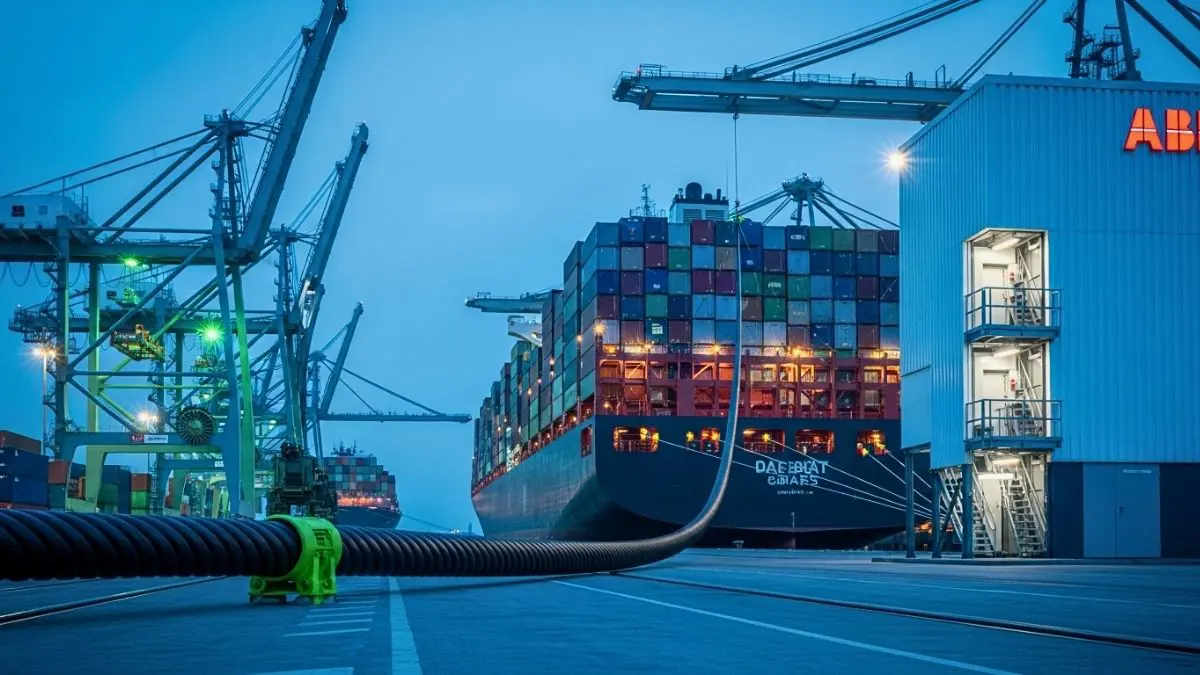
ABB has entered into a contract with Rotterdam Shore Power (RSP), a joint venture between the Port of Rotterdam and Netherlands-based energy major, Eneco, to build a 100 megavolt ampere (MVA) shore-based power project for the Port of Rotterdam – the largest such power system globally - so far.
The combined power system, spread over several locations in the Port of Rotterdam, will help reduce emissions at the port and support emission compliance requirements. The EU emissions norm requires that beginning 1 January 2031, all ships above 5,000 gross tonnage, including passenger ships, calling at sea ports, should use onshore power in cases where these vessels are not supplied with zero-emission energy.
The Rotterdam shore power system, when commissioned in the second quarter 2028, will power Port of Rotterdam’s three deep-sea container terminals, including vessels berthed at these terminals, helping to reduce emissions at Europe’s largest port, and ensuring compliance with emission norms.
The custom-designed power system will provide power to 35 connection points covering APM Terminals Maasvlakte II (APMT) facility and Hutchison Ports ECT Delta and Hutchison Ports ECT Euromax terminals.
It will also help charge up to 32 container ships simultaneously during loading and unloading operations.
Besides designing, installing, testing and commissioning the power project, ABB will also service all the three terminals under the multi-year agreement.
ABB will also implement supervisory control and data acquisition (SCADA) system for monitoring and tracking energy consumption, ensure minimum disruption of operations, as well as track energy usage for accurate customer billing.
The shore-based power system will allow vessels berthed at the port to turn off their engines, and switch to power from the port for 90 per cent of their energy requirements. This, according to ABB, will help reduce carbon dioxide emissions from vessels calling at the deep-sea terminals by an estimated 96,000 metric tonnes from 2032.
Besides reducing air pollution at the port, it would also help reduce noise levels, leading to better working and living conditions, says ABB.
The power system will be scalable above the 100 MVA target. Financial terms of the contract are yet to be disclosed.