India strikes manganese nodules in deep-sea exploration
14 May 2010
India has successfully used the remotely operable vehicle (ROV) - ROSUB 6000 - to trace manganese nodules at the poly metallic nodule (PMN) site in Central Indian Ocean Basin (CIOB).
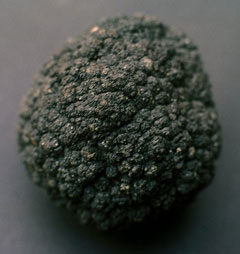 The ROSUB 6000 reached the maximum depth of 5,256 metres and sampled manganese nodules. This is for the first time ROV has gone beyond the depth of 5,000 metres in the Central Indian Ocean Basin, an official release said.
The qualification trials using the ROSUB 6000 at the poly metallic nodule site in the Central Indian Ocean Basin onboard ocean research vessel `Sagar Nidhi' started from offshore Mangalore on 1 April 2010 and conducted the ROV initial trials.
The first deep-water trial was conducted on 14 April 2010 at water depth of 5,290 metres.
An operation was done at an average descent speed of 25 metres per minute. All systems were tested at 50 metres and 3,000 metres water depth before reaching 5,000 metres. When ROV reached the maximum depth of 5,256 metres, certain electrical problems were noticed but they were rectified after bringing ROV back to the deck.
After integrated system checks, the ROV was redeployed at the same location on 17 April. After ROV reached the seabed at a depth of 5,289 metres, the various sub systems of the ROV were tested and qualified at that depth. Video cameras were turned on and pictures of seabed were taken.
After capturing video pictures of the bottom, ROV was lifted to an altitude of 10 metres from the seabed and undocked from the tether management system (TMS). ROV multi-beam sonar was switched on after undocking the ROV at 5,280 metre water depth and bathymetry data was collected along with back scatter multi-beam data. ROV position data was obtained with inertial navigation system assisted by Doppler velocity log (DVL). ROV was successfully docked back to TMS. The attached corer could sample a few manganese nodules as shown in picture.