Court overturns wind freeze, yet solar projects remain stalled under federal review
By Cygnus | 10 Dec 2025
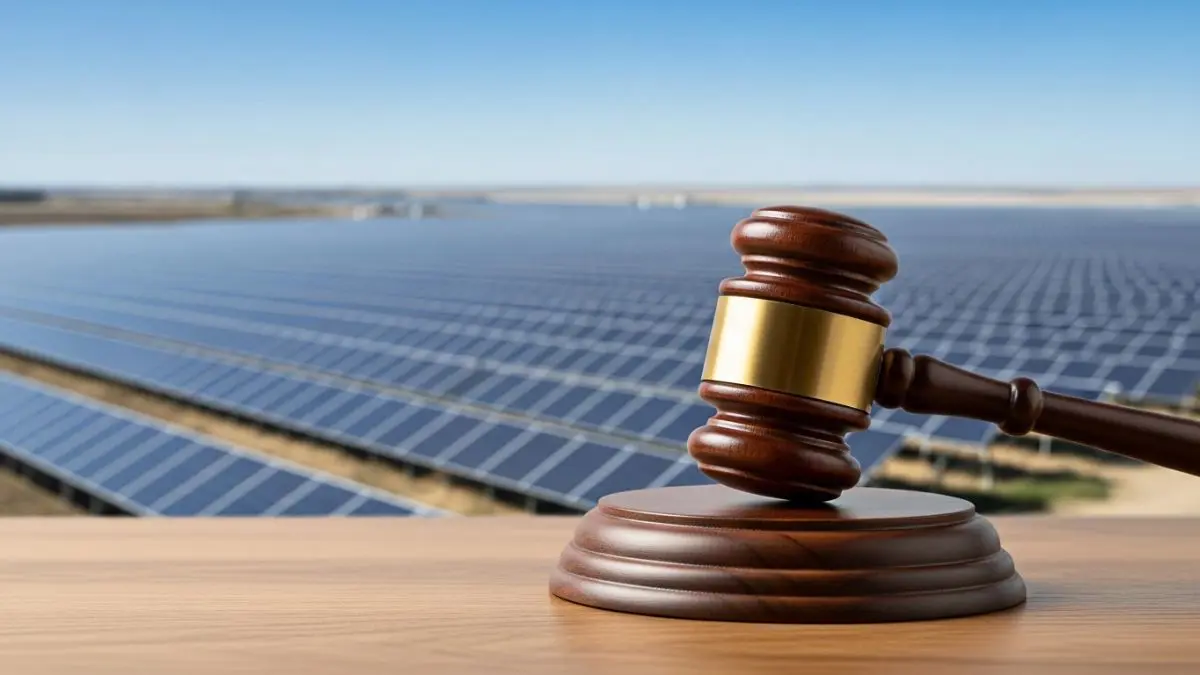
A federal court on Monday vacated the Trump administration’s blanket suspension of wind energy permits, marking a legal victory for the renewable sector. However, the ruling has done little to ease a deepening crisis for the solar industry, where gigawatts of capacity remain stuck in a bureaucratic bottleneck even as U.S. electricity demand surges.
While the court decision forces the administration to resume processing wind applications, a review of federal data shows that approvals for major onshore solar developments have ground to a near-halt. Since Interior Secretary Doug Burgum mandated in July that all renewable energy permits require his personal signature, only one solar project on federal land has been approved.
By comparison, 13 solar projects and two wind facilities moved forward on public lands during a comparable timeframe under the previous administration.
‘Energy emergency’ priorities
The slowdown aligns with the White House’s declared “energy emergency” agenda. President Trump has prioritized fast-tracking fossil fuel infrastructure to support the soaring electricity consumption driven by artificial intelligence clusters and hyperscale data centers.
The administration has explicitly excluded wind and solar from this accelerated track, arguing that intermittent power sources are “unreliable” for critical digital infrastructure. Despite the new court order regarding wind, the Interior Department maintains that strict, centralized oversight is necessary to protect national security and land interests.
Nevada ground zero
The permitting freeze has hit Nevada hardest, a state home to some of the nation’s premier solar resources. According to state officials, more than 33 gigawatts of solar and battery storage capacity are currently awaiting federal movement.
State regulators and utility leaders have warned that these delays threaten NV Energy’s supply planning and could throttle the expansion of the state’s mining and data center sectors.
Major developers, including NextEra Energy Inc., Hanwha Solutions Corp., and SoftBank Group Corp., face significant disruptions. In October, the Bureau of Land Management (BLM) abruptly canceled the environmental review for the massive 62,000-acre Esmeralda 7 solar complex, forcing developers to restart the application process from scratch.
Financial strain on communities
The ripple effects are being felt at the municipal level. Boulder City, Nevada, which relies on solar lease revenue for nearly 40% of its operating budget, faces deepening financial uncertainty.
“They’ve given us email addresses promising updates,” said Brok Armantrout, Boulder City’s revenue contracts manager. “And then—nothing.”
Rising demand, rising risks
The regulatory logjam comes as U.S. electricity demand is projected to climb 32% by 2030. Industry analysts warn that the disconnect between rising demand and stalled capacity is widening.
Wood Mackenzie estimates that 18 gigawatts of proposed solar capacity on federal lands have been canceled or idled this year due to the policy shift. The firm also projects that U.S. onshore wind installations will trail previous forecasts by 22% through 2029, as developers grapple with lingering market uncertainty despite the favorable court ruling.
Brief Summary
A federal court has struck down the Trump administration’s freeze on wind energy permits, but a separate mandate requiring personal approval from the Interior Secretary continues to stall solar projects. With over 33 gigawatts of capacity stuck in Nevada alone, the renewable sector warns that the bottleneck threatens U.S. energy reliability amid soaring power demand from AI and data centers.
Frequently Asked Questions (FAQs)
Q1: What happened in court on Monday?
A federal judge vacated the administration’s order that had indefinitely paused federal wind energy permitting, ruling the blanket freeze unlawful.This allows wind projects to theoretically resume the approval process, though administrative hurdles remain.
Q2: Why are solar projects still stuck?
The court ruling specifically addressed wind energy.Solar projects remain subject to a July directive from Interior Secretary Doug Burgum, which requires his personal approval for every new permit. This centralized bottleneck has slowed approvals to a near-standstill.
Q3: How is this affecting the “AI boom”?
AI data centers require massive amounts of power. While the administration is fast-tracking natural gas and coal to meet this demand, the freeze on renewables limits the total available power supply, potentially raising costs and slowing data center expansion in states like Nevada.
Q4: What is the “Energy Emergency” agenda?
The Trump administration has framed rising power demand as a national emergency, utilizing executive powers to accelerate fossil fuel infrastructure while subjecting renewable projects to stricter scrutiny, citing “reliability” and “national security” concerns.
Q5: How many projects are at risk?
The Solar Energy Industries Association (SEIA) estimates that over 500 solar and storage projects nationwide could be jeopardized. Wood Mackenzie estimates 18 gigawatts of capacity on federal land have already been canceled or idled this year.

























