Bridge Data Centres pilots HVO biofuel for low-emission backup power
By Axel Miller | 12 May 2026
Summary
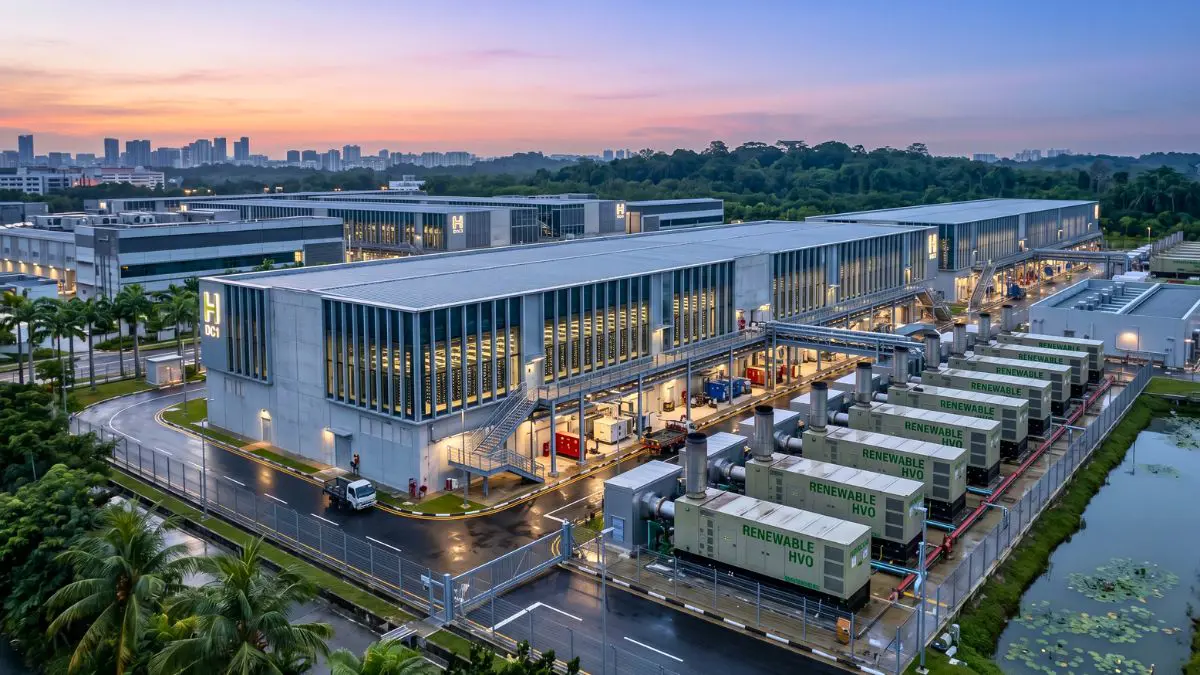
- Renewable backup power: Bridge Data Centres (BDC) and renewable fuel producer EcoCeres have completed a pilot program using Hydrotreated Vegetable Oil (HVO) for backup generators at Asia-Pacific data centre facilities.
- Drop-in fuel transition: The companies said the renewable diesel substitute operated in existing generator systems without requiring major hardware modifications.
- Lower emissions profile: HVO can reduce lifecycle greenhouse gas emissions significantly compared with conventional diesel, supporting data centre decarbonization goals.
SINGAPORE, May 12, 2026 — Bridge Data Centres (BDC), a data centre operator backed by Bain Capital, has completed a pilot deployment of Hydrotreated Vegetable Oil (HVO) as an alternative fuel for backup power systems across selected Asia-Pacific facilities.
The pilot was conducted in partnership with renewable fuels company EcoCeres and focused on evaluating HVO performance in critical backup generator operations, including startup reliability, load transfer capability, and sustained runtime conditions.
According to the companies, the renewable fuel was used within existing diesel generator infrastructure without requiring significant equipment redesign, highlighting the potential for lower-emission backup systems across hyperscale data centre operations.
Backup power under sustainability pressure
The trial comes as regional data centre operators face growing pressure to reduce emissions linked to rapidly expanding AI and cloud infrastructure. Facilities supporting high-density computing workloads require extensive backup power redundancy, traditionally dependent on diesel generators.
HVO, often referred to as renewable diesel, is produced from waste-based feedstocks such as used cooking oil, agricultural residues, and other non-food biomass materials. Compared with fossil diesel, the fuel can deliver substantially lower lifecycle carbon emissions depending on feedstock origin and production methods.
Industry participants increasingly view HVO as a near-term decarbonization option because it can typically be integrated into compatible diesel engines without large-scale infrastructure replacement.
Expanding regional demand
Southeast Asia is emerging as a major growth market for hyperscale infrastructure, particularly in locations such as Johor Bahru, Singapore, and Mumbai Metropolitan Region, where cloud and AI investment activity continues to accelerate.
EcoCeres said rising demand for sustainable fuels is driving expansion of its production footprint in Asia, including facilities focused on renewable diesel and Sustainable Aviation Fuel (SAF).
The companies indicated that the pilot results could support broader adoption of renewable backup fuel strategies across regional data centre portfolios in coming years.
Why this matters
- Data centre decarbonization: Backup power systems remain one of the most difficult emissions sources for hyperscale operators to address.
- Infrastructure compatibility: HVO offers a transition pathway using much of the existing diesel-generator ecosystem.
- AI-driven energy growth: As AI infrastructure expands, operators face increasing scrutiny over energy intensity and sustainability targets.
FAQs
Q1. What is HVO fuel?
Hydrotreated Vegetable Oil (HVO) is a renewable diesel alternative produced from waste oils, fats, and biomass feedstocks through a hydrogen-treatment process.
Q2. Is HVO the same as traditional biodiesel?
No. HVO differs chemically from conventional biodiesel (FAME) and generally offers improved storage stability and cold-weather performance.
Q3. Why are data centres interested in HVO?
Data centres rely heavily on backup generators for operational resilience. HVO provides a lower-emission alternative without requiring complete replacement of existing systems.