Budget 2026: Railways get fresh push with bullet train network and new freight corridor
By Cygnus | 02 Feb 2026
Summary
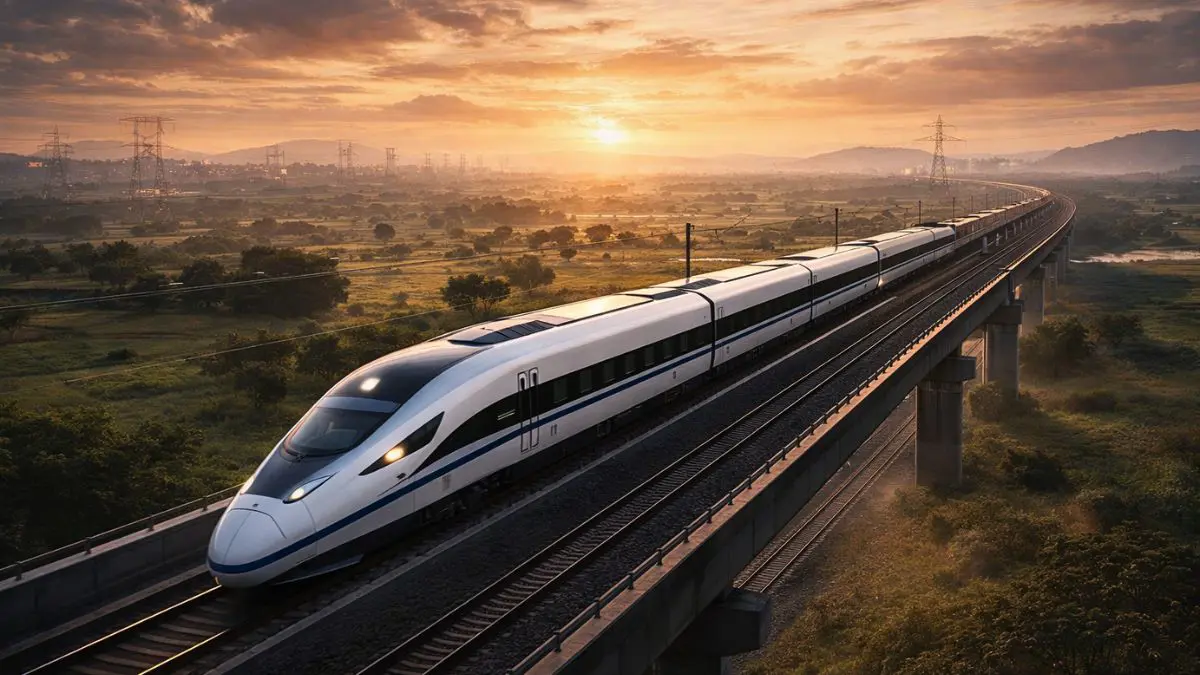
India’s rail infrastructure is set for a major expansion under Budget 2026, with plans for seven new high-speed (bullet train) corridors and a new East–West Dedicated Freight Corridor (DFC) aimed at transforming both passenger mobility and cargo efficiency.
Alongside sharply higher capital spending, the initiatives signal a dual strategy: faster intercity travel for people and lower logistics costs for businesses — positioning rail as a central pillar of India’s long-term growth and decarbonisation agenda.
NEW DELHI — The government has outlined an ambitious new phase of rail modernisation in Budget 2026, placing high-speed passenger connectivity and freight efficiency at the heart of infrastructure policy.
Presenting the budget, Finance Minister Nirmala Sitharaman said the high-speed rail programme would link key economic and population centres, positioning rail as a cleaner and faster alternative to road and air travel on busy intercity routes.
Seven new bullet train corridors
The proposed high-speed corridors will connect:
- Mumbai–Pune
- Pune–Hyderabad
- Hyderabad–Bengaluru
- Hyderabad–Chennai
- Chennai–Bengaluru
- Delhi–Varanasi
- Varanasi–Siliguri (via Patna)
Together, the routes are expected to span roughly 4,000 km, dramatically compressing travel times across some of India’s most heavily trafficked city pairs.
Railways Minister Ashwini Vaishnaw said the projects could attract around ₹16 lakh crore in investment over multiple years, with funding spread across successive budgets as construction progresses.
The new corridors are designed to build on experience from India’s first bullet train project and recent high-speed rail technology partnerships.
Travel time compression
Officials highlighted sharp reductions in journey durations:
- Mumbai–Pune: ~48 minutes
- Pune–Hyderabad: ~1 hour 55 minutes
- Hyderabad–Bengaluru: ~2 hours
- Hyderabad–Chennai: ~2 hours 55 minutes
- Chennai–Bengaluru: ~1 hour 13 minutes
- Delhi–Varanasi: ~3 hours 50 minutes
- Varanasi–Siliguri: ~2 hours 55 minutes
Such compression could reshape business travel, boost regional economic integration, and ease congestion on India’s busiest air routes.
Freight corridor to power logistics efficiency
Alongside passenger rail, the government announced a new East–West Dedicated Freight Corridor linking Dankuni in Odisha to Surat in Gujarat.
The corridor is aimed at:
- speeding up cargo movement
- reducing logistics costs
- shifting freight from roads to cleaner rail transport
Dedicated freight corridors are increasingly viewed as critical to India’s manufacturing competitiveness and export reliability.
Higher capital spending across Railways
Rail infrastructure investment continues to climb:
- Capital outlay FY27: ₹2.81 lakh crore (up from ₹2.55 lakh crore FY26)
- Safety spending: ₹55,170 crore
- Rolling stock: ₹65,496.6 crore
- Freight loading target FY27: 1,765 million tonnes
Financially, the Railways is targeting net revenue of ₹3,000 crore in FY27, with the operating ratio improving to 98.4%, indicating gradual efficiency gains.
Manufacturing ecosystem gaining strength
Industry executives say India’s domestic rail manufacturing base is now significantly stronger than a decade ago, helped by the rapid rollout of Vande Bharat trains and expanding high-speed rail expertise.
Local capabilities in rolling stock, components and engineering services are expected to benefit directly from the new corridor construction boom.
Why this matters
- Economic productivity: Faster intercity travel links labour markets, business hubs and tourism zones more efficiently
- Logistics competitiveness: Freight corridors cut transport time and cost for manufacturers and exporters
- Climate impact: Rail expansion supports lower-emission transport compared with roads and short-haul flights
- Industrial growth: Massive infrastructure spending boosts construction, engineering and domestic manufacturing
Together, the passenger and freight push signals a structural shift toward rail as the backbone of India’s transport future.
FAQs
Q1. What new bullet train corridors were announced in Budget 2026?
Seven routes: Mumbai–Pune, Pune–Hyderabad, Hyderabad–Bengaluru, Hyderabad–Chennai, Chennai–Bengaluru, Delhi–Varanasi and Varanasi–Siliguri.
Q2. How much investment is expected for high-speed rail projects?
Around ₹16 lakh crore over multiple years across successive budgets.
Q3. What is the East–West Dedicated Freight Corridor?
A freight-only rail corridor linking Dankuni (Odisha) to Surat (Gujarat) to improve cargo movement and reduce logistics costs.
Q4. How will bullet trains benefit businesses?
They sharply reduce travel time between major cities, improving connectivity, boosting regional growth, and easing airport congestion.
Q5. Is India capable of building these systems domestically?
Officials say manufacturing capability has improved significantly through recent train projects and high-speed rail development.
Q6. What does the operating ratio indicate?
It shows how much the Railways spends to earn ₹100 — a lower ratio reflects better financial efficiency. It is projected to improve to 98.4% in FY27.

























