Technology - general
Simulating firefighting operations on a PC
02 Jan 2012
Fewer animal experiments thanks to nanosensors
02 Jan 2012

Time for a change? Scholars say calendar needs serious overhaul
28 Dec 2011
Using computer programs and mathematical formulae,an astrophysicist and an applied economist have created a new calendar in which each new 12-month period is identical to the one which came before, and remains that way from one year to the next in perpetuity
Flipping an egg carton of light traps giant atoms
By By Nicole Casal Moore | 26 Dec 2011
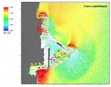
Modelling the spread of radioactivity in seawater
By By Rachel VanCott, MIT Sea Grant | 24 Dec 2011
When earthquake-triggered tsunami waves hit Japan in March, the surging water overtopped seawalls and caused massive damage that resulted in a release of radioactive seawater. Researchers funded by MIT Sea Grant develop a model to examine its near-shore and open-ocean circulation
Water out of thick air
By By Peter Dizikes, MIT News Office | 24 Dec 2011
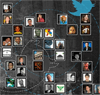
How traditional social networks fuelled Twitter’s spread
By By Denise Brehm, civil and environmental engineeri | 21 Dec 2011
MIT researchers who studied the growth of the newly hatched Twitter from 2006 to 2009 say the site’s early growth in the US actually relied on media attention and traditional social networks based on geographic proximity and socio economic similarity

Two new Earth-sized exoplanets discovered
By By Jennifer Chu, MIT News Office | 21 Dec 2011
Hunting for habitable worlds, NASA’s Kepler space telescope has unveiled two new planets, some 950 light-years away, and though neither planet is Earth’s twin, scientists say the discovery is a technological milestone
Physicists’ ‘light from darkness’ breakthrough named a top 2011 discovery
By By Nicole Casal Moore | 17 Dec 2011
Jumping droplets take a lot of heat, as long as it comes in a cool way
By By Richard Merritt | 16 Dec 2011

Stanford scientists' computer models help predict tsunami risk
By By Steven Fyffe | 14 Dec 2011
Stanford scientists are using complex computational models to solve the puzzle of the devastating tsunami that struck Japan earlier this year and predict where future tsunamis might occur
A glow of recognition
By By David L. Chandler, MIT News Office | 14 Dec 2011

Latest articles






Featured articles

The decoupling paradox: Why Wall Street keeps funding AI despite $100 oil
By Axel Miller | 11 May 2026
AI infrastructure stocks continue rallying despite $100 oil as investors bet on productivity gains and semiconductor demand in 2026.

Hybrid bonding gains attention as AI chip packaging demand grows
By Cygnus | 23 Apr 2026
Hybrid bonding is driving AI chip packaging demand as backend technologies gain importance in the semiconductor supply chain.

The agentic transition: how enterprises are scaling AI from pilot to profit
By Cygnus | 22 Apr 2026
AI has entered its execution era. Discover how companies like Valeo and Microsoft are scaling agentic AI systems—from copilots to autonomous workflows driving real business impact.

Post-splashdown: What Artemis II taught us about the ‘deep space wall’
By Axel Miller | 15 Apr 2026
Artemis II splashdown marks a breakthrough in deep space exploration. Discover AVATAR radiation data, Orion’s distance record, and insights shaping NASA’s 2028 Moon mission.

Can aviation go green? The multi-billion dollar race for sustainable fuel
By Cygnus | 10 Apr 2026
Airlines are racing to adopt sustainable aviation fuel, but limited supply and high costs challenge the future of green aviation.

The battery race: who will control the future of electric vehicles?
By Axel Miller | 08 Apr 2026
The global battery race is reshaping the electric vehicle industry, with China, the US, and Europe competing for control over supply chains and technology.

AI vs governments: Who controls the future of intelligence?
By Cygnus | 07 Apr 2026
Governments and AI companies like OpenAI and Anthropic are shaping the future of intelligence amid rising policy conflicts and global competition.

Strait of Hormuz: how one chokepoint controls the global economy
By Axel Miller | 06 Apr 2026
The Strait of Hormuz is a critical global chokepoint. Learn how disruptions impact oil prices, shipping, and the global economy.

The $2 trillion AI infrastructure race: Who will control global compute?
By Cygnus | 06 Apr 2026
AI spending is set to exceed $2 trillion in 2026, driving a global race in data centers, chips, and energy infrastructure.






