Japanese researchers transmit electric power wirelessly
13 Mar 2015
In a breakthrough research, Japanese researchers have succeeded in wirelessly transmitting electrical power with pinpoint accuracy, with the use of microwaves, opening the possibility of space-based solar power projects.
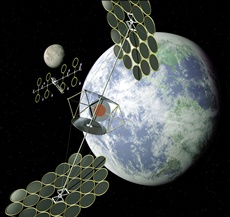 A team of researchers at the Japan Aerospace Exploration Agency (Jaxa) has successfully transformed 1.8 kilowatts of electric power into microwaves and transmitted it wirelessly to a receiver located 55 metres away, The Wall Street Journal reported.
In the experiment conducted at Hyogo prefecture in western Japan, sunlight gathered in geostationary orbit was transmitted to the Earth using microwaves. The microwaves were successfully converted into direct electrical current at the receiving end.
While the distance was not large, the technology could be used to eventually tap the vast amount of solar energy available in space and use it here on Earth, a Jaxa spokesman said.
"This was the first time anyone has managed to send a high output of nearly two kilowatts of electric power via microwaves to a small target, using a delicate directivity control device," he said.
"If implemented, microwave-transmitting solar satellites would be set up approximately 35,000 km from Earth by 2030," the Jaxa spokesperson was quoted as saying.
Unlike solar panels set on Earth, satellite-based solar panels can capture the energy around the clock and are not affected by weather conditions.
A receiver set up on Earth with an approximately three-km radius can create up to one giga Watt of electricity - about the same as one nuclear reactor.
Researchers "are aiming for practical use in the 2030s", Jaxa researcher Yasuyuki Fukumuro posted on its web site.
The challenge is how to create huge infrastructure in space and how to maintain it. This could take decades before the technology finds practical application, he added.
The Japanese government plans to spend some ¥2 trillion (about $20 billion) on a one-gigawatt orbiting solar power station - and Mitsubishi and other Japanese companies have already signed on to boost the effort.
A space solar power station using a four-kilometer solar panel would orbit some 36,000 kilometers above Earth and transmit power via microwave or laser beam.

























