Skywatchers Marvel as ISS Glides Over Qatar in Rare Six-Minute Pass
By Cygnus | 12 Jan 2026
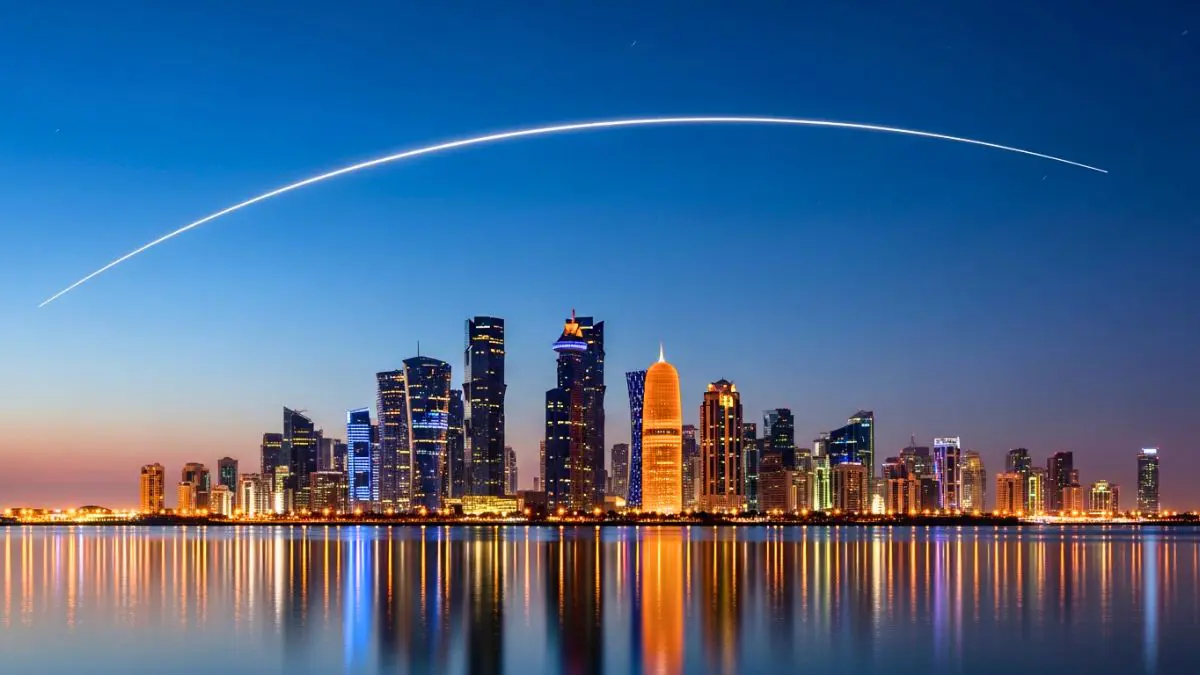
Residents across Qatar were treated to a brilliant celestial display on the evening of Sunday, January 11, 2026, as the International Space Station (ISS) made a luminous six-minute transit over the peninsula. The orbiting laboratory, appearing as a steady, high-velocity beacon, was clearly visible to the naked eye, a phenomenon confirmed by the Qatar Calendar House (QCH).
The sighting began precisely at 5:24 PM local time, with the station emerging from the southwest horizon. It reached its zenith before descending toward the northeast and disappearing by 5:30 PM. Occurring just after sunset, the timing provided the “golden hour” contrast necessary for the station’s massive solar arrays to reflect maximum sunlight against the darkening sky.
A Shared Moment of Human Achievement
Unlike conventional aircraft, the ISS travels at a staggering 28,000 km/h, completing an orbit of Earth every 90 minutes. At an altitude of approximately 400 km, the station serves as a testament to nearly 26 years of continuous human presence in space. For Doha residents, the sight was more than just a light in the sky; it was a tangible connection to the international crew of astronauts currently living and working aboard the football-field-sized structure.
“It’s a reminder that the frontier is right above us,” noted one local enthusiast on social media. The event sparked a flurry of activity on platforms like X and Instagram, with many capturing the silent, non-blinking transit against the backdrop of the Lusail and West Bay skylines.
Summary
The ISS transit on January 11, 2026, was a successful public engagement event for Qatar’s scientific community. Lasting six minutes (5:24–5:30 PM), the SW-to-NE pass was visible without equipment. It reinforced the “Viksit” (Progress) theme of space accessibility and served as an educational milestone for students tracking NASA and QCH alerts.
Frequently Asked Questions (FAQs)
Q1: What exactly is the International Space Station?
The ISS is a modular space station in low Earth orbit. It is a collaborative project between NASA (USA), Roscosmos (Russia), JAXA (Japan), ESA (Europe), and CSA (Canada).
Q2: Why did the ISS look like a steady light rather than a flashing one?
The ISS does not have its own external lights like an airplane. We see it because its large solar panels reflect sunlight back to Earth. Because it is so far away, this reflection appears as a steady, unblinking point of light.
Q3: How often can this be seen in Qatar?
While the ISS passes over the region several times a month, it is only visible when the station is in sunlight but the observer on the ground is in darkness (dawn or dusk). Rare high-visibility passes like the one on Jan 11 only occur a few times a year.
Q4: How can I track the next pass?
The best tools include NASA’s Spot the Station app and the ISS Detector app. Both provide real-time alerts based on your GPS coordinates in Qatar.

























