Wildly heterogeneous genes
19 Sep 2013
Cancer tumours almost never share the exact same genetic mutations, a fact that has confounded scientific efforts to better categorise cancer types and develop more targeted, effective treatments.
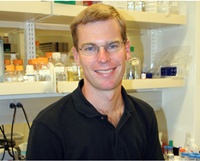 |
| Trey Ideker, PhDApollo |
In a paper published in the 15 September advanced online edition of Nature Methods, researchers at the University of California, San Diego, propose a new approach called network-based stratification (NBS), which identifies cancer subtypes not by the singular mutations of individual patients, but by how those mutations affect shared genetic networks or systems.
''Subtyping is the most basic step toward the goal of personalised medicine,'' said principal investigator Trey Ideker, PhD, division chief of genetics in the UC San Diego School of Medicine and a professor in the departments of Medicine and Bioengineering at UC San Diego.
''Based on patient data, patients are placed into subtypes with associated treatments. For example, one subtype of cancer is known to respond well to drug A, but not drug B. Without subtyping, every patient looks the same by definition, and you have no idea how to treat them differently.''
Recent advances in knowledge and technology have made it easier (and less expensive) to sequence individual genomes, especially in the treatment of cancer, which is fundamentally a disease of genes.
But genes are ''wildly heterogeneous,'' said Ideker. It is in combination, influenced by other factors, that mutated genes cause diseases like cancer. Every patient's cancer is genetically unique, which can affect the efficacy and outcomes of clinical treatment.
''When you look at patients' data at the level of genes, everybody looks different,'' said Ideker. ''But when you look at impacted biological networks and systems, groupings do appear. No genes are mutated in exactly the same place, but the mutations do appear in the same genetic pathways.''
Specifically, the scientists looked at somatic mutations – present in tumours but not healthy tissues – in data from lung, uterine and ovarian cancer patients compiled by The Cancer Genome Atlas, an on-going National Institutes of Health-funded program to gather and catalogue the genomes of thousands of cancer patients.
Ideker said the NBS approach has immediate clinical value. Genome sequencing of cancer patients is rapidly becoming a standard part of diagnosis. Clinicians can use NBS, he said, to better match treatment to cancer subtype. And by chronicling treatment outcomes, funneling those results back into the database, they can further refine and improve cancer therapies, making them as personalized as the individuals themselves.
Co-authors are Matan Hofree, Department of Computer Science and Engineering, UCSD; John P. Shen and Hannah Carter, Department of Medicine, UCSD; and Andrew Gross, Department of Bioengineering, UCSD.
Funding for this research came, in part, from National Institutes of Health grants

























