Estimating baby’s size gets more precise
30 Apr 2014
New Michigan State University (MSU) research aims to help doctors estimate the size of newborns with a new set of birth weight measurements based on birth records from across the country.
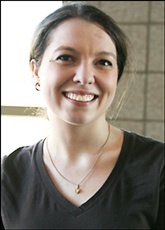 | |
| Nicole Talge is an assistant professor in MSU's Department of Epidemiology and Biostatistics. Courtesy Photo. |
''More than 7 million records were reviewed,'' said Nicole Talge, an assistant professor in MSU's Department of Epidemiology and Biostatistics, who co-led the study which is now available in the journal Pediatrics.
''Our research looked at live births in the United States during 2009-2010 and using a newly developed method, corrected unlikely gestational ages during that time. This led to changes in the birth weight thresholds, especially for preterm and post-term babies.''
Talge added that these thresholds are important because they can be used to classify a baby as small or large for gestational age.
As a result, her findings have helped introduce an updated and potentially more precise way to evaluate a baby's birth size.
During its research, the team's method compared the last menstrual period of the mother and the estimated gestational age of the foetus against the actual birth weight of the baby when born to identify birth records that had the likely errors.
Since birth size is often used as one indicator of a baby's health, these new thresholds may be useful for clinicians in making health care decisions. Researchers also may benefit from more precise estimates of birth size when investigating health outcomes at birth and later on in life.
''It's important to remember that birth size is only one piece of the puzzle when it comes to evaluating a baby's health,'' said Talge.
Additional researchers involved in the project included Lanay Mudd, assistant professor of kinesiology and Alla Sikorskii, associate professor of statistics and probability, both from MSU; and Olga Basso, associate professor in the Department of Obstetrics and Gynecology and the Department of Epidemiology, Biostatistics, and Occupational Health at McGill University.

























