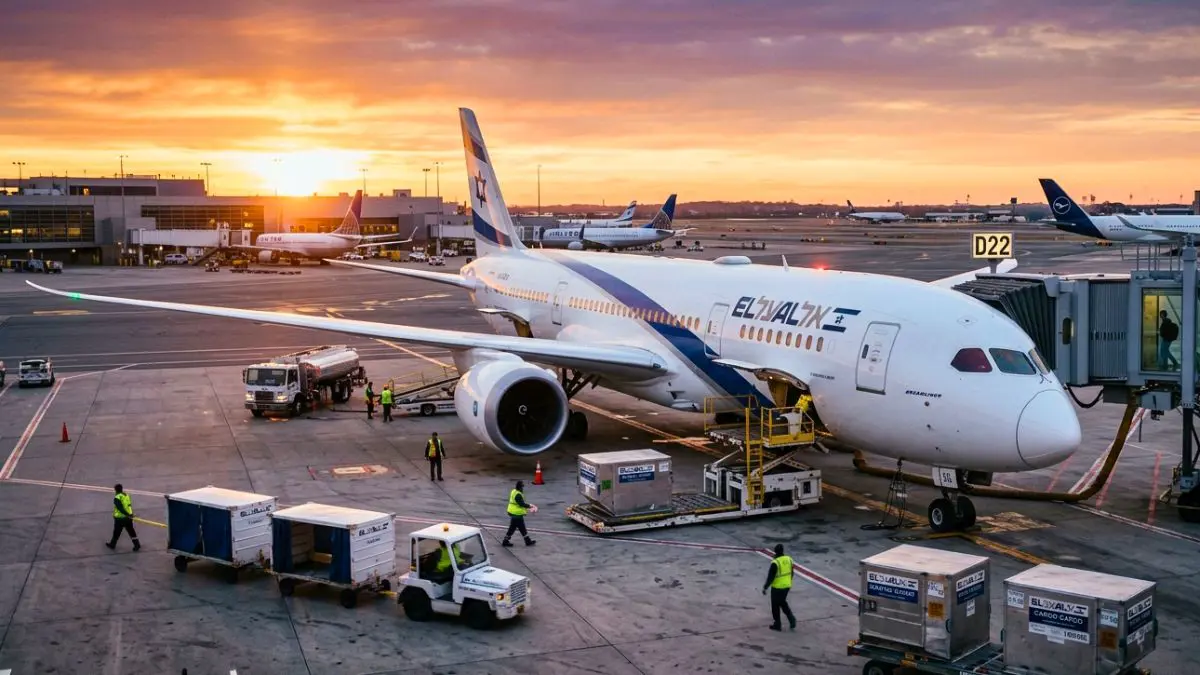
Widebody ambition: El Al expands Boeing 787 fleet to strengthen long-haul strategy
By Axel Miller | 16 Apr 2026
Summary
El Al Israel Airlines has agreed to acquire additional Boeing 787 Dreamliner aircraft, expanding its long-haul fleet modernization plan.
The airline is evaluating a mix of 787 variants, including the higher-capacity Boeing 787-10, to optimize high-demand international routes.
Deliveries are expected later this decade, supporting the gradual retirement of older widebody aircraft.
JERUSALEM, April 16, 2026 — El Al Israel Airlines has moved forward with plans to expand and modernize its long-haul fleet through an additional order of Boeing 787 aircraft, reinforcing its long-term focus on fuel efficiency and operational consistency.
Fleet expansion and modernization
The latest agreement with Boeing includes six additional 787 aircraft, with options for more. While the headline value is often cited using list prices, actual transaction values in the aviation industry are typically lower due to negotiated discounts.
This expansion will increase El Al’s total Dreamliner fleet over time, supporting its strategy to replace aging widebody jets with newer, more efficient aircraft.
Evaluating the 787-10 for capacity growth
As part of the deal, El Al is assessing the inclusion of the larger Boeing 787-10, which offers higher seating capacity compared to the 787-9.
The -10 variant is better suited for dense, high-demand routes—particularly transatlantic services—though it comes with slightly reduced range. This makes it ideal for routes where passenger volume outweighs ultra-long-haul requirements.
Focus on operational efficiency
By continuing with a largely uniform Dreamliner fleet powered by Rolls-Royce Trent 1000 engines, El Al benefits from simplified pilot training, maintenance processes, and spare parts logistics.
This fleet commonality is expected to reduce operating costs while improving scheduling flexibility and aircraft utilization.
Long-term network strategy
The planned deliveries, expected between 2028 and 2030, align with El Al’s broader goal of strengthening its international network amid recovering global travel demand.
The airline is particularly focused on maintaining competitiveness on key North American routes, which remain central to its long-haul operations.
Why this matters
Lower operating costs: Newer aircraft like the 787 improve fuel efficiency and reduce per-seat expenses.
Capacity optimization: Larger variants allow airlines to maximize revenue on high-demand routes.
Fleet simplification: A uniform aircraft family improves maintenance efficiency and operational reliability.
FAQs
Q1. What is the difference between the 787-9 and 787-10?
The 787-10 is longer and carries more passengers, while the 787-9 offers greater range for ultra-long-haul routes.
Q2. When will the new aircraft be delivered?
Deliveries are expected between 2028 and 2030, depending on final configurations and production schedules.
Q3. Why is El Al focusing on the 787 family?
The 787 offers a balance of fuel efficiency, range, and passenger comfort, making it suitable for long-haul operations.

























