China’s electric truck boom accelerates as diesel prices surge
By Cygnus | 07 May 2026
Summary
China’s heavy freight sector is rapidly shifting toward electric trucks as diesel prices rise sharply amid global energy volatility. Industry data shows new-energy heavy truck sales surged 45% year-on-year in early 2026, supported by faster battery-swapping infrastructure, lower long-term operating costs, and continued state incentives. Chinese manufacturers such as Sany Group and BYD are also using their scale advantage to expand into overseas markets, especially Europe, where lower-priced electric freight vehicles are increasingly challenging traditional truck makers.
BEIJING, May 7, 2026 — China’s transition away from diesel-powered freight is accelerating as higher fuel costs reshape the economics of long-haul logistics. Following the recent spike in global oil prices, retail diesel prices in China have risen significantly compared with early 2026 levels, pushing fleet operators toward electric heavy trucks at a faster pace.
According to Chinese commercial vehicle industry data platform CVWorld.cn, new-energy heavy truck sales reached around 44,000 units during the opening months of 2026, representing roughly 45% year-on-year growth. Electric heavy trucks now account for more than one-quarter of total heavy truck sales in China, up sharply from the same period last year.
The economics of electric freight
The rapid shift is being driven by total operating cost advantages rather than just environmental policy. Although electric heavy trucks still carry a higher upfront price than diesel equivalents, lower energy and maintenance costs are reducing the financial payback period for logistics operators.
Industry estimates suggest the ownership cost gap has narrowed considerably as diesel prices remain elevated. Fleet operators are increasingly viewing electric trucks as a hedge against fuel-price volatility and geopolitical disruptions affecting global oil supply routes.
Manufacturers including Sany Group have also improved battery performance and driving range. Some newer heavy-duty electric truck models now advertise ranges approaching 600 kilometers under commercial operating conditions, helping expand adoption beyond short-haul urban logistics.
Battery swapping becomes a competitive edge
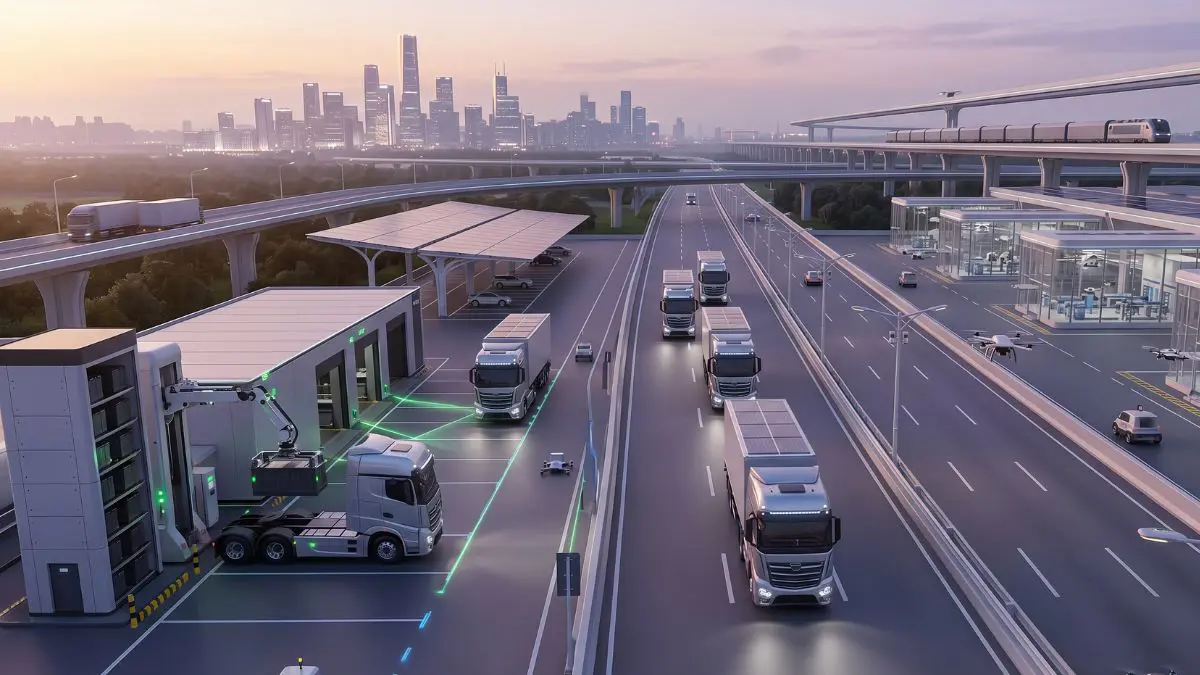
One of China’s biggest advantages in electric freight is the rapid rollout of battery-swapping infrastructure for commercial vehicles. Instead of waiting for lengthy charging sessions, truck operators can replace depleted battery packs at dedicated swap stations in just a few minutes.
This model is particularly attractive for mining, port, and long-distance freight operators that require near-continuous vehicle utilization. China has aggressively expanded swap-station corridors along major freight routes, including sections of the Beijing–Shanghai logistics network.
The infrastructure push is helping address one of the largest barriers to electric trucking: downtime. Analysts say battery swapping has become a major differentiator between China’s freight electrification strategy and slower adoption rates in many Western markets.
Export ambitions grow
China’s domestic scale is also supporting a broader export push. The country sold roughly 160,000 electric heavy trucks during 2024, according to international energy industry estimates, far exceeding volumes seen in Europe.
Chinese truck makers are now targeting overseas markets with lower-cost electric freight vehicles, particularly in Europe and Southeast Asia. Even with tariffs and regulatory barriers, industry analysts say Chinese manufacturers retain significant pricing advantages due to battery scale, domestic supply chains, and government-backed industrial infrastructure.
The expansion is increasing pressure on established Western truck manufacturers as commercial transport companies look for cheaper zero-emission alternatives amid tightening emissions rules and high diesel costs.
Why this matters
- Energy security shift: China’s move toward electric freight could gradually reduce dependence on imported oil and lower exposure to disruptions in the Strait of Hormuz.
- Freight economics changing: Rising fuel prices are making electric trucks financially viable much faster than expected, especially for high-mileage commercial fleets.
- Global competition intensifies: Chinese electric truck makers are beginning to replicate the export strategy previously seen in smartphones, solar panels, and electric passenger vehicles.
FAQs
Q1. Can electric heavy trucks handle long-distance freight?
Yes, newer models now offer ranges of around 500–600 km, while battery-swapping systems help reduce downtime for extended routes.
Q2. Is China still subsidizing electric trucks?
China continues to support parts of the commercial EV ecosystem through incentives, infrastructure investment, and trade-in programs in several regions.
Q3. Why is battery swapping important for trucks?
Commercial freight operators prioritize uptime. Swapping batteries in minutes is often more practical for heavy trucks than waiting hours for charging.

























