Bosch, Tata AutoComp explore deeper EV collaboration as India pushes localisation
By Axel Miller | 23 Mar 2026
Summary
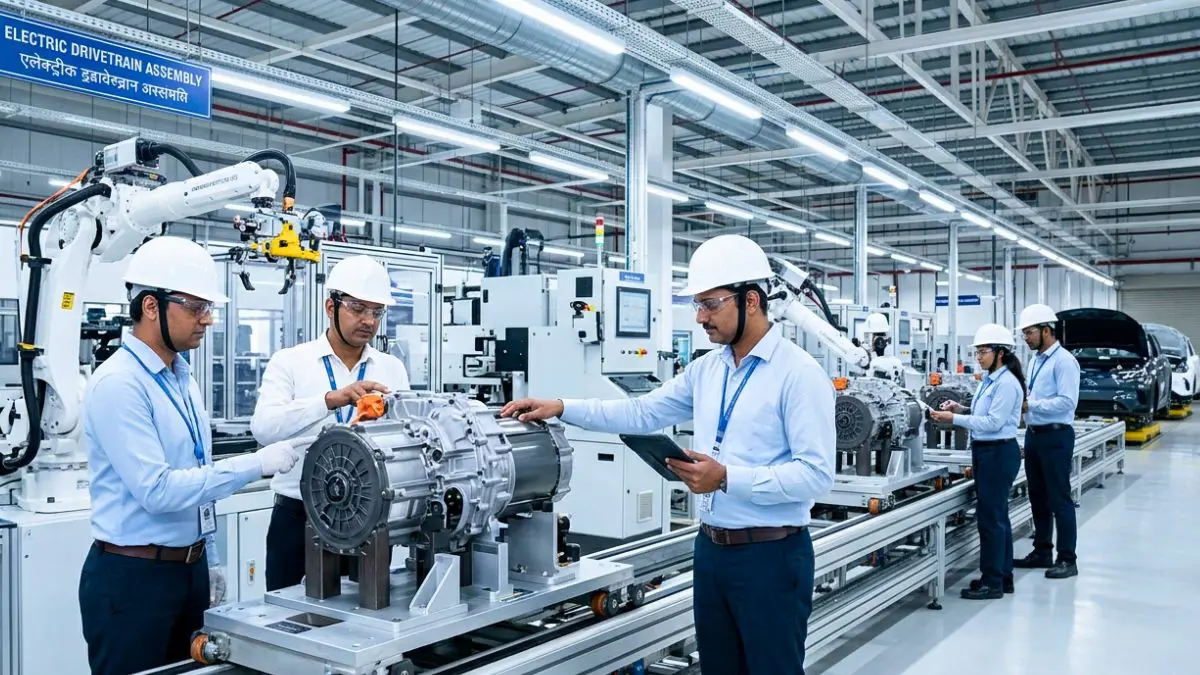
Bosch and Tata AutoComp Systems are looking to expand their collaboration in electric vehicle components, as automakers in India seek to localise critical EV technologies and reduce dependence on imports.
PUNE, March 23, 2026 — Bosch Ltd and Tata AutoComp Systems are exploring opportunities to deepen their collaboration in electric vehicle (EV) components, as India’s auto industry accelerates efforts to localise key technologies.
The move comes as automakers increase investments in electrification and look to build domestic supply chains for critical systems such as electric motors, power electronics and integrated drive units.
Industry executives say localisation of high-value EV components remains a key priority, with a large portion of advanced systems still sourced from global suppliers.
Focus on powertrain technologies
Companies including Bosch have been expanding their EV portfolios globally, with offerings such as electric drive modules, inverters and battery management systems. Tata AutoComp, a major Indian auto component supplier, has also been investing in EV-focused businesses through partnerships and joint ventures.
Analysts say integrated drive units—often referred to as eAxles—are gaining traction as automakers seek compact and efficient solutions that combine motors, transmission and electronics into a single system.
Localisation push
India has been encouraging domestic manufacturing of EV components under its broader push for self-reliance in the automotive sector. Local production is expected to help reduce costs, improve supply chain resilience and support faster adoption of electric mobility.
While advanced architectures such as higher-voltage systems are being adopted globally, experts note that their rollout in India will depend on infrastructure readiness, vehicle compatibility and cost considerations.
Industry outlook
The Indian EV market is still at an early stage but is growing steadily, supported by government incentives, rising fuel costs and increasing model availability.
Component makers are expected to play a crucial role in this transition by developing scalable and cost-effective solutions tailored to local market needs.
Why this matters
- Supply chain resilience: Localising EV components reduces reliance on imports.
- Cost competitiveness: Domestic production can help bring down EV prices.
- Technology evolution: Integrated systems like eAxles are shaping next-generation vehicle design.
FAQs
Q1. What is an eAxle?
An eAxle is an integrated unit that combines the electric motor, transmission and power electronics into a single compact system.
Q2. Why is localisation important for EVs?
Local manufacturing reduces costs, improves supply chain stability and supports faster adoption.
Q3. Are advanced EV technologies available in India?
Some technologies are being introduced gradually, but large-scale adoption depends on infrastructure and affordability.

























