Fuel Volatility and Ethanol Policy May Support India’s EV Shift: BMW India
By Cygnus | 08 Apr 2026
Summary
- BMW Group India reported strong Q1 2026 sales, with electric vehicles contributing a growing share of total volumes.
- CEO Hardeep Singh Brar indicated that fuel price trends and policy shifts such as ethanol blending are influencing consumer preferences toward EVs.
- India’s rollout of E20 petrol and ongoing discussions around higher ethanol blends could impact fuel efficiency perceptions, indirectly supporting EV adoption.
NEW DELHI, April 8, 2026 — BMW Group India said evolving fuel economics and regulatory changes, including ethanol blending policies, are likely to support the gradual shift toward electric vehicles (EVs) in India, particularly in the premium segment.
Fuel Trends and Policy Influence
Speaking recently, CEO Hardeep Singh Brar noted that fluctuations in global energy markets can influence consumer sentiment, even if domestic retail fuel prices do not immediately reflect international volatility. Higher expected running costs for conventional vehicles often prompt buyers to evaluate alternative powertrains, including EVs.
India has already implemented E20 (20% ethanol-blended petrol) nationwide, in line with its biofuel roadmap. While ethanol blending supports energy diversification, it is widely acknowledged that higher ethanol content has a lower energy density than pure petrol, which can marginally affect fuel efficiency. This factor, combined with fuel price expectations, may contribute to increased consumer interest in electric mobility.
EV Contribution to Sales
The company reported solid performance in the first quarter of 2026, with EVs forming a meaningful share of total sales. Demand for models such as the BMW iX1 and other electric offerings has been supported by improving charging infrastructure and growing acceptance of EV technology among premium buyers.
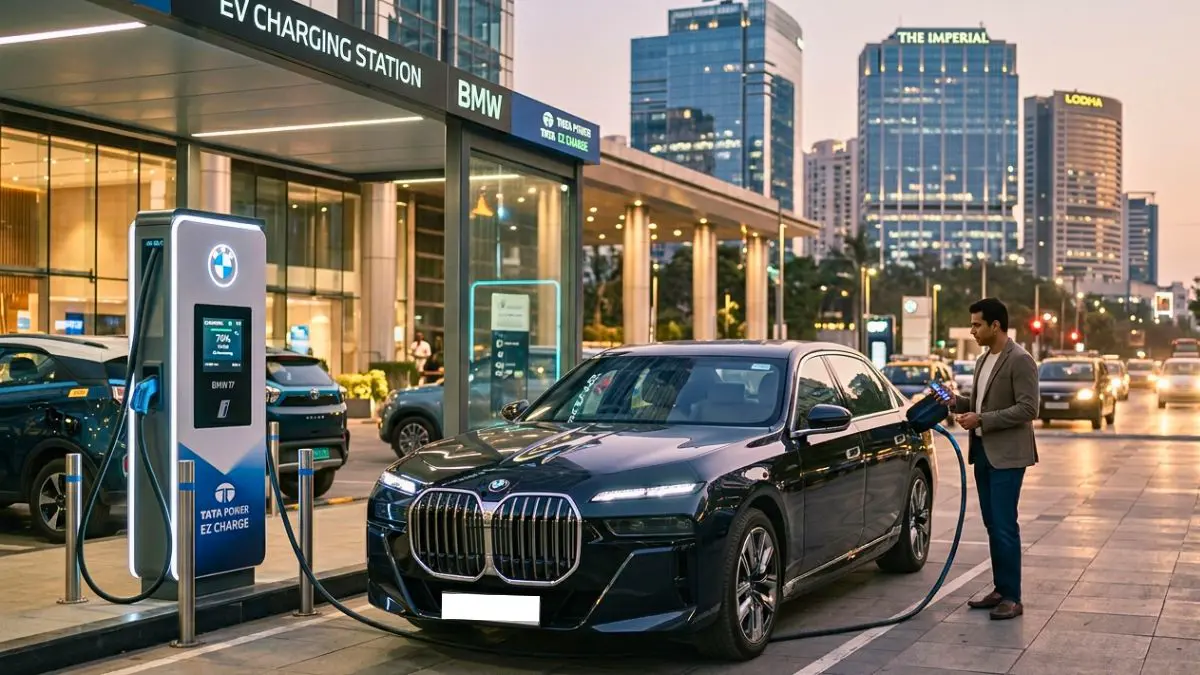
BMW Group India has also continued expanding its charging ecosystem partnerships to support customer adoption, addressing one of the key barriers to EV growth—range anxiety.
Pricing and Cost Pressures
Brar highlighted that recent vehicle price adjustments have been influenced primarily by foreign exchange movements and input cost pressures, rather than fuel price volatility alone. As a company with significant imported components, currency fluctuations remain a key factor in pricing decisions.
At the same time, the EV segment continues to benefit from lower GST rates compared to internal combustion engine (ICE) vehicles, although the higher upfront cost of battery technology still keeps EV prices elevated relative to comparable ICE models.
Why this matters
- Policy Alignment: Ethanol blending and EV adoption are parallel strategies aimed at reducing India’s oil import dependence.
- Consumer Economics: Expectations of higher fuel costs and efficiency trade-offs may accelerate EV consideration, especially in premium segments.
- Market Signal: Luxury segment trends often act as early indicators for broader shifts in the automotive industry.
FAQs
Q1. Does ethanol blending reduce fuel efficiency?
Yes, ethanol has a lower energy density than petrol, which can lead to a marginal reduction in mileage, depending on the blend level and engine compatibility.
Q2. Are EVs becoming more popular in India’s luxury segment?
Yes, automakers including BMW are seeing increasing EV adoption among premium buyers, supported by better infrastructure and product availability.
Q3. What is driving recent car price increases?
According to BMW India, foreign exchange fluctuations and input cost pressures are the primary factors behind recent price adjustments.

























