India’s home battery network could help support rising power demand
By Axel Miller | 10 Jun 2026
Summary
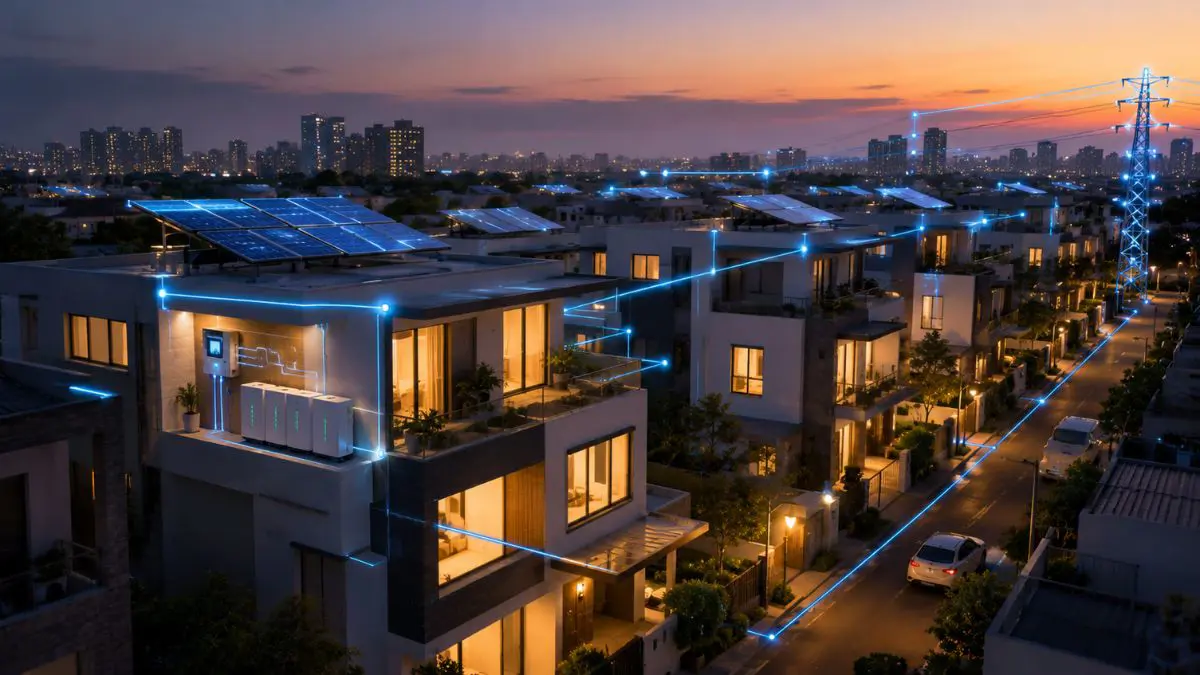
India’s vast network of residential inverter batteries could play an increasingly important role in balancing electricity demand as renewable energy generation expands and power consumption rises. Industry experts say home battery systems, combined with rooftop solar and smart meters, could evolve into a distributed energy storage network capable of supporting grid stability and reducing peak-hour demand pressures.
NEW DELHI, June 10, 2026 — India’s extensive fleet of residential inverter batteries, originally installed to provide backup power during outages, is emerging as a potential resource for supporting grid reliability and managing growing electricity demand.
Millions of households across the country use inverter-battery systems that charge from the grid and provide backup electricity when needed. As renewable energy capacity grows and electricity demand reaches new highs, energy experts increasingly see these systems as a form of distributed energy storage that could help balance supply and demand across the grid.
According to Preeti Bajaj, Executive Vice President of the Home & Distribution Division at Schneider Electric, India’s long-standing reliance on decentralized backup power has created one of the world’s largest networks of residential energy storage systems. While these batteries were initially designed for backup applications, advances in digital connectivity and energy management technologies could allow them to become active participants in future grid operations.
The Indian residential energy storage market has traditionally been dominated by lead-acid batteries because of their lower upfront cost. However, declining lithium-ion battery prices are accelerating a shift toward more efficient systems that offer higher energy density, longer operating life, reduced maintenance requirements, and smaller installation footprints.
One of the largest participants in the sector is Luminous Power Technologies, a Schneider Electric company. The company serves millions of households across India and is expanding its portfolio of lithium-ion-based energy storage products as consumer demand evolves.
Shift toward lithium-ion technology
Historically, lead-acid batteries have remained the preferred choice for residential backup power because of affordability. However, falling lithium-ion battery costs and improved financing options are narrowing the cost gap between the two technologies.
Lithium-ion systems offer several advantages, including longer service life, faster charging capability, improved efficiency, and lower maintenance requirements. They are also better suited to integration with rooftop solar systems and modern smart-home energy management platforms.
As Indian households increasingly adopt energy-intensive appliances such as air conditioners, induction cooktops, and electric water pumps, demand is growing for more capable residential energy storage systems that can support larger household loads.
Industry observers note that financing options, including zero-interest installment plans, are helping make advanced battery systems more accessible to a broader consumer base.
Supporting renewable energy integration
India’s electricity grid is facing mounting pressure from rising temperatures, urbanization, growing incomes, and increased use of air conditioning. Peak electricity demand often occurs during evening hours when solar generation declines, creating a significant balancing challenge for grid operators.
Energy storage is widely viewed as a critical solution to this challenge because batteries can store surplus solar electricity generated during the day and discharge it when demand rises after sunset.
The Central Electricity Authority (CEA) has projected a substantial increase in battery energy storage requirements over the coming decade as India accelerates renewable energy deployment. Alongside large utility-scale battery projects, distributed residential storage systems could provide an additional layer of flexibility and resilience.
Industry estimates suggest that combining rooftop solar installations under the PM Surya Ghar: Muft Bijli Yojana with battery storage systems could create a significant decentralized energy reserve capable of supporting local grid stability and improving renewable energy utilization.
Smart meters and regulation could accelerate adoption
The rollout of smart meters across India is expected to play a key role in enabling greater participation from residential energy storage systems.
Smart meters can help households optimize electricity consumption by charging batteries during periods of lower demand or high renewable generation and using stored electricity during peak pricing periods.
At the same time, regulatory reforms are creating a stronger foundation for grid-connected residential energy systems. New safety and performance standards for inverters and distributed energy equipment are designed to improve interoperability, reliability, and grid compatibility.
As digital energy infrastructure expands, experts believe residential batteries could evolve from passive backup devices into active grid-support resources capable of helping manage demand fluctuations and improve overall power system resilience.
Why this matters
- Unlocking distributed storage: Millions of existing inverter batteries could provide a cost-effective source of decentralized energy storage without requiring large-scale new infrastructure investments.
- Supporting renewable energy growth: Residential batteries can store daytime solar generation and help address evening demand peaks when renewable output falls.
- Accelerating lithium-ion adoption: Falling battery costs and improved financing options are driving a gradual shift away from traditional lead-acid systems.
- Enhancing grid resilience: Smart meters and connected energy management systems could enable homes to participate in future virtual power plant and demand-response programs.
FAQs
Q1: What is India’s residential battery network?
It refers to the millions of inverter-battery systems installed in homes across India that currently provide backup power and could eventually support broader grid operations.
Q2: Why are residential batteries becoming important?
They can help store excess renewable energy, reduce peak electricity demand, and improve grid stability as renewable generation increases.
Q3: What is driving the shift toward lithium-ion batteries?
Declining battery costs, longer operating life, lower maintenance requirements, and better performance are encouraging consumers to adopt lithium-ion systems.
Q4: How do smart meters support battery adoption?
Smart meters allow households to manage charging and electricity usage more efficiently, enabling batteries to respond to changing grid conditions and electricity prices.
Q5: How could residential batteries support renewable energy integration?
They can store surplus solar electricity generated during the day and supply power during evening peak-demand periods when solar generation is unavailable.