Denmark awards $2.6 billion CCS subsidy to Aalborg Portland
By Axel Miller | 09 Jun 2026
Summary
Denmark has awarded cement producer Aalborg Portland up to 16.5 billion Danish crowns ($2.55 billion) in carbon capture and storage (CCS) subsidies, supporting one of Europe's largest industrial decarbonisation projects. The initiative is expected to play a major role in reducing emissions from the cement industry, one of the world's most carbon-intensive sectors.
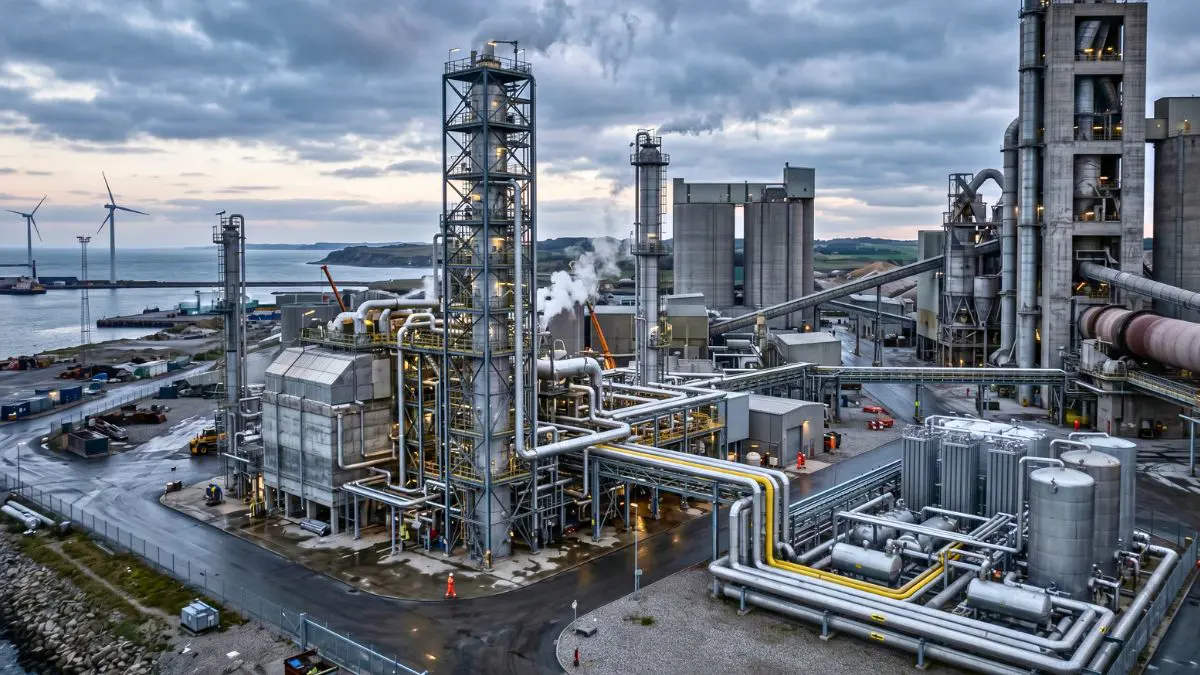
COPENHAGEN, June 9, 2026 — Aalborg Portland, a subsidiary of Cementir Holding, has signed an agreement with the Danish Energy Agency to receive up to 16.5 billion Danish crowns ($2.55 billion) in carbon capture and storage (CCS) subsidies beginning in 2030. The funding will support the company’s ACCSION project, one of Europe’s largest planned industrial carbon capture initiatives.
The subsidy forms part of Denmark’s strategy to reduce greenhouse gas emissions and decarbonise hard-to-abate industries, including cement manufacturing, where emissions are generated not only from fuel use but also from the chemical process of producing clinker.
Aalborg Portland, Denmark’s largest emitter of carbon dioxide (CO₂), said the project will enable the company to make a significant contribution to national climate targets while advancing industrial decarbonisation across Europe. Chief Executive Søren Holm Christensen described the agreement as a decisive step toward realising one of the continent’s largest industrial carbon capture projects.
Cement production accounts for roughly 8% of global industrial CO₂ emissions. The sector remains difficult to decarbonise because emissions arise both from the high-temperature kilns used in manufacturing and from the conversion of limestone into clinker.
Under the inflation-indexed 15-year agreement, Aalborg Portland will receive 875 Danish crowns per tonne of CO₂ captured, equivalent to annual payments of up to 1.1 billion crowns. The subsidy covers the capture, transport and permanent storage of up to 1.25 million tonnes of CO₂ per year.
The company estimates the project will account for more than half of Denmark’s CCS subsidy programme target of capturing 2.3 million tonnes of CO₂ annually from 2029 onward.
The ACCSION project will be developed in partnership with Air Liquide, which will provide the carbon capture technology, while Harbour Energy will supply transportation infrastructure and storage services.
Denmark has set a legally binding target to reduce greenhouse gas emissions by 70% from 1990 levels. Policymakers regard CCS as an essential technology for achieving that goal, particularly in sectors where emissions cannot be eliminated through electrification alone.
The technology remains debated within environmental and energy circles. The International Energy Agency considers CCS an important tool for meeting global climate objectives, while critics argue that high costs and commercial challenges could limit its long-term effectiveness and potentially prolong dependence on fossil fuel-related industries.
Despite those concerns, governments across Europe are increasingly backing large-scale CCS projects as part of broader industrial transition strategies aimed at reaching net-zero emissions targets.
Why this matters
- Industrial decarbonisation: Cement production is among the largest industrial sources of carbon emissions globally, making emissions reductions in the sector critical for climate goals.
- Support for climate targets: The project directly supports Denmark’s target of reducing greenhouse gas emissions by 70% from 1990 levels.
- Scaling CCS infrastructure: The initiative strengthens Europe’s emerging carbon capture, transport and storage value chain for hard-to-abate industries.
- Public investment signal: The subsidy demonstrates governments’ growing willingness to provide large-scale financial support for industrial decarbonisation projects.
- European leadership: The ACCSION project is expected to become one of the largest industrial CCS developments in Europe, potentially serving as a model for other heavy industries.
FAQs
Q1: What is Denmark’s CCS subsidy agreement with Aalborg Portland?
Denmark has agreed to provide Aalborg Portland up to 16.5 billion Danish crowns ($2.55 billion) in carbon capture and storage subsidies over a 15-year period beginning in 2030.
Q2: What is the ACCSION project?
ACCSION stands for Aalborg Portland Carbon Capture & Storage using Infrastructure Onshore in North Jutland, a large-scale CCS project designed to capture, transport and permanently store CO₂ emissions from cement production.
Q3: How much CO₂ will the project capture?
The facility is designed to capture, transport and store up to 1.25 million tonnes of CO₂ annually.
Q4: Why is cement production difficult to decarbonise?
Cement manufacturing generates emissions from both fuel combustion and the chemical conversion of limestone into clinker, making emissions reductions challenging through electrification alone.
Q5: Who are the project’s partners?
Air Liquide will provide the carbon capture technology, while Harbour Energy will be responsible for transport infrastructure and CO₂ storage services.
Q6: Who owns Aalborg Portland?
Aalborg Portland is a subsidiary of Cementir Holding, an international cement and building materials company listed in Milan.