European Carmakers Warn Against ‘Restrictive’ India–EU Trade Deal as Talks Enter Final Stretch
By Axel Miller | 22 Jan 2026
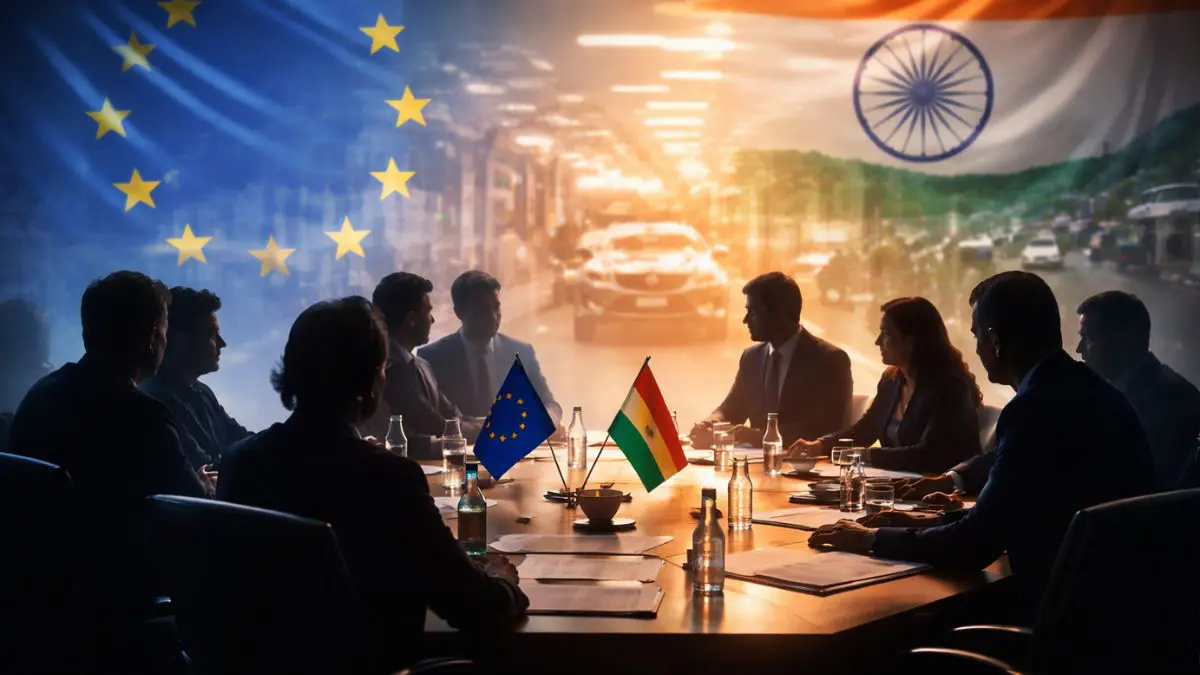
European carmakers have urged negotiators to avoid turning the proposed India–European Union free trade agreement (FTA) into what they described as a “paper deal”, warning that excessive restrictions such as quotas and complex licensing could limit the pact’s real economic impact.
In a statement issued Thursday, the European Automobile Manufacturers’ Association (ACEA) said the deal should prioritise meaningful market access and long-term supply chain integration, rather than focusing on narrow vehicle quotas that may benefit only limited volumes.
ACEA represents 17 Europe-based manufacturers, including BMW, Mercedes-Benz, Renault and Jaguar Land Rover.
Supply chains vs market access
The association said the removal of duties on automotive components should be treated as a priority, arguing that tariff-free component trade would deepen industrial linkages and enable Indian suppliers to become part of European value chains.
ACEA’s International Trade Director Jonathan O’Riordan said a trade pact that is heavy on restrictions but light on real liberalisation risks failing both sides by limiting investment visibility and supply chain resilience.
Rules of origin become the key battleground
While European manufacturers are pushing for easier access, India is maintaining a more defensive posture on sensitive sectors such as automobiles.
People familiar with discussions said India is pressing for strict rules of origin (ROO) and value-add thresholds, with negotiators seeking safeguards that prevent third-country goods — particularly Chinese electric vehicle (EV) components — from entering India through Europe using FTA benefits.
India’s concern is that EV kits or components manufactured in China could be lightly processed or assembled in Europe and then routed to India under preferential tariff treatment.
Likely outcome: graded liberalisation
Negotiators on both sides have signaled that automobiles may see only a calibrated approach rather than blanket liberalisation.
Industry observers expect any duty reductions to be tiered, with deeper cuts more likely for premium segments and high-tech components, while mass-market vehicle tariffs may remain elevated in line with India’s domestic manufacturing priorities.
Why This Matters
- Autos is the hardest sector in India–EU talks because it combines jobs, tariffs and strategic industrial policy
- The ROO battle is linked to the China supply chain question, especially EVs
- Component liberalisation could quietly be the biggest winner, even if car quotas stay limited
Summary
Europe’s carmakers, led by ACEA, warned that the India–EU trade pact could become overly restrictive if it relies heavily on quotas and complex licensing. They urged negotiators to prioritise tariff removal on auto components to build stronger supply chain integration. India, meanwhile, is pushing for stricter rules of origin to prevent third-country EV components — particularly Chinese — from exploiting the agreement.
FAQs
Q1: What did ACEA say today?
ACEA warned against a restrictive, quota-heavy structure and urged negotiators to focus on meaningful market access — especially through lower tariffs on auto components.
Q2: Why are auto components important in the India–EU deal?
Because component tariff cuts would integrate Indian suppliers into global manufacturing chains and could unlock bigger trade flows than limited vehicle quotas.
Q3: Why is India pushing strict rules of origin?
India wants to ensure only genuinely EU-origin products receive FTA benefits and to prevent third-country transshipment — especially from China’s EV supply chain.
Q4: Will India cut tariffs on mass-market cars?
Industry observers expect mass-market vehicle tariffs to remain high, with more flexible treatment likely for premium segments and select components.