India giving shape to world’s largest co-operative foodgrain storage system
By Unnikrishnan | 17 Dec 2025
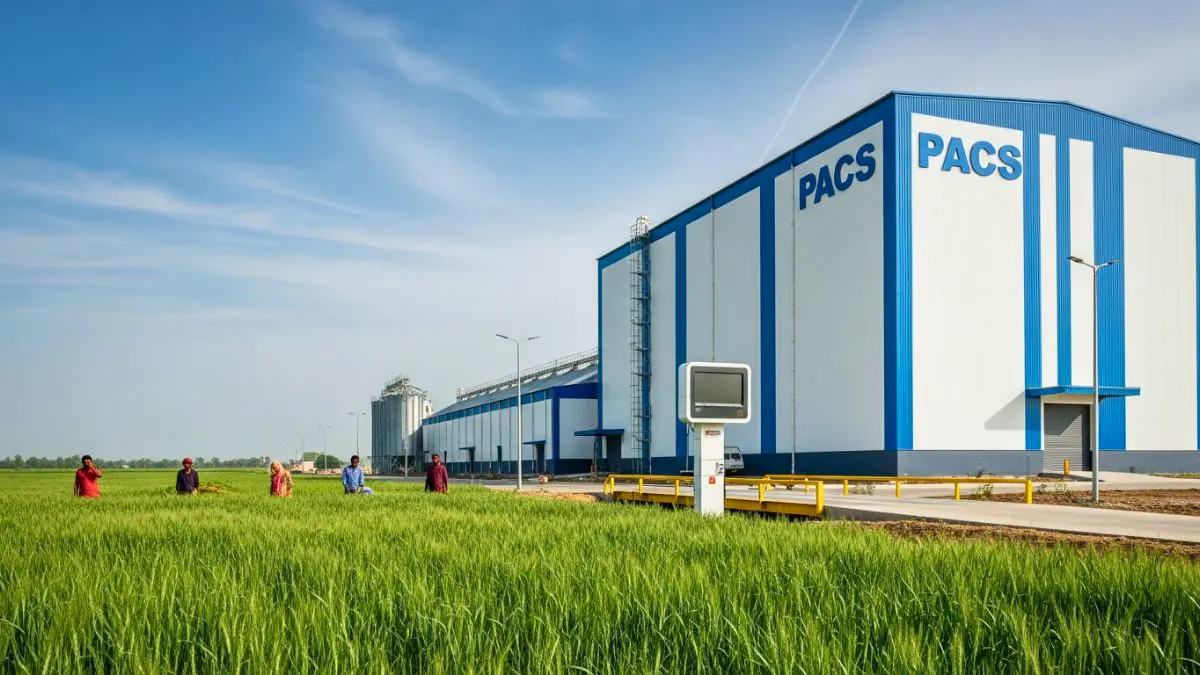
India is giving shape to the world’s largest cooperative foodgrain storage system through the establishment of a nation-wide storage chain under the cooperative framework.
The scheme, launched as a pilot project in may 2023, in order to address the shortage of storage capacity for food grains in the country, is being implemented with the assistance of various existing central government schemes.
The plan involves creation of agriculture-related infrastructure at the level of primary agricultural credit societies (PACS), such as godowns, custom hiring centres, processing units, fair price shops, etc, besides enhancing the operational capacity and income of PACS.
For this, the government has proposed to develop them into multi-service centres that would undertake procurement, processing, warehousing, financial and credit services among others. This, in turn, will help to boost rural employment during the construction and operational phase - both directly and indirectly – and open up service and operations related jobs like warehousing, logistics and other services, over the long term as well.
The empowerment of PACS will help improve the efficiency of rural and agricultural economy by reducing post-harvest losses, improving supply chain network, and enhancing the role of agriculture and related sectors in overall economic growth of the country.
Funding for the scheme is being arranged through various existing central government schemes, such as Agriculture Infrastructure Fund (AIF), Agricultural Marketing Infrastructure Scheme (AMI), Sub Mission on Agricultural Mechanization (SMAM), Pradhan Mantri Formalisation of Micro Food Processing Enterprises Scheme (PMFME), etc.
Besides, the Department of Agriculture and Farmers Welfare has extended the repayment of loans from the Agriculture Infrastructure Fund (AIF) from 2+5 years to 2+8 years to improve financial viability of PACS.
The construction cost has been revised to Rs3,500 per tonne from Rs3,000 per tonne for the plains and to Rs8,000 per tonne from Rs4,000 per tonne for northeastern states, while the subsidy has been increased to 33.33 per cent from 25 per cent (to Rs2,333 per tonne from Rs875 per tonne for the plains and and to Rs2,666 per tonne from Rs1,333.33 per tonne for northeastern states
Government has also reduced margin money requirement from 20 per cent to 10 per cent.
PACS can claim additional subsidy equivalent to one-third of the total admissible subsidy for ancillary infrastructure such as internal roads, weighbridges, boundary walls, etc.
Along with 3 per cent interest subvention available under the AIF, the effective interest rate on the loan for PACS falls to a mere 1 per cent.
NABARD is providing special refinance for the scheme to significantly reduce the financial burden on participating cooperatives.
Besides the centre, certain state governments such as Rajasthan and Gujarat are providing financial support for construction of warehouses under state level schemes.
Food Corporation of India (FCI) plays a key role in the development of godowns by PACS by providing leads on storage gaps and offering 9-year hiring assurances to all PACS godowns of 2,500 MT capacity and above.
Besides, agencies like NAFED and NCCF also assure hiring of space in PACS godowns within their procurement zones.
State wearhoung corporations (SWCs), in coordination with the Central Warehousing Corporation (CWC) and state cooperation departments would facilitate timely hiring of godown space.
Further, the government has expanded the scope of participation beyond PACS to include other cooperative societies, cooperative federations, and multi-state cooperative societies (MSCS) in order to broaden capacity and scale of operation.
The setting up of PACS-level warehouses will minimise transportation costs and associated losses by enabling local storage of grains. Besides, the integration of PACS with food supply chain management, including agri-marketing and procurement systems, will ensure better price realisation for farmers and strengthen the rural economy as a whole.

























