Despite resistance, UK government to go ahead with £3.9bn acquisition of aircraft carriers
21 May 2008
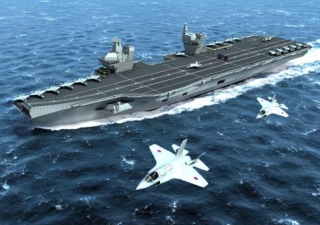 London: Despite serious doubts expressed by UK's military chiefs about the financial burden that a pair of large aircraft carriers are likely to impose on a severely extended defence budget, the UK government has made clear it intends to go ahead with their construction. The carriers are expected to cost the UK exchequer at least £3.9bn ($7.6 billion).
At 65,000-tonnes, the two carriers, HMS Queen Elizabeth and HMS Prince of Wales, will be the biggest warships ever built in Britain. They are slated to enter service, as originally planned, in 2014 and 2016, respectively. Delays in the production of the US Joint Combat Aircraft will compel HMS Queen Elizabeth to initially carry the ageing Harrier aircraft.
The carriers will be 280 metres long and will carry up to 40 planes.
According to Lady Taylor, the defence equipment minister: "We are investing about £14bn in the navy and in the maritime industry over the next 10 to 15 years. The future carriers will provide an important military capability and will sustain many jobs - around 10,000 at the peak of production."
However, the project remains a particularly contentious one within the UK defence establishment. It is understood that the decision to go ahead with the construction of the carriers is essentially a political one as jobs and credibility are at stake.
It has also now emerged that General Sir Timothy Granville-Chapman, vice-chief of the defence staff, may have written privately to all brigadier and major-general rank officers in all three branches of the armed services in the Ministry of Defence, asking for their views about the need for a new aircraft carrier strike force.
The move reflects concern in the Royal Army and the Royal Air Force, that an already overstretched UK defence programme may be further impacted by the decision to acquire the carriers, in particular, proposed acquisitions by the Royal Army and Air Force.