US Patent Office bounces back Apple’s “rubber-banding" patent
03 Apr 2013
The US Patent and Trademark Office (USPTO) has invalidated Apple's ''bounce back'' or "rubber-banding" patent, a ruling that could change the course of the $1-billion patent infringement lawsuit (reduced last month to $598 million) awarded to Apple against its arch rival Samsung Electronics.
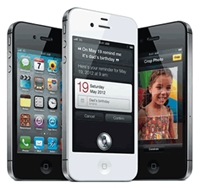 The patent called '381', which has the ability to "bounce back" content on the iPhone when the user scrolls to the top or bottom of the page, had been successfully used by Apple in its lawsuit against Samsung last year, where a jury in California last August found that 21 Samsung smartphones and tablets infringed on this patent.
Under a preliminary investigation, the USPTO had in October last year found that all of 20 claims of Apple's "bounce back" patent were invalid.
After numerous reviews and appeals from Apple, the USPTO has now ruled that it would revive three claims from Apple's patent but once again rejected the other 17 claims, including the key ''bounce back" patent.
Samsung has brought this adverse ruling against Apple by the USPTO to the notice of the court in California, where the Jury had found 21 of its products to have infringed on this patent held by Apple and awarded the US technology giant $1 billion.
Last month, US federal judge Lucy Koh, who presided over the case, overturned the jury's $1.05 billion award to $598.9 million and set a new trial to determine damages (See: Apple's $1.05-bn award against Samsung cut to $598 mn). Koh said that the jury had incorrectly calculated part of the award and the damages will be reassessed in a new trial, which could be increased or lowered.
Samsung is also planning to appeal the judgment in its entirety, and both companies are now arguing whether the appeal or the new trial addressing correct damages should be heard first.
Although Apple can appeal the USPTO ruling, patent experts believe that the company is on losing ground since the "bounce back" patent had already been given to AOL in 2003.
Luigi Lira, a former software engineer at AOL had designed a way a user can interact with a web page on devices that were PDAs used with styluses rather than today's smartphones.
The USPTO said that Apple's ''rubber banding'' patent is a replica of what Lira does'' by ''snapping back'' to a document when the ''input'' - whether stylus or finger - is removed from the screen, according to a report from the Financial Times.

























