Scientists pinpoint a neural center of resilience
19 Jul 2016
Why some people handle stress better than others is a question that has fascinated scientists for decades. Now a Yale-led team reports that flexible brain activity in a particular area of the brain may predict resilience.
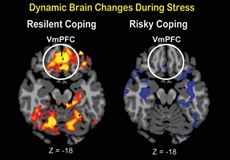 Conversely, its absence can help pinpoint those most at risk for binge drinking, emotional eating, and angry outbursts, according to a study published the week of July 18 in the journal Proceedings of the National Academy of Sciences.
Thirty research participants were given fMRI scans while exposed to either highly threatening, violent, and stressful images and to neutral, non-stressful images for six minutes each. The scientists found three distinct patterns of response to stress.
The first pattern was characterised by sustained neural activation of brain regions that signal, monitor, and process potential threats. The second response pattern involved a dynamic pattern with increased and then decreased activation, perhaps as the brain's way of reducing initial distress to a perceived threat. Finally, subjects showed flexible neural responses in an area of the brain called the ventral medial prefrontal cortex (VmPFC) during sustained stress exposure.
''Higher levels of neuroflexibility in this area of the brain helped predict those who would regain emotional and behavioural control during stress,'' said Rajita Sinha, the Foundations Fund Professor of Psychiatry, director of the Yale Stress Center and lead author of the study. ''The VmPFC seems to be the area of the brain which mobilizes to regain control over our response to stress.''
Prior studies have shown consistently that repeated and chronic stress causes great damage to neural structures, connections, and functions of the prefrontal cortex, the seat of higher order cognition that helps regulate emotions, and more primitive areas of the brain.
In subsequent interviews with the participants, the researchers found that those who did not show neural flexibility in the VmPFC during stress were more prone to binge drinking, episodes of emotional eating, and anger outbursts. Those subjects might be at higher risk of alcohol abuse and addiction or emotional dysfunction problems, which are hallmarks of exposure to repeated and high levels of chronic stress, Sinha hypothesized.
Cheryl Lacadie and Todd Constable are co-authors of the study, which was funded by the National Institute of Health Common Fund Roadmap and the National Institutes of Alcohol Abuse and Alcoholism, the National Institute of Drug Abuse, and the National Institutes of Digestive Diseases and Kidney.