Significant losses for Russia if S-300 deal with Iran scrapped
22 Oct 2009
Moscow: Even as pressure mounts on Russia to scrap delivery of the S-300 missile defence system to Iran, its technocrats are counting financial losses that the country may suffer if this should happen. It's now being let out by Russian defence ministry sources that losses stemming from an unfulfilled contract are likely to be significant.
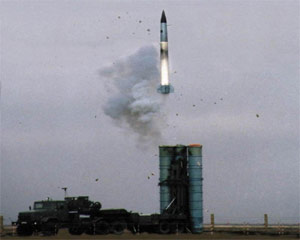 Russian military experts have said previously that any decision not to go ahead with the contract would easily cost Russia about $1 billion in lost profits and another $300-400 million in fines and penalties.
The S-300 has for long been recognised as a lethal, state-of-the-art system capable of taking on a wide range of threats. Reports about possible deliveries of the system to Iran have aroused serious concerns in the West and in Israel. Primarily, because the system acts as a powerful deterrent against any pre-emptive strike sought to be launched against Iranian nuclear facilities.
The Israelis bombed the French-built Osirak nuclear plant near Iraq's capital, Baghdad, in June 1981. It was the world's first air strike against a nuclear plant. Though the 70MW reactor was near completion it was not stocked with nuclear fuel.
Persistent reports in the Iranian media, citing senior security officials, have stressed that Russia has begun delivery of the advanced version of the S-300 missile to Tehran under a 2005 contract. These have, however, been denied by Russian arms industry officials.
"The fulfilment of the contract to deliver S-300 complexes to Iran fully depends on the country's leadership," an unnamed defence ministry source has been quoted as saying. He also stressed that the S-300 systems were defensive weapons.
"They are not under any embargo, and Russia is free to make its own decision on whether or not to supply them to one country or another," he said.
The latest version of the S-300 family is the S-300PMU2 Favorit, which has a range of up to 195 kilometres (about 120 miles) and can intercept aircraft and ballistic missiles at altitudes from 10 meters to 27 kilometres.