Measuring mercury: common test may overestimate exposure from dental amalgam fillings
21 Mar 2013
A common test used to determine mercury exposure from dental amalgam fillings may significantly overestimate the amount of the toxic metal released from fillings, say University of Michigan (U-M) researchers.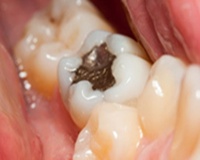
Scientists agree that dental amalgam fillings slowly release mercury vapour into the mouth. But both the amount of mercury released and the question of whether this exposure presents a significant health risk remain controversial.
Public health studies often make the assumption that mercury in urine (which is composed mostly of inorganic mercury) can be used to estimate exposure to mercury vapour from amalgam fillings. These same studies often use mercury in hair (which is composed mostly of organic mercury) to estimate exposure to organic mercury from a person's diet.
But a U-M study that measured mercury isotopes in the hair and urine from 12 Michigan dentists found that their urine contained a mix of mercury from two sources - the consumption of fish containing organic mercury and inorganic mercury vapour from the dentists' own amalgam fillings.
"These results challenge the common assumption that mercury in urine is entirely derived from inhaled mercury vapour," said Laura Sherman, a postdoctoral research fellow in the Department of Earth and Environmental Sciences and lead author of a paper in the journal Environmental Science & Technology. A final version of the paper was published online March 20.
"These data suggest that in populations that eat fish but lack occupational exposure to mercury vapor, mercury concentrations in urine may overestimate exposure to mercury vapor from dental amalgams. This is an important consideration for studies seeking to determine the health risks of mercury vapor inhalation from dental amalgams," said U-M biogeochemist Joel D. Blum, a co-author of the paper and a professor in the Department of Earth and Environmental Sciences.

























