China pushes AI chip self-reliance as U.S. curbs weigh on Nvidia
By Axel Miller | 01 Apr 2026
Summary
China is accelerating efforts to develop domestic AI chips as U.S. export restrictions limit access to advanced semiconductors, with companies such as Huawei Technologies gaining traction, though Nvidia remains a key supplier.
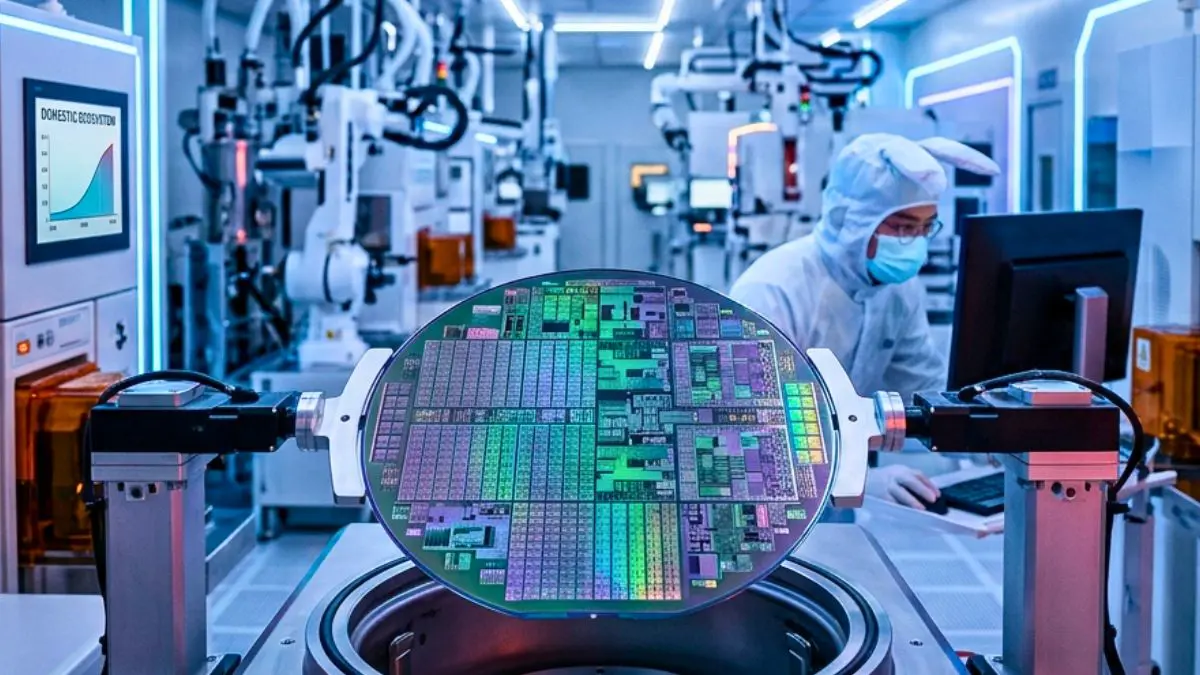
BEIJING, April 1, 2026 — China is stepping up its push for semiconductor self-reliance as U.S. export controls continue to restrict access to advanced artificial intelligence chips, prompting domestic companies to expand production and adoption of homegrown alternatives.
Chinese technology firms including Huawei Technologies, Alibaba Group and Baidu have been developing in-house AI processors aimed at reducing reliance on foreign suppliers.
Despite these efforts, Nvidia continues to play a significant role in China’s AI ecosystem, particularly in high-performance computing and model training, though its ability to sell advanced chips has been constrained by U.S. regulations.
Impact of export controls
Washington has imposed multiple rounds of restrictions on the export of high-end chips and chipmaking tools to China, citing national security concerns. These curbs have forced U.S. firms to offer modified, lower-performance products tailored to comply with the rules.
However, regulatory uncertainty remains, with licensing requirements and compliance rules evolving over time, creating challenges for both suppliers and Chinese customers.
Rise of domestic alternatives
Chinese chipmakers are gaining ground in certain segments, particularly in inference workloads and cloud deployments. Huawei’s Ascend series and chips developed by Baidu and Alibaba are increasingly being deployed in domestic data centers and AI infrastructure projects.
Much of this growth is being supported by government-backed initiatives, including investment in “intelligent computing centers” and incentives to promote the adoption of locally developed technologies.
Manufacturing constraints remain
Industry analysts say China still faces limitations in producing cutting-edge chips, with firms such as SMIC operating at process nodes that lag behind the most advanced global standards.
As a result, domestic chips are seen as competitive in some applications but still behind global leaders in high-end AI training performance.
Why this matters
- Highlights China’s accelerating push for semiconductor self-reliance
- Reflects growing impact of U.S. export controls on global chip supply chains
- Signals rising competition between domestic and international AI chipmakers
- Underscores strategic importance of AI hardware in geopolitical rivalry
- Points to ongoing technology gaps in advanced semiconductor manufacturing
FAQs
Q1. Is China replacing Nvidia completely?
No. Nvidia remains important, especially for high-end AI workloads, though domestic alternatives are expanding.
Q2. Why are U.S. chip restrictions important?
They limit China’s access to cutting-edge AI hardware, shaping global tech competition.
Q3. Are Chinese chips competitive?
They are increasingly competitive in some use cases, but still lag in top-tier performance.