Apple at 50 reflects shift toward services and AI as growth drivers
By Axel Miller | 01 Apr 2026
Summary
As Apple marks its 50th anniversary, the company is increasingly relying on its fast-growing services business and expanding artificial intelligence capabilities, even as the iPhone remains central to its ecosystem.
CUPERTINO, April 1, 2026 — Apple Inc. marked its 50th anniversary on Tuesday, highlighting a broader shift in its business model toward services and artificial intelligence, as the iPhone maker adapts to slowing hardware growth and changing user behavior.
Founded in 1976 by Steve Jobs and Steve Wozniak, Apple has evolved from a personal computer pioneer into one of the world’s most valuable companies, with a diversified portfolio spanning devices, software and digital services.
Growing role of services
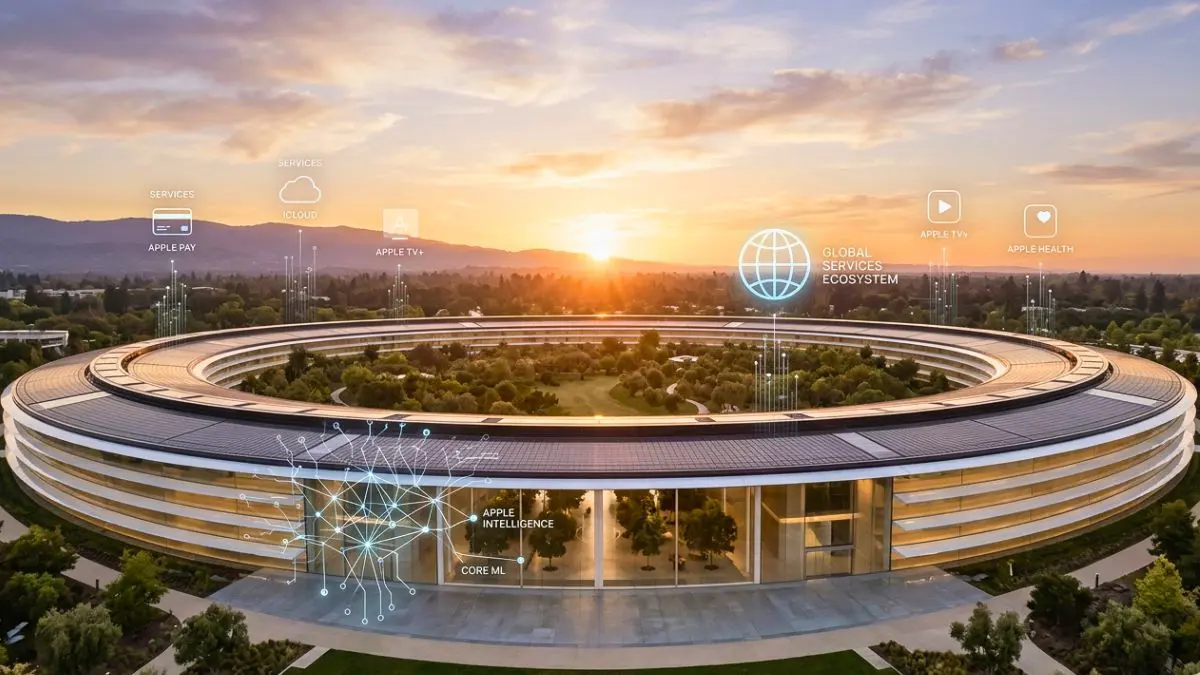
Apple’s services segment — which includes the App Store, iCloud, Apple Pay and subscription offerings — has become a key contributor to revenue in recent years, supported by its large installed base of devices.
The company has reported steady growth in the segment, which analysts say is approaching a significant share of overall revenue and offers higher margins than hardware products.
Focus on artificial intelligence
Apple has also been expanding its capabilities in artificial intelligence, including features designed to enhance user experience across its devices.
The company has emphasized privacy-focused, on-device processing as a differentiator, positioning its approach against cloud-heavy AI models offered by rivals such as Google and Meta Platforms.
Hardware remains central
Despite the strategic shift, Apple’s hardware ecosystem — led by the iPhone, Mac and wearables — continues to anchor its business, driving demand for services and software integration.
The company has also expanded into new categories in recent years, including mixed-reality devices such as the Apple Vision Pro, as it explores future computing platforms.
Looking ahead
Analysts say Apple’s long-term growth will depend on its ability to integrate AI across its ecosystem while maintaining its hardware appeal and user loyalty.
The company has not disclosed detailed plans for future products, but continues to invest in emerging technologies including health, augmented reality and custom silicon.
Why this matters
- Reflects Apple’s gradual shift from hardware-led growth to services and software
- Highlights increasing importance of AI in consumer technology ecosystems
- Shows how recurring revenue models are reshaping big tech business strategies
- Underscores Apple’s focus on privacy as a competitive differentiator
- Signals continued evolution of devices as platforms for digital services
FAQs
Q1. Is Apple moving away from hardware?
No. Hardware remains central, but services and software are becoming more important for growth.
Q2. What role does AI play in Apple’s strategy?
AI is being integrated into devices to improve user experience, with a focus on privacy and on-device processing.
Q3. Why are services important for Apple?
They provide recurring revenue and typically offer higher profit margins than hardware.

























