India explores new uses for ethanol amid rising output, focuses on blending and pilot applications
By Axel Miller | 08 Apr 2026
Summary
India is expanding its ethanol strategy beyond fuel blending, with policymakers and industry stakeholders examining additional applications, though claims of a large surplus and widespread rollout of alternative uses remain limited to proposals and pilot-stage discussions.
NEW DELHI, April 8, 2026 — India is evaluating additional uses for ethanol as production capacity rises, with the government continuing to prioritize its ethanol blending programme while exploring new demand avenues in transport and energy applications.
The country has significantly increased ethanol production in recent years under its Ethanol Blended Petrol (EBP) programme, targeting 20% blending (E20). However, there is no widely confirmed data indicating a nationwide surplus of the magnitude suggested, as production and diversion levels fluctuate annually based on feedstock availability and policy decisions.
Focus remains on blending and mobility
Government policy continues to emphasize ethanol blending in petrol as the primary use case. Automakers such as Maruti Suzuki and Toyota have been developing flex-fuel vehicles, though adoption remains at an early stage and depends on regulatory clarity and consumer economics.
Alternative applications under discussion
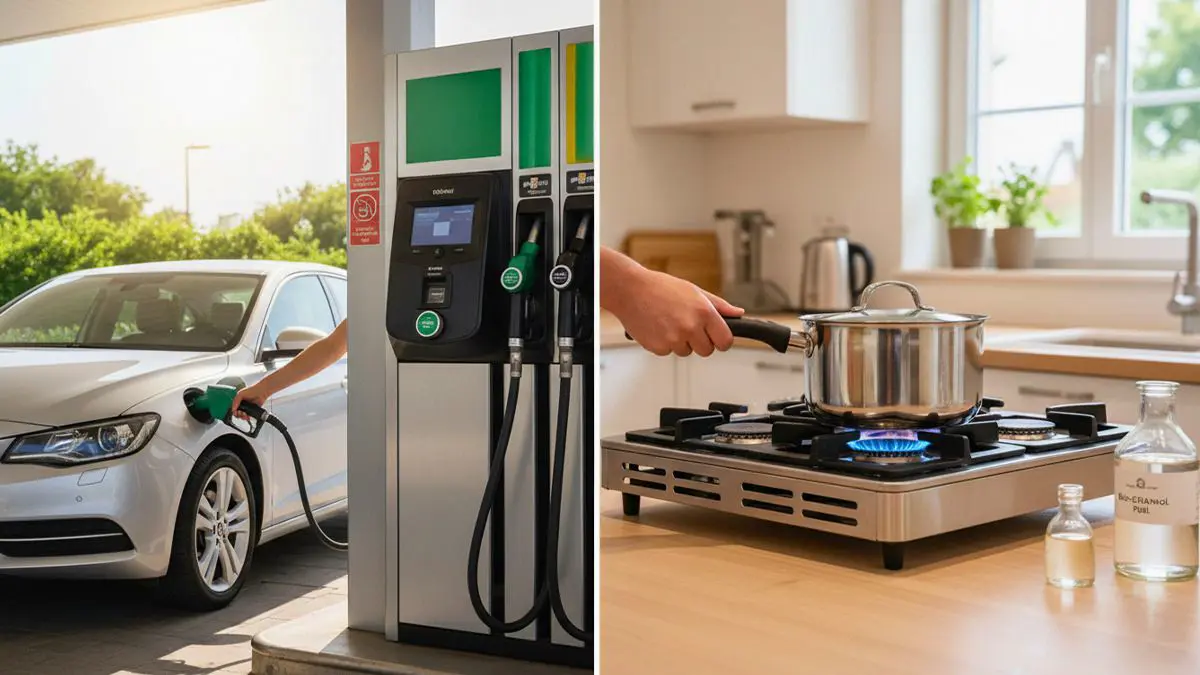
Industry groups and policymakers have discussed expanding ethanol use into areas such as clean cooking, power generation and potential blending with diesel, but these initiatives are largely at exploratory or pilot levels rather than large-scale deployment.
Technical and economic challenges—including fuel efficiency, engine compatibility and infrastructure readiness—continue to limit immediate expansion beyond the transport sector.
Policy and taxation considerations
Industry stakeholders have raised concerns about taxation structures and pricing dynamics affecting flex-fuel adoption, though no major nationwide tax revisions specific to ethanol vehicles have been formally implemented to date.
Balancing supply and demand
India’s ethanol programme is closely linked to agricultural output, particularly sugarcane and grains, with the government adjusting policies to balance fuel production, food security and inflation.
Why this matters
- Highlights evolution of India’s biofuel strategy
- Shows limits of current ethanol demand beyond blending
- Reflects early-stage exploration of alternative fuel uses
- Signals need for policy clarity on flex-fuel ecosystem
- Links energy policy with agriculture and rural economy
FAQs
Q1. Does India have a confirmed ethanol surplus?
Not definitively. Supply levels vary, and most production is aligned with blending targets.
Q2. Are ethanol stoves and generators widely available?
No, these are still at pilot or proposal stages.
Q3. Can ethanol replace petrol or diesel fully?
Not yet. Infrastructure, vehicle compatibility and pricing challenges remain.